The short answer
You need a new chimney liner when the existing one is cracked, deteriorated, missing, or the wrong size for your appliance, which often happens after an oil-to-gas boiler conversion. AshVanta inspects the flue with a camera, then installs a liner sized to your appliance and tests the draft before we leave.
A chimney liner is the protective channel inside your flue that carries smoke and exhaust safely out of the house. It keeps heat away from wood framing, keeps acidic gases off the masonry, and helps the appliance draft properly. Many older New York homes have clay tile liners that have cracked or shifted, and some have no liner at all. Others switched from oil to gas and now have a flue that is the wrong size or material. AshVanta Chimney Services installs new liners for fireplaces, wood stoves, inserts, boilers and water heaters in New York City and nearby cities. Our certified technicians inspect first, explain what they found, and fit a liner sized to the appliance it serves.
Signs you need a new chimney liner
Liner damage is usually hidden inside the chimney, so most homeowners notice the symptoms before they see the problem. If you see any of the following, schedule an inspection before your next fire or heating season.
- A smoke or creosote smell in the room, especially on humid days or when the fireplace is not in use
- Poor draft: smoke rolls into the room, fires are hard to start, or the boiler or water heater spills exhaust
- Pieces of clay tile, mortar or brick flakes collecting in the firebox or at the base of the flue
- White staining on the brick inside or outside the chimney, a sign that moisture is moving through the masonry
- Water in the firebox or damp spots on walls and ceilings near the chimney
- A recent or planned switch from oil to gas, or a new appliance connected to an old flue
What is included in a liner installation
Every job starts with an inspection so the liner matches the appliance and the chimney. Here is what a standard installation covers.
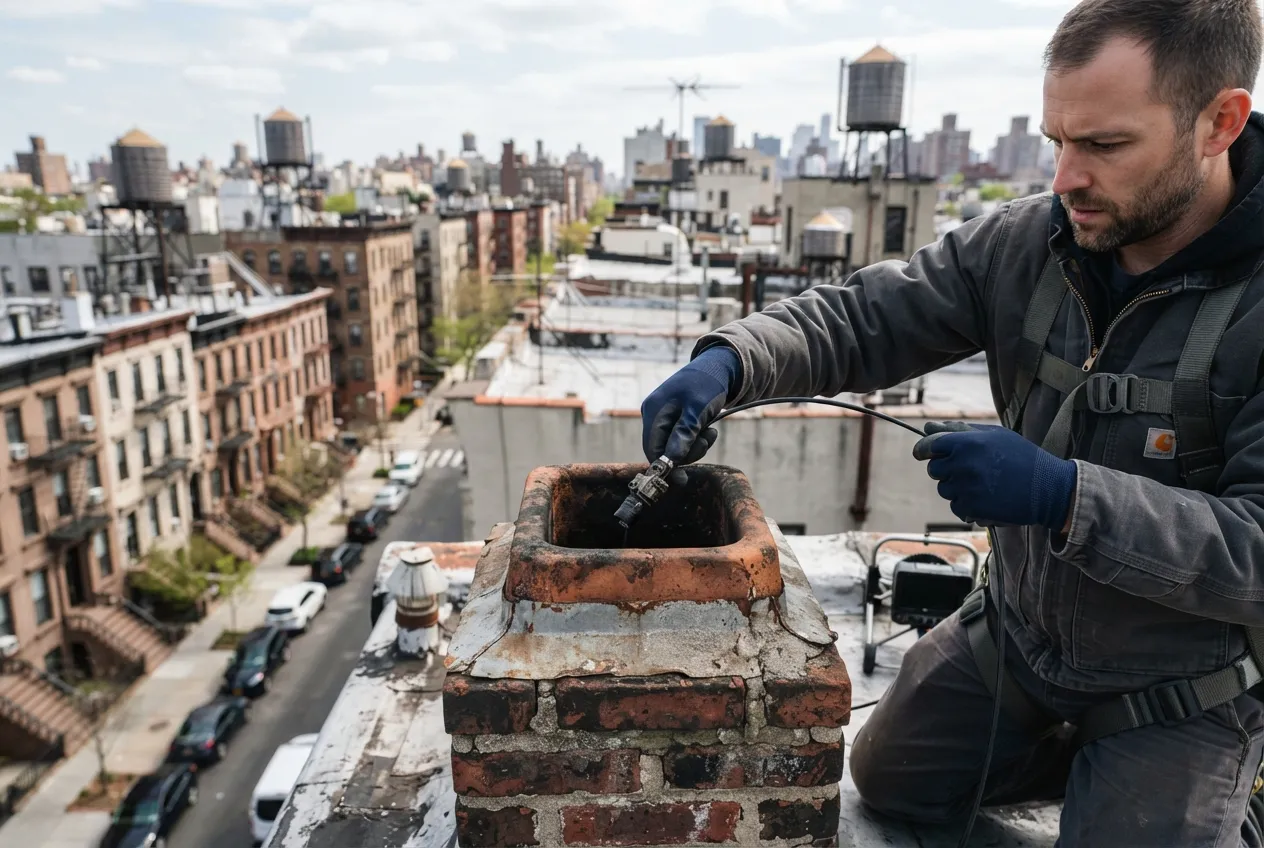
- Video camera inspection of the full flue before work begins
- Measurement of the flue and review of the appliance's venting requirements so the liner is sized correctly
- Cleaning the existing flue to remove soot, creosote and loose debris
- Removal of broken tile or obstructions where needed to fit the new liner
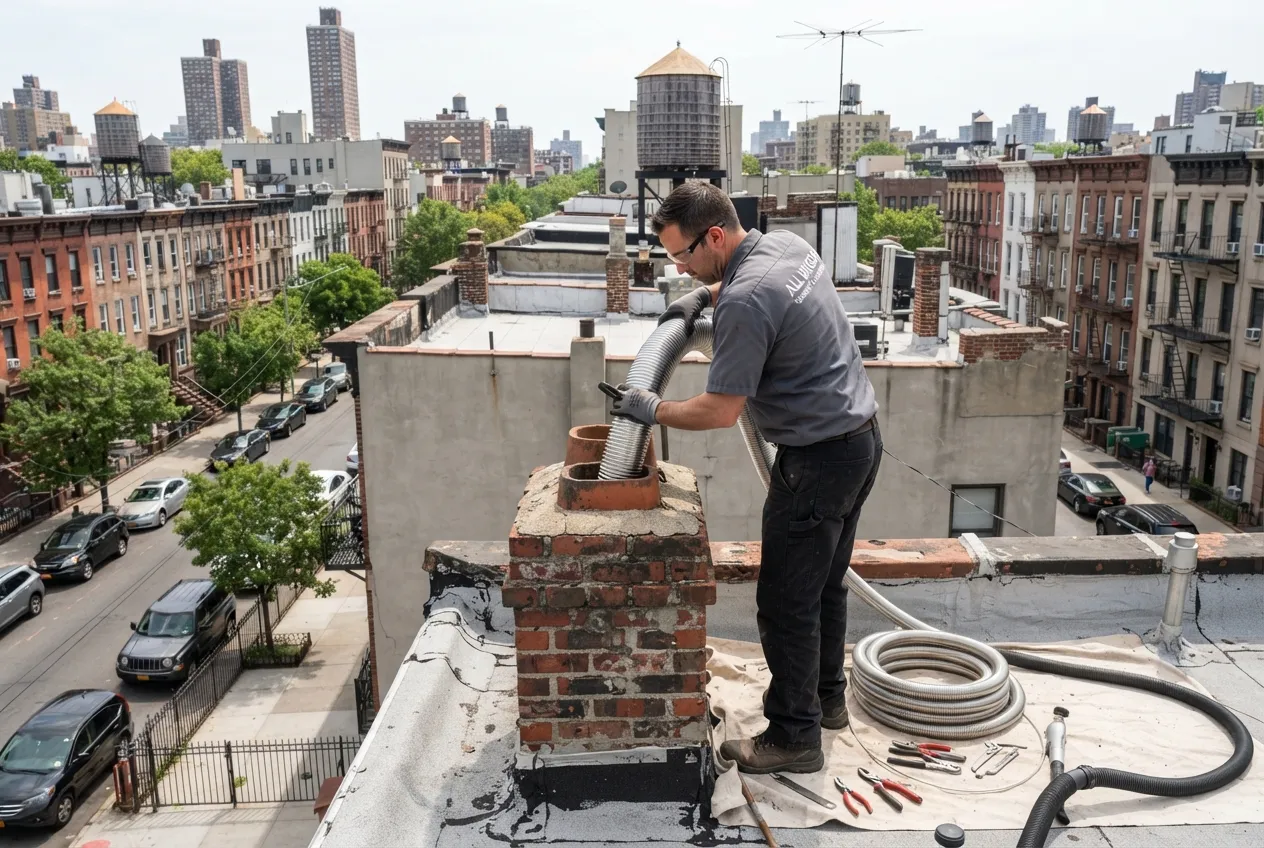
- Installation of a liner suited to the fuel type, with the connections and fittings the appliance requires
- A top plate and cap to seal the top of the flue and keep out rain and animals
- Insulation around the liner where the chimney and appliance call for it
- A draft test after installation and a final camera check
- A written summary and photos of the before and after condition
How our crew works inside your home and on the roof
Inside, the crew lays drop cloths from the door to the fireplace or appliance and seals the opening before cleaning starts. Rotary brushes clear the old flue while HEPA vacuums run to capture soot and dust, so it stays in the chimney instead of settling on your furniture. A camera goes up the flue before and after the work so you can see the condition of the lining for yourself.
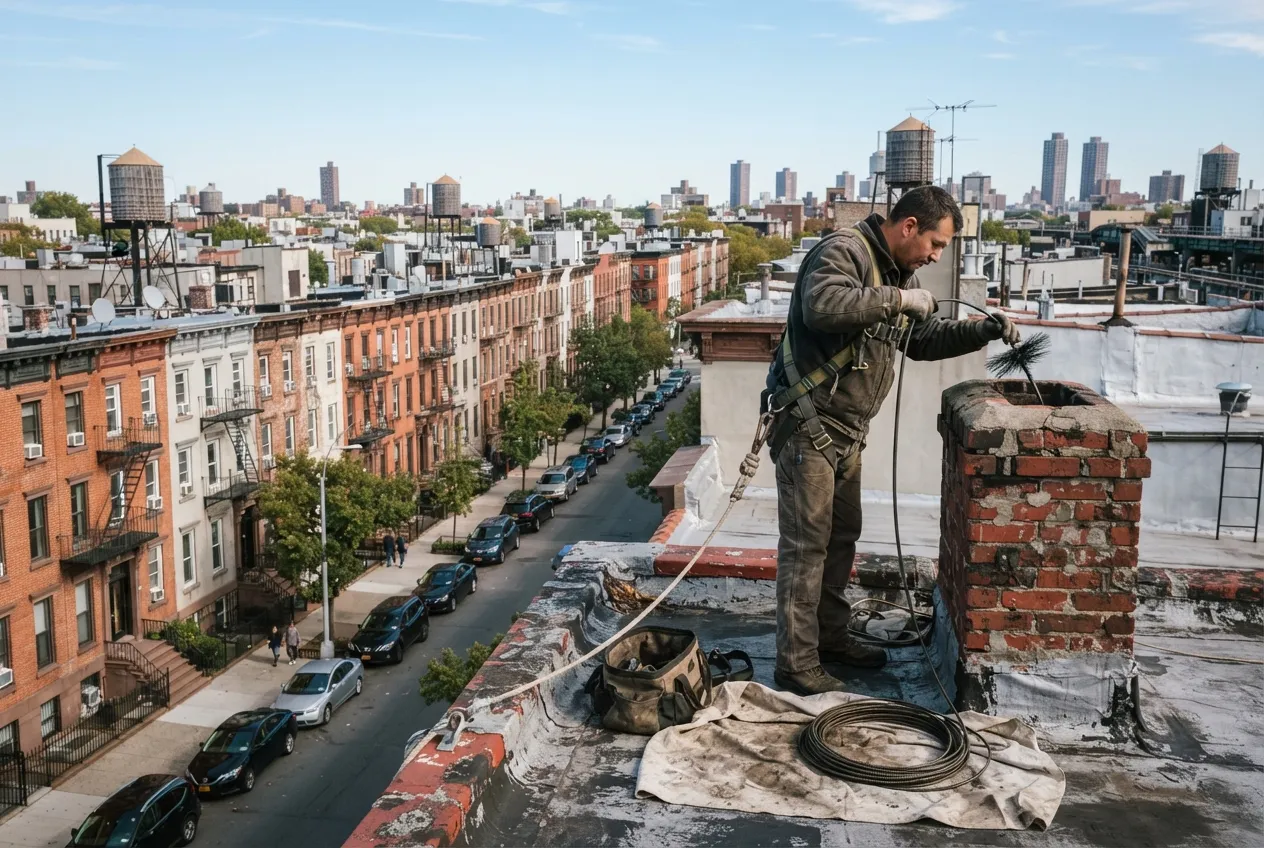
On the roof, the technicians use proper ladders and fall protection, check the crown, flashing and cap, and feed the new liner down from the top. In attached row houses and buildings with shared walls, we pay close attention to neighboring flues and roof access, and we let you know ahead of time if we need building staff or a neighbor's cooperation to reach the roof.
Time for your annual chimney check?
The standards we follow
The NFPA 211 standard calls for chimneys, fireplaces and vents to be inspected once a year. Chimney professionals use three inspection levels. A Level 1 inspection applies when nothing has changed. A Level 2 inspection applies when the system changes, such as a new appliance, a switch of fuel, or the sale of the home. A Level 3 inspection applies when a hidden hazard has to be reached by opening part of the chimney or building.
Installing a new liner, or relining after a fuel change, usually calls for at least a Level 2 inspection, which includes the camera work described above. In New York City, when a building converts its boiler from oil to gas, the chimney has to be evaluated as part of the job. A new liner is often needed because gas exhaust produces acidic condensate that can corrode a masonry flue over time.
What affects the price
We give you a written quote after the inspection, because every chimney is different. These are the main factors that shape the cost:
- Chimney height and how easy it is to reach and work safely on the roof
- The fuel type and appliance: wood, gas or oil, and whether it is a fireplace, stove, insert, boiler or water heater
- Flue size, shape and condition, including any offsets or bends
- How much creosote, soot or debris has to be removed first
- Whether broken tile must be removed, or masonry repaired, before the liner can go in
- Whether insulation, a new cap, or a further camera inspection is needed
How a visit works
When you contact us, we ask about your appliance, the age of the home, and any symptoms you have noticed. We schedule an inspection visit, run the camera, and walk you through what we see. If a liner is needed, you get a written scope and quote explaining the liner type, insulation and any repairs.
On installation day, the crew protects your floors, cleans the flue, installs and connects the liner, then tests the draft. We clean up before we leave and send you photos. Since New York City's heat season runs from October 1 through May 31, landlords and owners of heated buildings often schedule relining in late spring or summer so the boiler is back in service before October.
Chimney Liner Installation by city
- Chimney Liner Installation in YorkvilleLocal service & repairs
- Chimney Liner Installation in Carnegie HillLocal service & repairs
- Chimney Liner Installation in Upper East SideLocal service & repairs
- Chimney Liner Installation in Upper West SideLocal service & repairs
- Chimney Liner Installation in Manhattan ValleyLocal service & repairs
- Chimney Liner Installation in East HarlemLocal service & repairs
- Chimney Liner Installation in Lenox HillLocal service & repairs
- Chimney Liner Installation in Roosevelt IslandLocal service & repairs
- Chimney Liner Installation in Old AstoriaLocal service & repairs
- Chimney Liner Installation in Hallets PointLocal service & repairs
- Chimney Liner Installation in Lincoln SquareLocal service & repairs
- Chimney Liner Installation in Morningside HeightsLocal service & repairs