The short answer
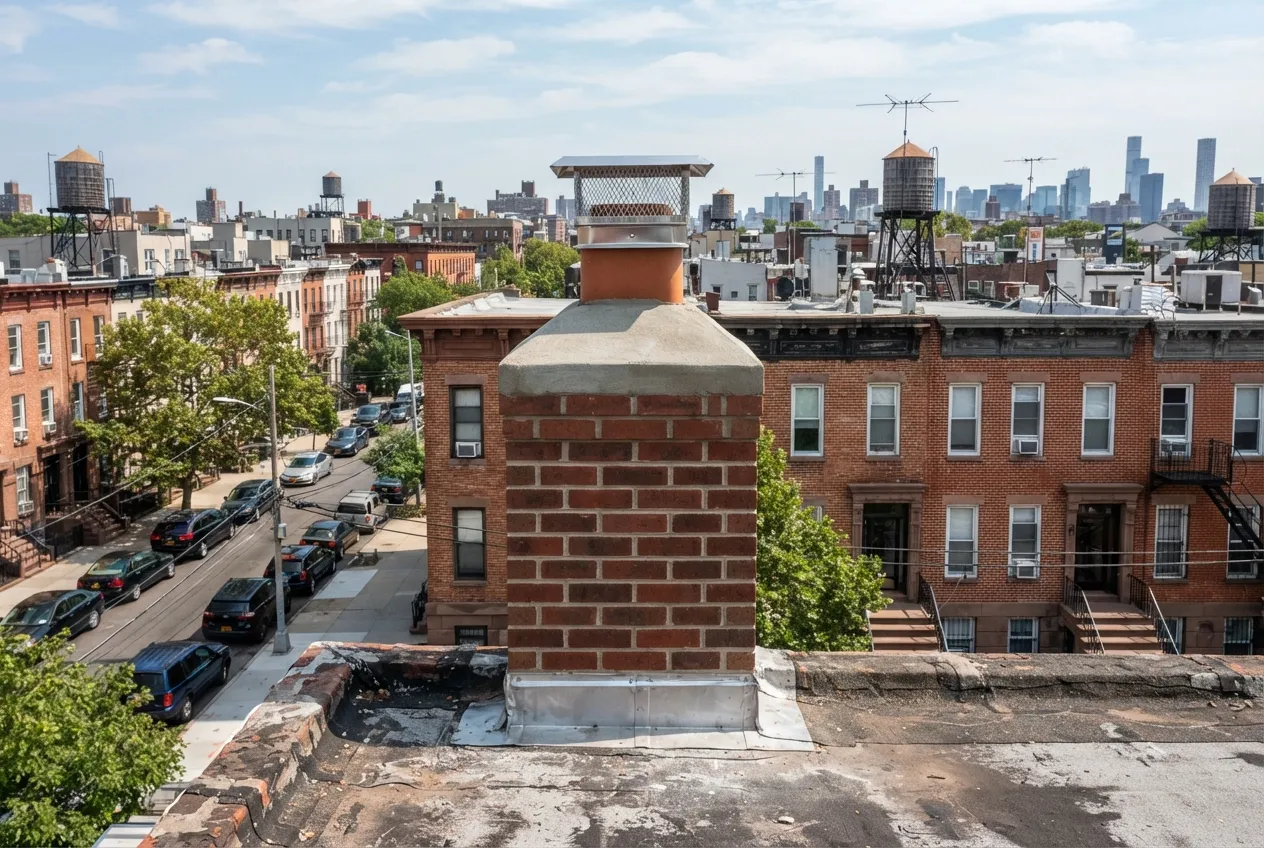
Chimney rebuilding means taking down damaged brick and mortar, usually from the roofline up, and relaying it with new materials, a new crown and properly sealed flashing. You likely need it if bricks are loose or spalling, mortar is crumbling, the stack leans, or water keeps reaching the firebox.
A chimney stands in the weather year-round. Rain, freeze-thaw cycles, wind and the heat and gases from your fireplace or boiler all wear on the brick and mortar. Small cracks can usually be repaired. When the damage spreads, with loose bricks, crumbling joints, a leaning stack or a crown that has failed, patching stops working and the chimney needs to be partly or fully rebuilt. AshVanta Chimney Services rebuilds damaged chimneys for homeowners in New York and nearby cities. This page covers the signs that point to a rebuild, what the work includes, how our certified technicians protect your home and roof, and what affects the cost.
Signs you need it
Most homeowners notice the problem from inside the house first, or from a neighbor's yard where they can see the top of the stack. Any one of these signs is worth an inspection. Several together often point to damage that a simple repair won't fix.
- Brick flakes, chips or mortar crumbs collecting in the firebox or on the smoke shelf
- White, chalky staining on the outside brick, which shows water is moving through the masonry
- Water in the firebox or damp stains on the ceiling or wall near the chimney
- Poor draft, or smoke rolling back into the room when you light a fire
- A smoke or creosote smell that lingers, especially in humid weather
- Bricks that are cracked, missing or have faces popping off
- A stack that leans, or gaps between the chimney and the house
What's included in a chimney rebuild
Every rebuild starts with an inspection so we know how far the damage goes. Some chimneys need only the top few feet rebuilt. Others need work down to the roofline or below. We explain the scope before any brick comes down. A typical rebuild includes:
- Inspection of the chimney exterior, crown, flashing and flue, including a camera inspection of the flue where needed
- Sweeping the flue with rotary brushes before work begins
- Careful removal of damaged brick and mortar down to sound masonry
- Relaying the chimney with matching brick and fresh mortar
- A new chimney crown shaped to shed water away from the flue
- New or resealed flashing where the chimney meets the roof
- Resetting or replacing flue tiles at the top of the stack, and a liner evaluation if needed
- A chimney cap to keep out rain, debris and animals
- Cleanup of the roof, yard and work areas, plus photos of the finished work
How our crew works inside your home and on the roof
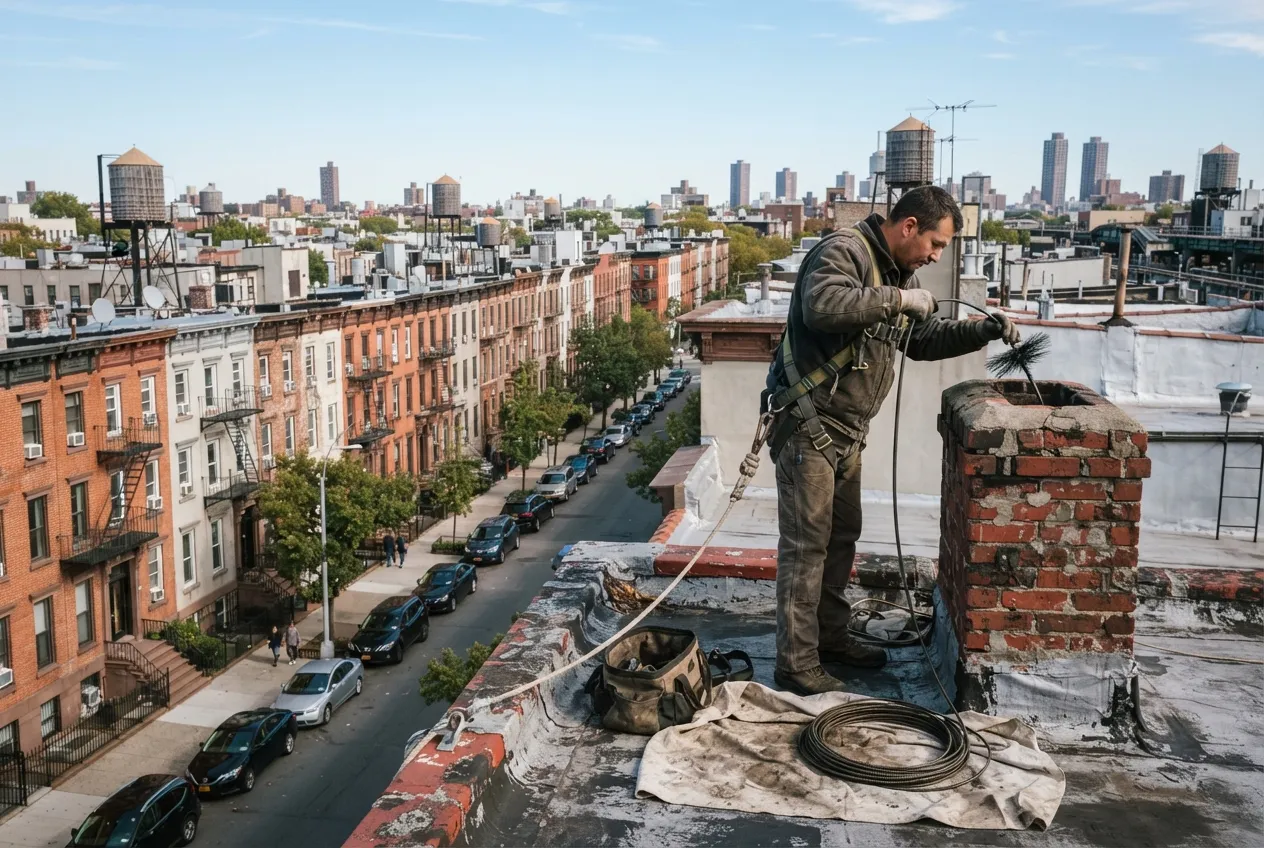
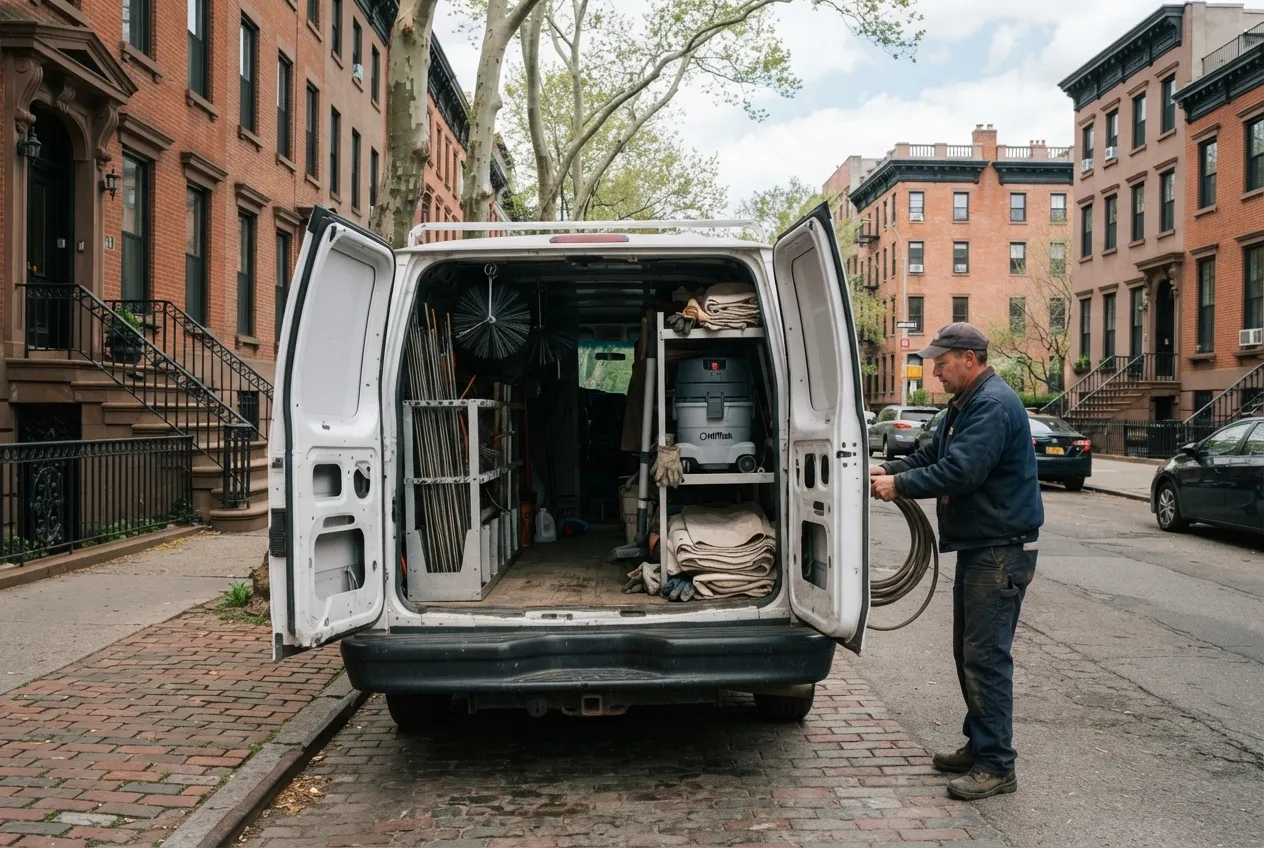
Most rebuilding happens outside, but we often need to work at the fireplace or appliance connection too. Inside, the crew lays drop cloths from the door to the fireplace, seals the fireplace opening, and runs HEPA vacuums while sweeping so soot and dust stay out of your living space. We use rotary brushes to clean the flue and a camera to check the flue walls and joints that can't be seen from the top or bottom.
On the roof, we set up safe access and protect the shingles, gutters and any roof surfaces near the chimney. Old brick and mortar are lowered down in a controlled way, not tossed, and we keep the work area tidy during the job. At the end of each day the chimney is covered so rain can't get into the open flue or the house.
Time for your annual chimney check?
The standard we follow
The NFPA 211 standard calls for chimneys, fireplaces and vents to be inspected once a year. Chimney professionals use three inspection levels. Level 1 applies when nothing has changed. Level 2 applies when the system changes, for example a new appliance or a switch of fuel, or when the home is sold. Level 3 applies when a hidden hazard has to be reached by opening part of the chimney or building. A rebuild almost always calls for at least a Level 2 inspection, and sometimes Level 3 if damage may extend inside a wall or attic.
If your home is converting a boiler from oil to gas, the chimney has to be evaluated as part of that work in New York City. A new liner is often needed, because gas exhaust produces acidic condensate that can corrode a masonry flue. A rebuild is a good time to handle both jobs together.
What affects the price
We don't quote a price until we've seen the chimney, because no two rebuilds are the same. The main factors are:
- Chimney height and how easy it is to reach the roof safely
- How much of the stack has to come down to reach sound masonry
- Flue size and condition, and whether tiles or a liner need replacing
- The fuel the chimney serves, such as wood, oil or gas
- How much soot or creosote buildup has to be cleaned first
- Whether a camera inspection, flashing replacement or other repair is needed
- Matching older or specialty brick
How a visit works
First, we schedule an inspection at a time that works for you. A certified technician checks the chimney from the roof, the fireplace or appliance, and the flue, and takes photos. You get a clear explanation of what we found and a written scope of work.
Once you approve the work, we schedule the rebuild around the weather, since mortar needs dry conditions to cure. In New York City, heat season runs from October 1 through May 31. If the chimney serves your heating system, it helps to plan the work before or between heating needs. After the rebuild, we walk you through the finished chimney, share photos and explain when to have it inspected again.