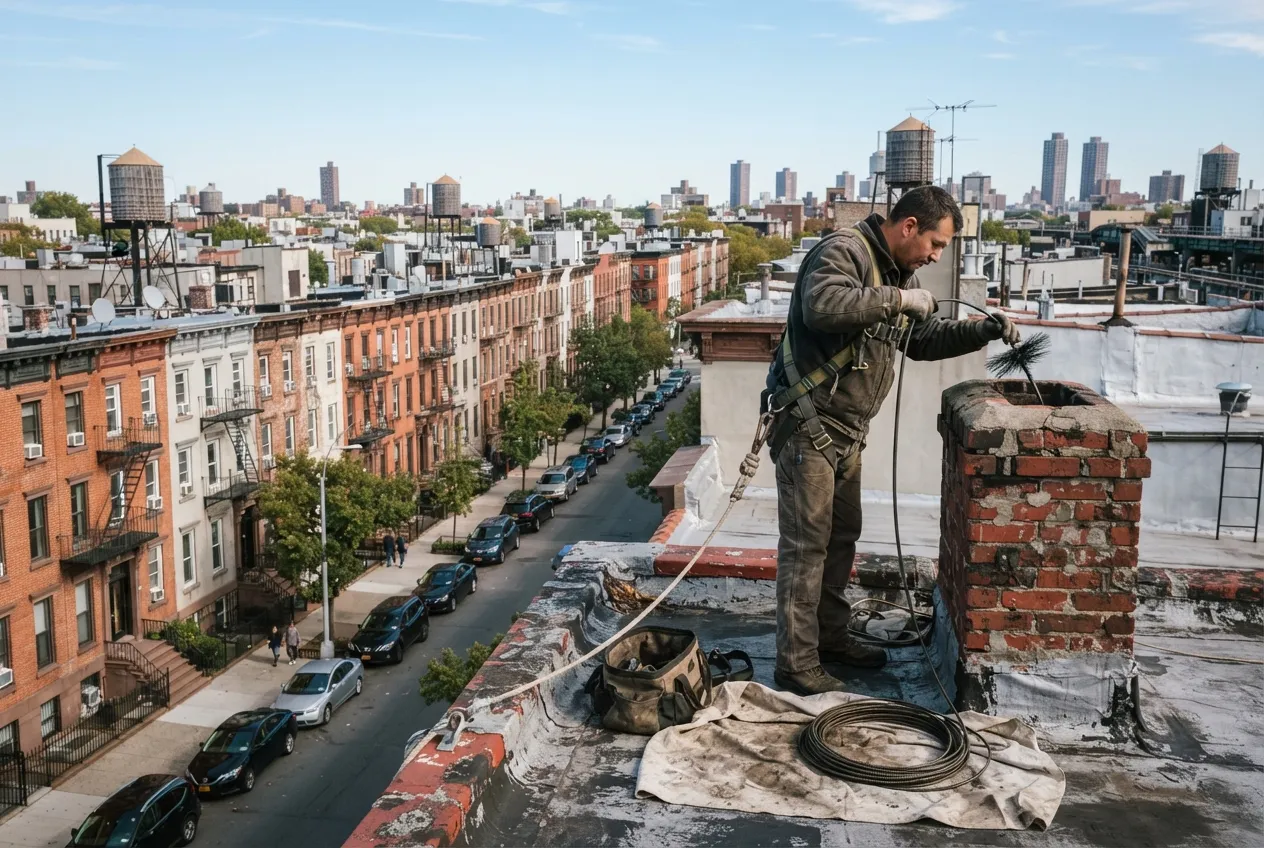
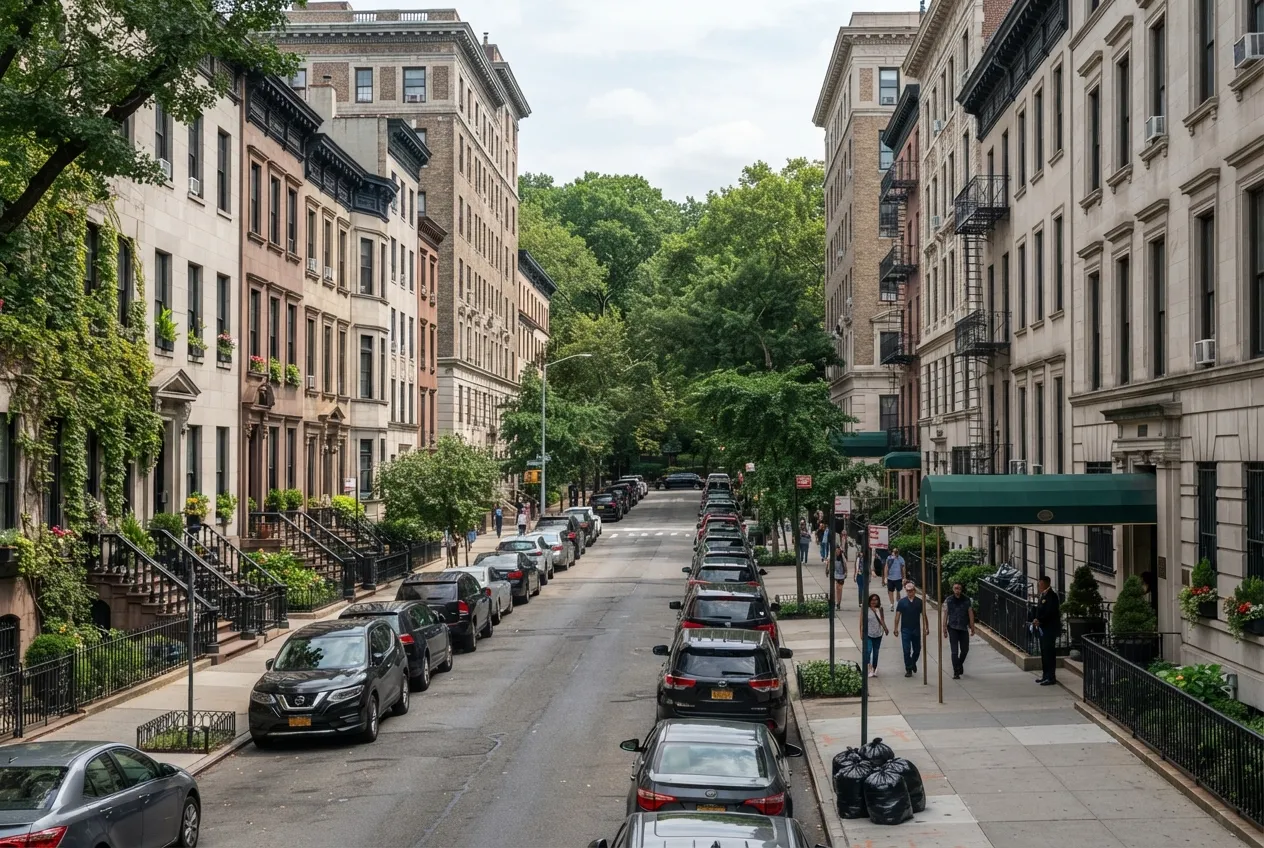
The short answer
A Carnegie Hill chimney usually needs a new liner when the original clay tiles are cracked, the flue was never lined, or a new appliance or fuel such as an oil-to-gas boiler conversion changes what the chimney has to vent. We inspect the full flue, size a liner to the appliance, and coordinate the installation with your building.
Many chimneys in Carnegie Hill were built long before today's boilers, furnaces and fireplace inserts existed. A liner is the protective channel inside the masonry that carries smoke and exhaust up and out of the building. When it is cracked, missing or the wrong size for the appliance, the chimney can't do its job safely. AshVanta Chimney Services installs chimney liners for brownstones, townhouses and pre-war apartment buildings across Carnegie Hill, working from our office in Yorkville, about a mile away. Our certified technicians inspect the flue first, explain what they found, and recommend a liner only when the chimney actually needs one.
Why older Carnegie Hill chimneys often need relining
Most homes in Carnegie Hill are older masonry. That includes rowhouses and brownstones with original fireplaces, and pre-war apartment buildings with tall chimneys serving a central boiler. Many of those flues were built with clay tile liners, and some older chimneys have no liner at all. Over decades, heating cycles, water getting in and settling can crack tiles and open mortar joints. Those gaps let heat and exhaust gases reach the brick and the framing around the chimney.
A damaged liner usually isn't visible from inside the room. These are common reasons we take a closer look:
- Pieces of tile or flaking masonry falling into the firebox or cleanout
- Water stains or white residue (efflorescence) on walls near the chimney
- Smoke or odors leaking into rooms or neighboring units
- A new stove, insert, furnace or boiler going in
- A camera inspection showing cracks, gaps or missing liner sections
Oil-to-gas conversions in pre-war buildings
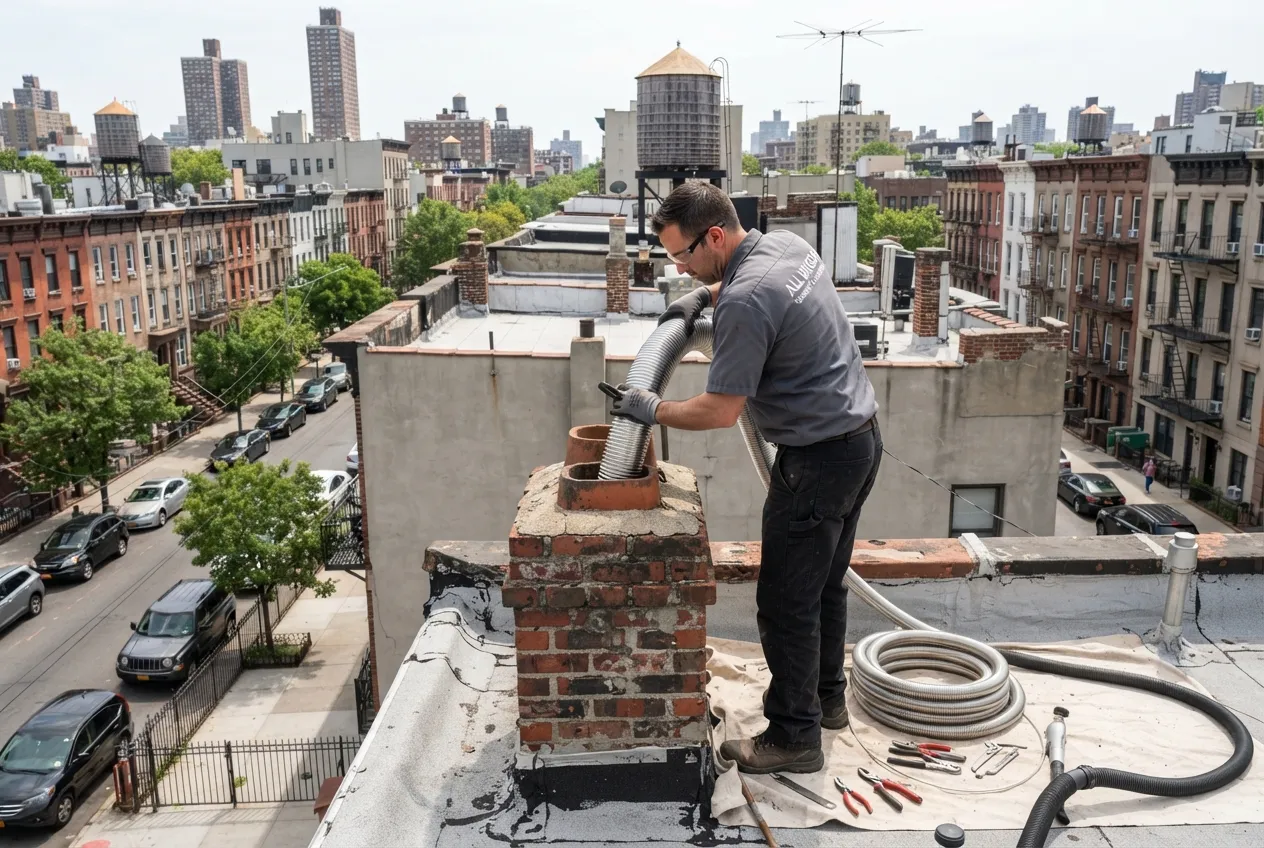
When a New York City building converts its boiler from oil to gas, the chimney has to be evaluated as part of the project. A new liner is often required, because gas exhaust produces acidic condensate that can corrode a masonry flue over time. In a pre-war co-op or rental building, the liner is usually one piece of a larger conversion that involves the boiler contractor and building management.
Timing matters. The city's heat season runs from October 1 through May 31, and building owners must keep apartments at the required minimum temperatures during that period. Scheduling liner work for the warmer months, or planning carefully so the boiler is down as briefly as possible, helps buildings keep up with those heating obligations. We coordinate with the boiler contractor so the liner is sized and ready when the new equipment is.
Choosing the right liner for your chimney
The NFPA 211 standard calls for a Level 2 inspection when a heating system changes, such as a new appliance or a switch in fuel, and when a home is sold. Liner work usually starts there. We inspect the full length of the flue, often with a camera, and measure it. The liner has to match the appliance it serves. If a flue is too large for a modern boiler or furnace, the exhaust can cool and condense inside it. If a flue is too small, it can't move enough smoke or gas.
Depending on the chimney and the appliance, we may recommend one of these options:
- A rigid or flexible stainless steel liner sized to a gas, oil or wood-burning appliance
- An insulated stainless liner where the chimney needs extra protection from heat transfer or condensation
- A cast-in-place liner that forms a new, smooth flue inside a deteriorated masonry chimney
- A repair or partial reline when the damage is limited to one section
Time for your annual chimney check?
What installation looks like in a Carnegie Hill home
Most liners are installed from the roof down. In a townhouse that means rooftop access, and in an apartment building it means approval from building management. Many co-op and condo boards require advance scheduling, set work hours, and protection for lobbies and elevators, and we plan around those rules. Inside, we cover floors and furniture near the fireplace or boiler room and contain soot and debris.
Brownstones and rowhouses often have chimneys that are shared with or built close to neighboring buildings. Before work begins, we confirm which flue serves which appliance. Once the liner is set, we connect it to the appliance, seal the top, add a cap where appropriate, and show you photos of the finished work. If a hidden problem can only be reached by opening part of the chimney or a wall, that is a Level 3 inspection. We'll explain why it's needed before anything is opened.
After the liner is in
A new liner doesn't end the need for maintenance. NFPA 211 calls for chimneys, fireplaces and vents to be inspected once a year. When nothing about the system has changed, a routine Level 1 inspection is usually enough. Wood-burning fireplaces still build up creosote on a new liner, and boiler chimneys are worth checking before each heat season.
Beyond Carnegie Hill, we install and inspect chimney liners on the Upper East Side, in Yorkville and Lenox Hill, on Roosevelt Island and on the Upper West Side.
More services in Carnegie Hill
- Chimney Sweep in Carnegie HillLocal service & repairs
- Chimney Inspection in Carnegie HillLocal service & repairs
- Chimney Repair in Carnegie HillLocal service & repairs
- Air Duct Cleaning in Carnegie HillLocal service & repairs