The short answer
A chimney sweep removes the creosote, soot and debris that build up in your flue and can cause chimney fires or poor draft. The NFPA 211 standard calls for chimneys to be inspected once a year, and a yearly sweep and inspection is the simplest way to keep a fireplace safe to use. AshVanta's certified crew cleans from the firebox to the cap, keeps your room clean, and explains what we found.
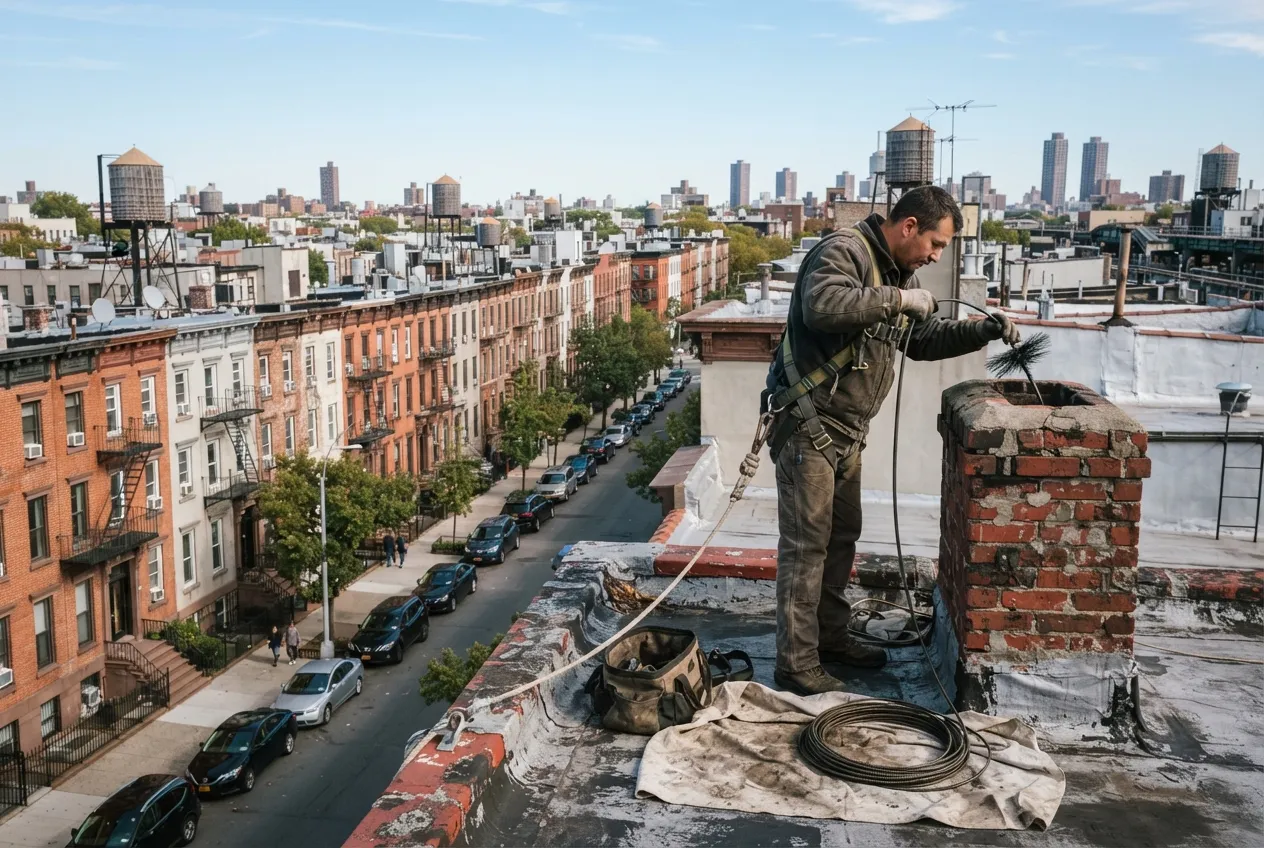
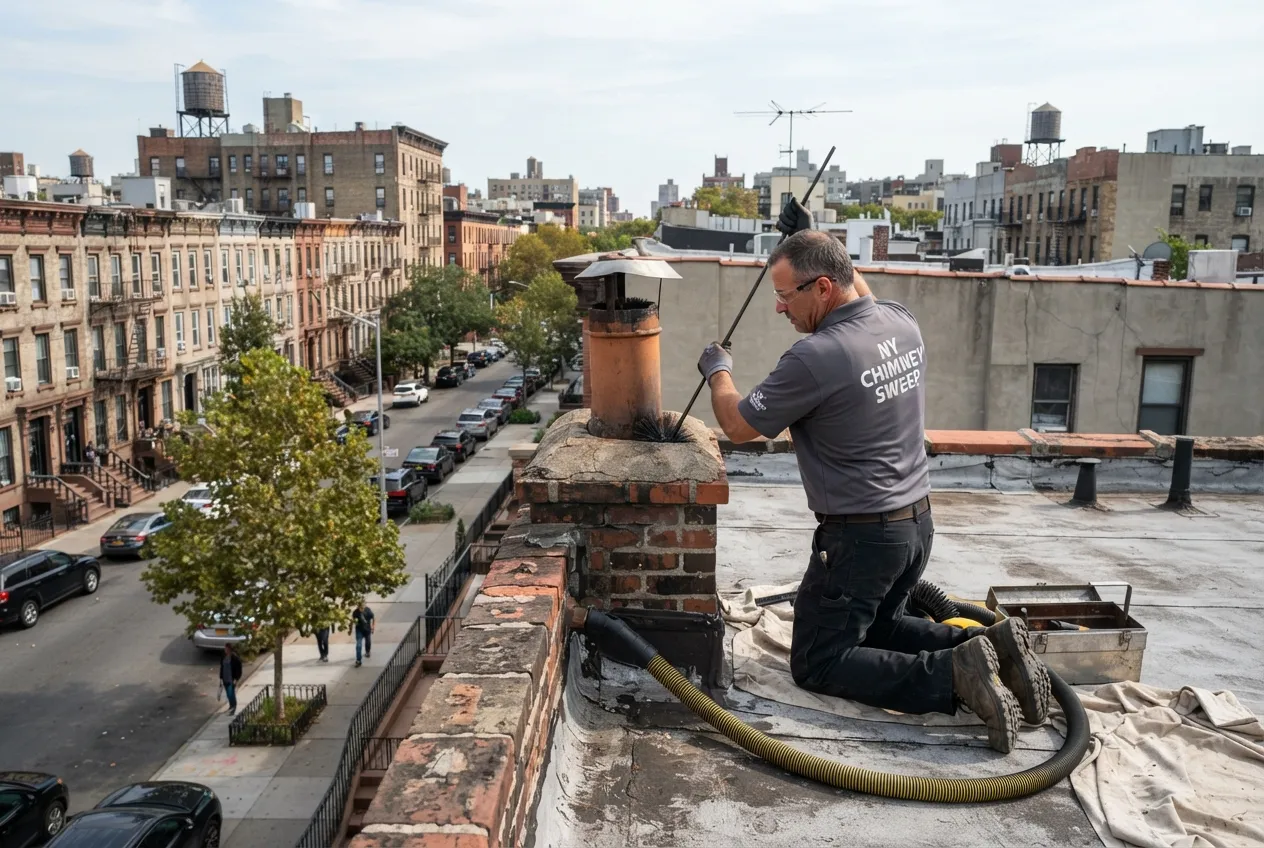
A chimney sweep removes the soot and creosote that build up inside a flue each time you burn wood. It also clears the debris, nests and loose material that keep a chimney from venting smoke safely. AshVanta Chimney Services sweeps fireplace and wood stove chimneys for homeowners in New York City and nearby cities, in brownstones, row houses and detached homes. Our certified technicians clean the flue, smoke chamber and firebox, inspect the system as they work, and tell you plainly what they found, including anything that should be fixed before your next fire.
Signs you need a chimney sweep
Most homeowners call us because something about the fireplace has changed. It smells, smokes, draws poorly, or something is falling into the firebox. Any of these is worth a look before you light another fire.
If the chimney hasn't been swept or inspected in more than a year, that alone is reason to schedule, even if nothing seems wrong.
- A smoky or tar-like creosote smell, often stronger on humid days or when the air conditioning is running
- Poor draft: smoke rolling into the room, or fires that are hard to start and keep going
- Soot, debris, or flakes of brick and mortar collecting in the firebox
- White staining on the chimney brick, inside or outside, a sign that moisture is moving through the masonry
- Scratching, chirping or flapping sounds from birds, squirrels or raccoons in the chimney
- Water dripping or pooling in the firebox after rain
- Black, flaky, crusty or shiny deposits on the damper or the flue walls
What's included in every chimney sweep
A sweep covers the whole path smoke travels, not just the part you can see from the hearth. Here is what we do on a standard visit.
Some creosote hardens into a glazed, tar-like coating that brushing alone won't remove. If we find it, we'll show you, explain what it means, and describe the options for removing it.
- Protect the hearth, nearby floors and furniture before any work starts
- Sweep the flue from top to bottom with rotary brushes sized to your flue
- Clean the smoke chamber and smoke shelf
- Clean the damper and check that it opens, closes and seals
- Remove soot, creosote and debris from the firebox
- Clear nesting material and other blockages that can be safely reached
- Perform a Level 1 inspection of the readily accessible parts of the chimney
- Check the cap, crown, flashing and visible masonry from the roof when access is safe
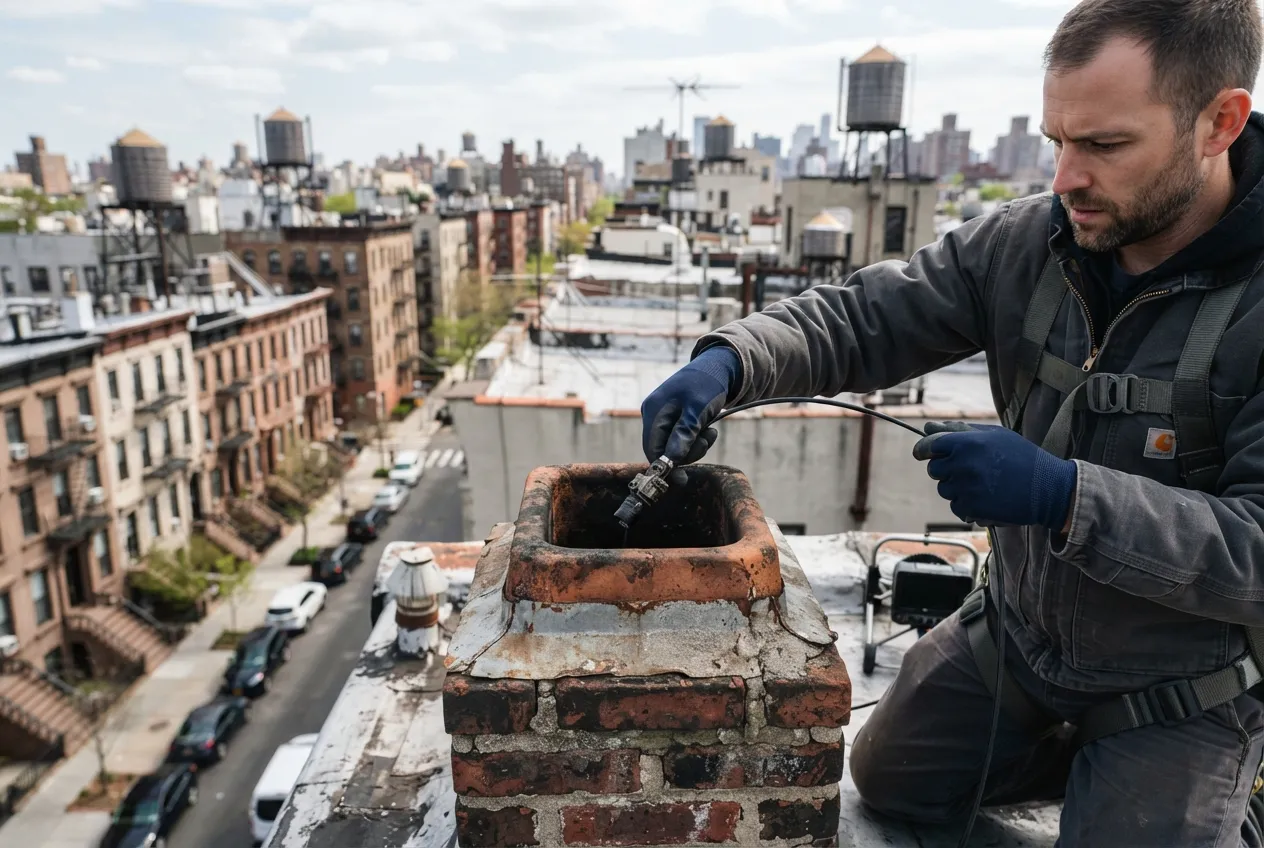
- Use a camera to view the flue interior where the job calls for it
- Give you a plain-language summary of findings, with photos when helpful
How our crew works in your home and on the roof
Inside, we start by laying drop cloths from the door to the fireplace and around the hearth. We seal the fireplace opening and run a HEPA vacuum during the sweep, which pulls air into the chimney so soot stays in the flue instead of drifting into your room. Rotary brushes on flexible rods scrub the flue walls, and the loosened material is vacuumed out of the firebox and smoke chamber. When a closer look is needed, we run a camera up the flue to check for cracks, gaps between liner tiles, and deposits we can't see from below.
On the roof, a technician checks the chimney cap and screen, the crown, the flashing where the chimney meets the roof, and the top of the flue. In attached New York buildings, roof access is often through a hatch or a neighboring roof, so we'll ask about access when you book. If the roof isn't safe to reach, we sweep from below and tell you which parts we couldn't see.
Before we leave, we vacuum the work area, fold up the drop cloths, and walk you through what we found.
Time for your annual chimney check?
The standard we follow: NFPA 211 and the three inspection levels
The NFPA 211 standard calls for chimneys, fireplaces and vents to be inspected once a year. We pair your sweep with that yearly inspection so cleaning and checking happen in one visit.
Chimney professionals use three inspection levels. Level 1 applies when nothing about the system has changed, and it is part of every standard sweep. Level 2 applies when something changes, such as a new appliance, a switch of fuel, or the sale of the home, and it typically includes a camera inspection of the flue. Level 3 applies only when a hidden hazard has to be reached by opening part of the chimney or the building.
Fuel changes deserve special attention in New York. When a building converts its boiler from oil to gas, the chimney has to be evaluated as part of the work, and a new liner is often needed because gas exhaust produces acidic condensate that can corrode a masonry flue.
What affects the price of a chimney sweep
Every chimney is different, so we quote after we know a few details about yours. These are the main factors:
- Chimney height and how hard the roof is to reach
- Fuel type: wood fireplace, wood stove, or a flue serving another appliance
- Flue size, shape and condition, including whether it is lined
- How much soot and creosote has built up, and whether any of it is glazed
- Whether a camera inspection is needed, such as a Level 2 inspection
- Whether repairs are needed, like a new cap, crown work or damper replacement
How a chimney sweep visit works
We keep the process simple and tell you what to expect at each step.
- Book a visit and tell us about your fireplace, your building type, and any problems you've noticed
- Let the fireplace cool completely, ideally without a fire for at least a day before the visit
- Our certified technicians arrive, protect the work area, and confirm what you're seeing
- We sweep, inspect, and check the roof side when it's safe to do so
- We clean up and review findings with you, with photos when useful
- If repairs are needed, we explain them and give you a separate quote. Nothing extra is done without your approval
Chimney Sweep by city
- Chimney Sweep in YorkvilleLocal service & repairs
- Chimney Sweep in Carnegie HillLocal service & repairs
- Chimney Sweep in Upper East SideLocal service & repairs
- Chimney Sweep in Upper West SideLocal service & repairs
- Chimney Sweep in Manhattan ValleyLocal service & repairs
- Chimney Sweep in East HarlemLocal service & repairs
- Chimney Sweep in Lenox HillLocal service & repairs
- Chimney Sweep in Roosevelt IslandLocal service & repairs
- Chimney Sweep in Old AstoriaLocal service & repairs
- Chimney Sweep in Hallets PointLocal service & repairs
- Chimney Sweep in Lincoln SquareLocal service & repairs
- Chimney Sweep in Morningside HeightsLocal service & repairs