The short answer
A chimney liner protects the masonry and keeps exhaust moving safely out of your Morningside Heights building. A new liner is often needed after an oil-to-gas boiler conversion or when an inspection finds a damaged flue. We inspect first, then size and install a liner matched to your appliance.
A chimney liner is the protective channel inside your flue that carries smoke and exhaust gases up and out of the building. In Morningside Heights, many chimneys serve older masonry buildings, from rowhouses and brownstones to pre-war apartment buildings, where the original flue may be cracked, worn, or not matched to the heating equipment it now serves. AshVanta Chimney Services installs chimney liners for homeowners and building owners in ZIP codes 10027 and 10115, working from our office in Yorkville, about 2 miles south. Our certified technicians inspect the flue first, explain what we find, and recommend a liner only when it fits the appliance and the chimney.
Why Liners Matter in Older Morningside Heights Buildings
Much of the housing in Morningside Heights is older masonry construction. Brick chimneys in rowhouses, brownstones, and pre-war apartment buildings were often built with clay tile flues or no liner at all. Over decades, heat, moisture, and freeze-thaw cycles can crack tiles, wear down mortar joints, and leave gaps where heat and exhaust can reach the surrounding brick and framing.
A sound liner does three jobs. It keeps heat away from combustible materials, it shields masonry from corrosive byproducts, and it gives exhaust a correctly sized path so the appliance drafts properly. When a flue is too large, too small, or damaged, gases can cool and condense, draft can weaken, and exhaust can linger where it should not.
Relining After an Oil-to-Gas Conversion
Many Manhattan buildings have moved or are planning to move their boilers from oil to gas. When a New York City building makes this change, the chimney has to be evaluated as part of the work. A new liner is often needed because gas exhaust produces acidic condensate that can corrode a masonry flue that was fine for oil.
If you are planning a conversion, bring us in early. We can inspect the existing flue, confirm whether it can safely serve the new equipment, and coordinate liner sizing with the appliance specifications so the chimney is ready when the new boiler goes in.
We Inspect Before We Reline
The NFPA 211 standard calls for chimneys, fireplaces, and vents to be inspected once a year. Chimney professionals use three inspection levels. A Level 1 inspection fits when nothing has changed. A Level 2 inspection applies when the system changes, such as a new appliance or a switch of fuel, or when a home is sold. A Level 3 inspection is used when a hidden hazard has to be reached by opening part of the chimney or building.
Because relining usually follows a change in the system or a problem we have found, most liner projects start with a Level 2 inspection, which typically includes a camera view of the flue interior. We share what we see so you can make an informed decision.
- Cracked, shifted, or missing flue tiles
- Eroded mortar joints or spalling inside the flue
- Signs of condensate damage or staining on walls near the chimney
- A flue that is the wrong size for a new or replaced appliance
- Planned boiler, furnace, or water heater replacement or fuel change
Time for your annual chimney check?
Choosing the Right Liner for Your Chimney
There is no single liner that suits every chimney. We look at the appliance type, the fuel, the flue dimensions, the height and bends of the chimney, and the condition of the masonry before recommending a system.
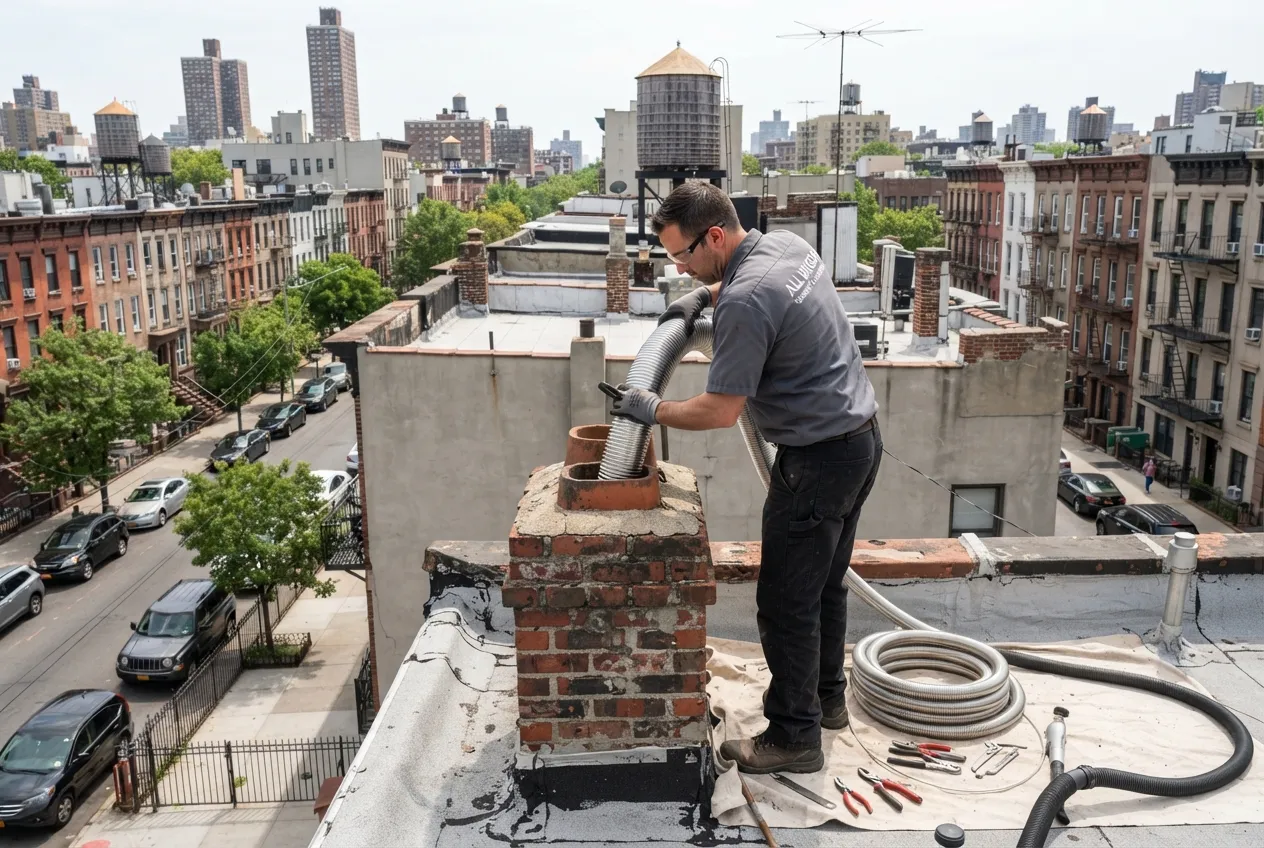
Stainless steel liners are common for gas and oil appliances and for chimneys with offsets, since they can be fed down an existing flue. Cast-in-place liners can rebuild the interior surface of a damaged masonry flue. Clay tile replacement may suit some wood-burning fireplaces. We explain the tradeoffs of each option for your building in plain terms, including access, disruption, and how long the work is likely to take.
Planning Around Heat Season
New York City's heat season runs from October 1 through May 31, when building owners must keep apartments heated to the city's minimum temperatures. For buildings with a central boiler, relining during those months has to be scheduled carefully so heat is not interrupted longer than necessary.
When possible, we recommend scheduling inspections and liner work in late spring or summer. If a problem turns up mid-season, we will talk through options for keeping downtime short. We also serve nearby Manhattan Valley, the Upper West Side, East Harlem, Carnegie Hill, and Yorkville.
More services in Morningside Heights
- Chimney Sweep in Morningside HeightsLocal service & repairs
- Chimney Inspection in Morningside HeightsLocal service & repairs
- Chimney Repair in Morningside HeightsLocal service & repairs
- Air Duct Cleaning in Morningside HeightsLocal service & repairs