
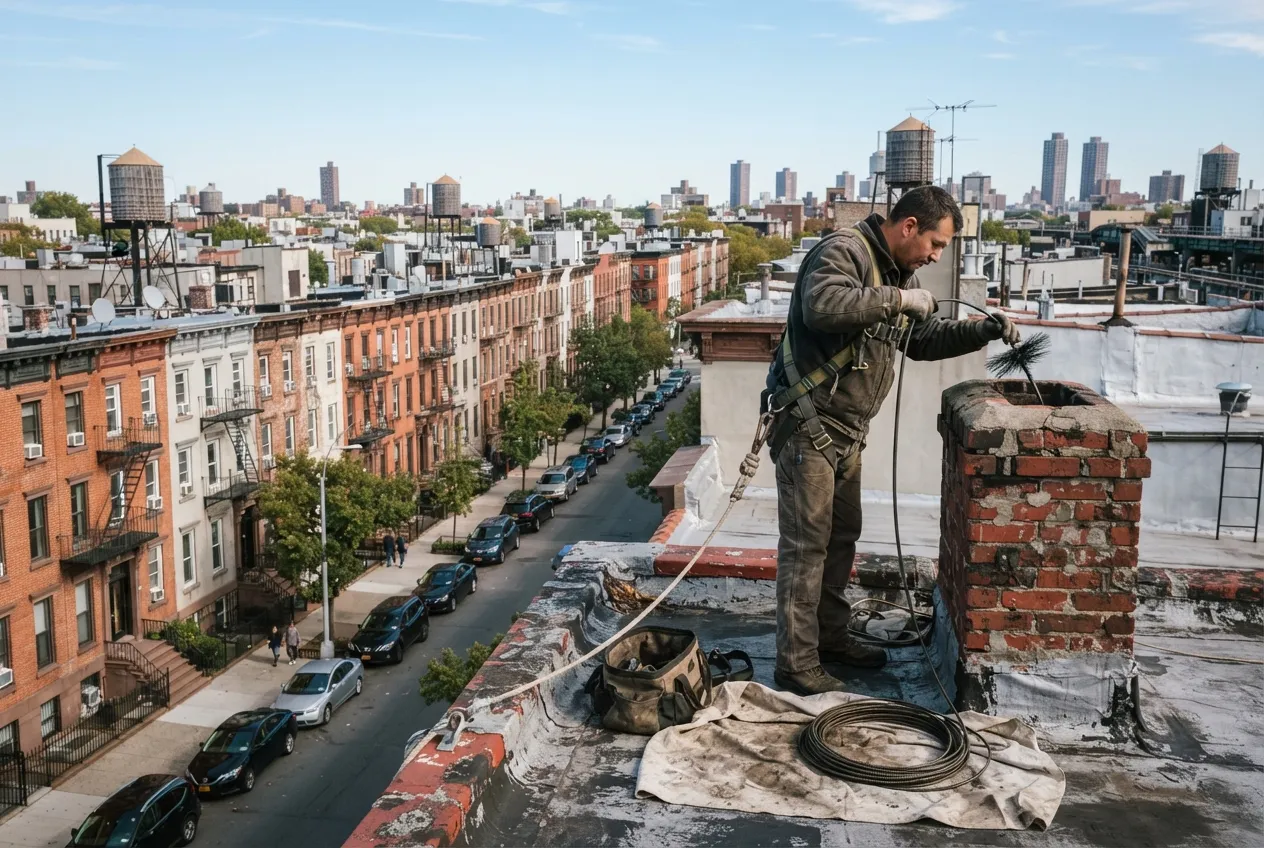
What Chimney and Air Duct Work Costs in New York, and Why
Serving New York and nearby cities.
- Diagnosis before any repair
- Photos of every finding
- Written price before we start
Homeowners often ask us for a price over the phone before anyone has seen the chimney, the ducts, or the building. We understand why. But chimney and duct work in New York varies a lot from one home to the next, and a number given without seeing the job is usually a guess. This page explains what drives the cost of each service we offer, how we arrive at a price, and why we put that price in writing before any work starts. We don't publish a price list. We want you to know what you're paying for and why.
What affects the price of a chimney sweep
A sweep removes soot, creosote, and debris from the flue, smoke chamber, and firebox. Two chimneys that look alike from the street can take very different amounts of time and equipment to clean.
Fuel type matters. A wood-burning fireplace that gets heavy use builds up creosote, and glazed creosote takes more work to remove than loose soot. Oil and gas flues collect different residue and may need different tools. Flue size and shape matter too. Older masonry chimneys sometimes have oversized or irregular flues, and some homes have several flues serving a fireplace, a boiler, and a water heater.
- Height of the chimney and whether we need roof access, and how safe that access is
- Fuel burned: wood, oil, or gas
- Number of flues and their size and shape
- How much buildup there is and whether it has glazed
- Blockages such as nests, fallen masonry, or debris
- Access inside the home, including furniture, finished rooms, and building rules
Chimney inspections: Level 1 versus Level 2
The national chimney safety standard, NFPA 211, calls for chimneys, fireplaces, and vents to be inspected once a year. Inspections come in three levels, and the level sets the cost.
A Level 1 inspection fits when nothing about the system has changed. We check the readily accessible parts of the chimney and appliance connection. A Level 2 inspection is needed when something changes, such as a new appliance or a switch from oil to gas, or when the home is being sold. It covers more ground and usually includes a camera run through the full length of the flue to look for cracks, gaps, and deterioration you can't see from the ends. That takes more time and equipment, so it costs more. A Level 3 inspection is reserved for cases where a hidden hazard can only be reached by opening part of the chimney or building. We only recommend it when there is a real reason.
Repairs, liners, and rebuilding
Repair costs depend on what is wrong and how far it has gone. Fixing a damper or replacing a chimney cap is a contained job. Repointing deteriorated mortar, repairing a crown, or rebuilding a chimney above the roofline involves more materials, more labor, and often staging or roof work.
Liner installation depends on the flue's size, height, and condition, the appliance it serves, and the liner material that fits that appliance. When a New York City building converts its boiler from oil to gas, the chimney has to be evaluated as part of the work. A new liner is often needed because gas exhaust produces acidic condensate that can corrode a masonry flue. Waterproofing, chase covers, and caps are priced by the size of the chimney and how easy it is to reach.
Air duct and dryer vent cleaning
Duct cleaning price depends on the system, not the square footage alone. We look at how many supply vents and returns there are, how the ductwork runs, what it is made of, and how much dust and debris it holds. The EPA advises cleaning ducts when there is substantial visible mold growth, vermin, or excessive dust and debris. It also notes that duct cleaning has not been shown to prevent health problems. We tell you honestly whether your ducts need cleaning at all, and we are careful about chemical treatments.
Dryer vent cleaning depends on the length of the vent run, the number of bends, and where it exits: a wall, the roof, or a shared building shaft. This matters for safety. The U.S. Fire Administration reports that failure to clean is the leading factor contributing to home clothes dryer fires.
Apartments, co-ops, and building access
Manhattan and the other boroughs add access considerations that suburban price lists don't account for. Many co-ops and condos require advance scheduling, a certificate of insurance on file with management, use of a service elevator, or work only during set hours. Roof access may go through the super. Shared flues and vent shafts can mean coordinating with building staff. Demand also rises around the city's heat season, which runs from October through May, so booking ahead can make scheduling easier.
Why we give a written price after we see the job
Once we have looked at the chimney, ducts, or vent, we give you a written price that describes the work. You can review it before anything starts. If we find something during the job that changes the scope, we stop and explain it before doing more.
Be cautious of very cheap advertised whole-house duct cleaning. The EPA warns consumers to research the process before responding to these offers. Very often the low price covers only a quick pass. Once the crew is inside, the real work gets added on: extra charges per vent, sanitizers, mold treatments, or urgent repairs. A clear written price from the start avoids that.
Can you give me a price over the phone?
We can talk through your situation and tell you what usually affects the cost. A firm price comes in writing after a certified technician sees the chimney, ducts, or vent, because access and condition change the work a lot.
Why does a Level 2 inspection cost more than a Level 1?
A Level 2 inspection covers more of the system and usually includes a camera run through the entire flue. It takes more time and equipment, and it is called for when the system changes or the home is sold.
Does switching from oil to gas affect chimney costs?
Often, yes. The chimney has to be evaluated as part of the conversion, and many masonry flues need a new liner because gas exhaust creates acidic condensate that can corrode them.
Do I really need my air ducts cleaned?
Not always. The EPA recommends it when there is substantial visible mold, vermin, or excessive dust and debris. We will tell you plainly if cleaning isn't needed.
Does living in a co-op or apartment change the price?
It can. Building rules about scheduling, elevator use, roof access, and paperwork can add time. We factor these in when we write up your price.
What if you find more problems during the job?
We stop, show you what we found, and explain your options before doing any added work. Nothing beyond the written scope happens without your approval.
Find out what your chimney or vents need
Tell us about your home, what you have noticed, and when you are available. We will set up an inspection, show you what we find, and give you a written price before any work begins.