The short answer
Fireplace and damper repair fixes the parts that control smoke and heat: the damper, the firebox brick and mortar, and the smoke chamber above it. If your fireplace smokes, smells, leaks or the damper sticks, a repair visit identifies the cause and corrects it, following the NFPA 211 standard for chimney safety.
A fireplace that smokes into the room, a damper that won't close, or firebrick that crumbles when you sweep the ash are signs that the system needs repair, not just cleaning. AshVanta Chimney Services repairs fireplaces and dampers for homeowners in New York City and nearby communities, from brownstone parlor fireplaces to wood-burning inserts in suburban homes. Our certified technicians find out what is actually failing, explain it in plain terms with photos, and fix it so the fireplace drafts properly and the damper seals when it isn't in use.
Signs you need it
Most fireplace and damper problems give warning before they become serious. Older masonry fireplaces, common across New York's row houses and prewar homes, often have original cast-iron dampers and firebrick that have taken decades of heat and moisture. If you notice any of the following, it is worth having the fireplace looked at before the next fire.
- Smoke or creosote smell in the room, especially on humid days or when the heat is running
- Poor draft, with smoke rolling out of the fireplace opening instead of rising up the flue
- Debris, mortar sand or brick flakes collecting in the firebox
- White staining on the brick, a sign that water is moving through the masonry
- Water in the firebox or rust stains on the damper after rain
- Animal noises such as scratching or chirping above the damper
- A damper that sticks, won't open fully, won't close, or lets in cold air even when shut
What's included
Every repair visit starts with an inspection of the fireplace and the lower flue so the work addresses the cause rather than the symptom. Depending on what we find, the job can include any of the items below. We explain each recommended item before any work begins.
- Inspection of the firebox, damper, smoke chamber and visible flue
- Freeing, adjusting or replacing a stuck or warped throat damper
- Replacing a broken damper handle, chain or pivot
- Installing a top-sealing damper at the top of the flue when the original damper can't be saved
- Replacing cracked or spalled firebrick
- Repointing deteriorated mortar joints in the firebox with heat-rated refractory mortar
- Replacing worn refractory panels in prefabricated fireplaces
- Smoothing and sealing the smoke chamber where rough or open masonry is hurting draft
- Sweeping loose debris and creosote from the work area
- Photos of the before and after condition
How our crew works in your home and on the roof
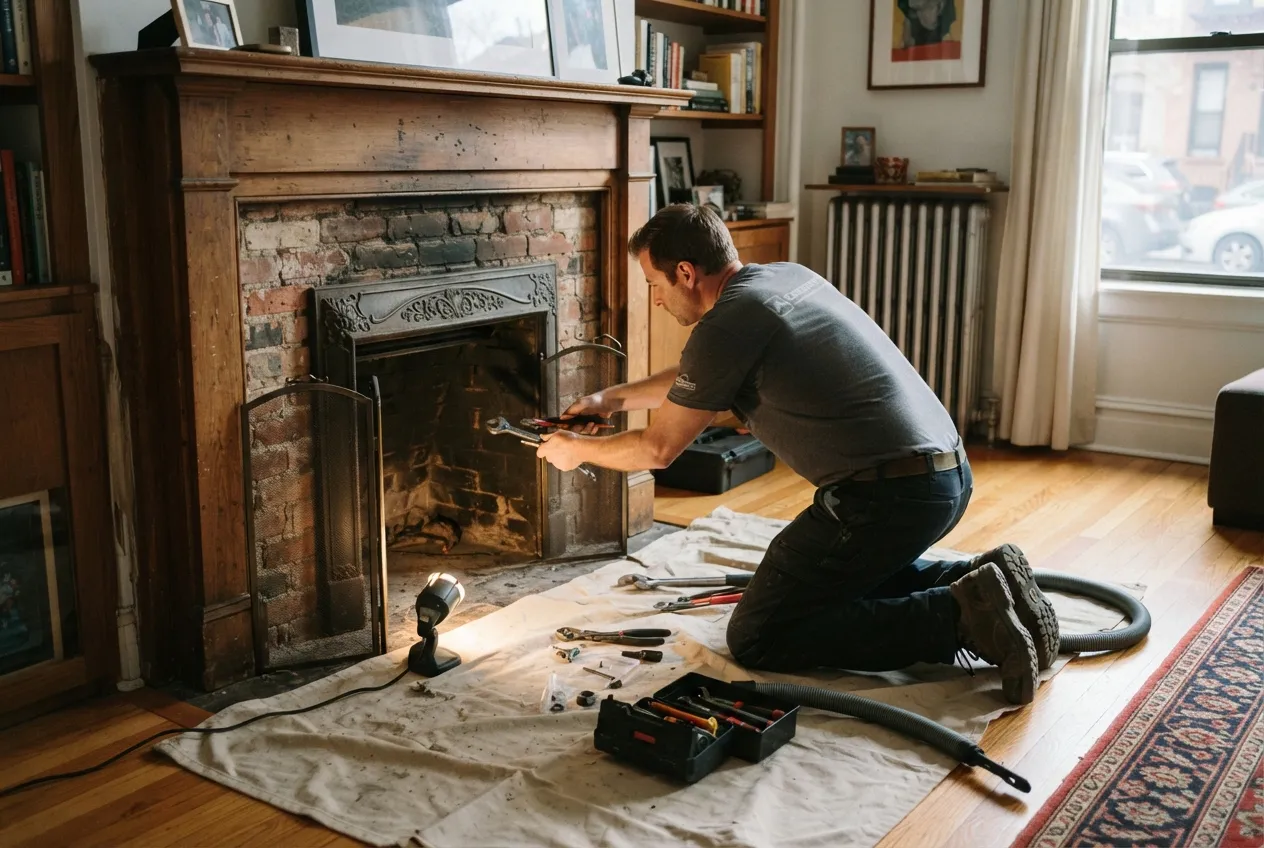
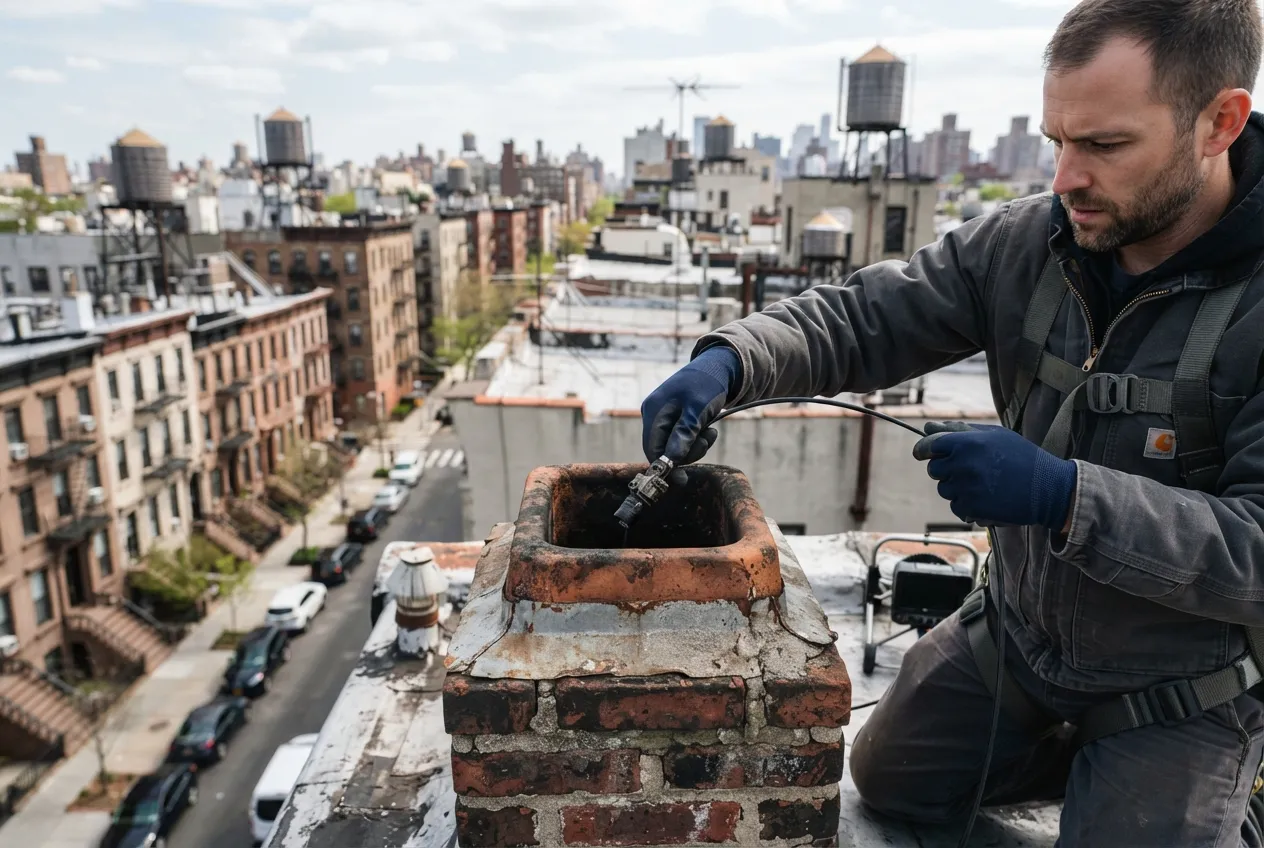
Inside, we lay drop cloths from the door to the hearth and cover nearby furniture and flooring before touching the fireplace. HEPA vacuums run during sweeping and masonry work to capture soot and dust at the source. Rotary brushes clear the damper area and lower flue so we can see the masonry clearly, and where the problem may extend higher, we run a camera up the flue to record its condition.
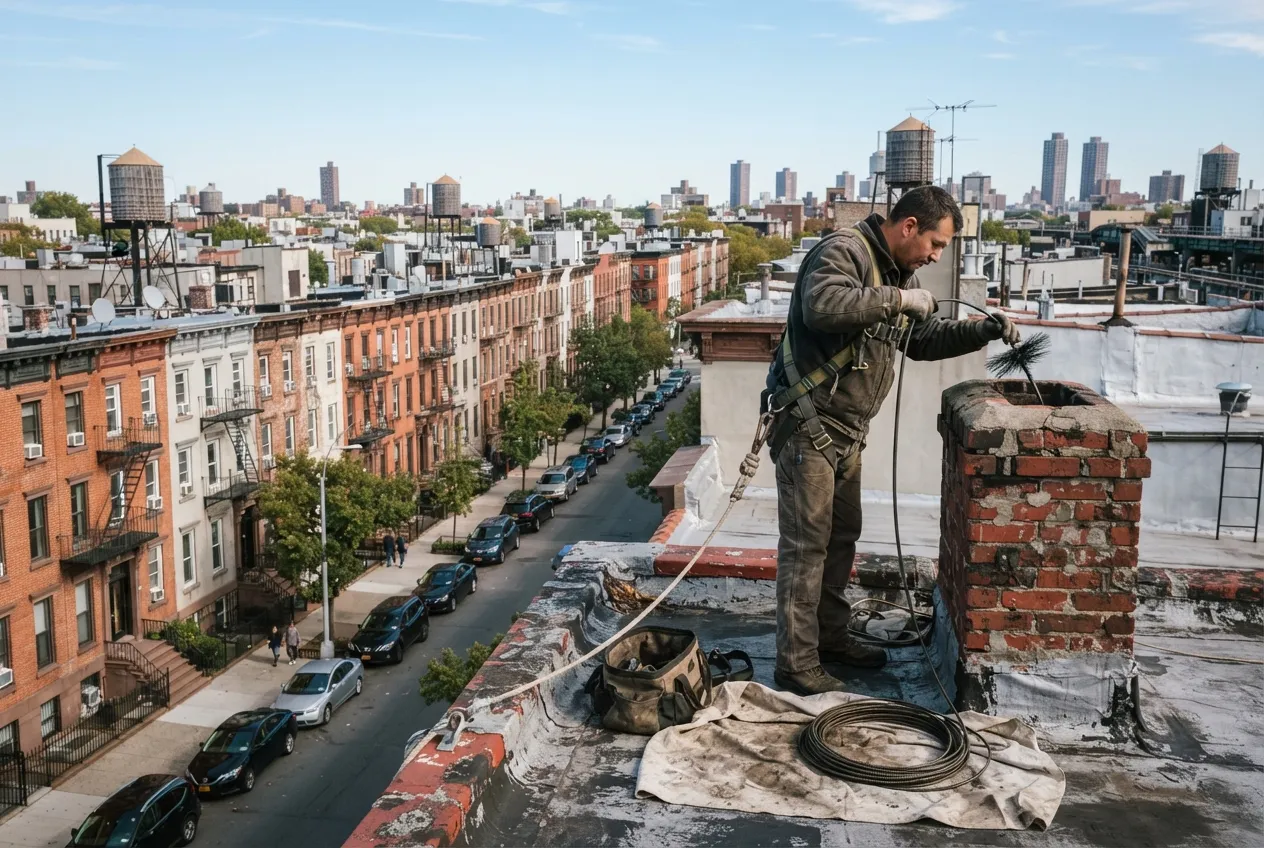
On the roof, we check the chimney crown, cap and flashing, since many firebox water problems start at the top. Installing a top-sealing damper also requires roof access. We secure ladders and use safe access methods, and we will tell you in advance if your roof or building needs special arrangements. When we leave, the hearth and room should look the way they did when we arrived.
Time for your annual chimney check?
The standard we follow
Our work follows the NFPA 211 standard, which calls for chimneys, fireplaces and vents to be inspected once a year. Chimney professionals use three inspection levels. Level 1 applies when nothing about the system has changed. Level 2 applies when the system changes, such as a new appliance or a switch of fuel, or when the home is sold. Level 3 applies when a hidden hazard has to be reached by opening part of the chimney or the building.
Most fireplace and damper repairs begin with a Level 1 inspection. If you are converting a wood fireplace to gas logs, adding an insert, or buying or selling a home, a Level 2 inspection with a camera is the right starting point. For New York buildings converting a boiler from oil to gas, the chimney has to be evaluated as part of the work, and a new liner is often needed because gas exhaust creates acidic condensate that can corrode a masonry flue.
What affects the price
Every fireplace is different, so we quote after seeing it. The main factors are listed below, and we explain how each one applies to your job before you approve anything.
- Chimney height and roof access, including steep, slate or multi-story roofs
- Fuel type: wood, gas or a converted system
- Flue size and condition
- How much creosote and debris has built up
- Whether a camera inspection is needed to see higher in the flue
- The type and extent of repair, such as a damper adjustment versus a full replacement, or a few bricks versus a rebuilt firebox
How a visit works
You schedule a time that works for you, and we ask a few questions about the fireplace, the fuel you burn and what you've noticed. Please don't use the fireplace for at least a day before the visit so the firebox is cool.
On arrival, the technician protects the room, inspects the fireplace and damper, and shows you photos of what was found. You get a clear explanation of the problem and the recommended repair before any work begins. Simple fixes, like freeing a stuck damper, can often be done the same day. Larger jobs, such as firebox rebuilding or a top-sealing damper, may need a return visit for materials. Many owners schedule repairs before the heating season, which in New York City runs from October 1 through May 31.