The short answer
You need a new chimney cap or chase cover when you see water in the firebox, hear animals in the chimney, find debris falling into the fireplace, or notice rust and staining at the top of the chimney. AshVanta's certified technicians inspect the chimney, measure every flue, clear any nesting material and fit a cap or cover sized for your chimney and appliance.
The top of your chimney takes the worst of the weather, and it is also the easiest way into your house for rain, birds, squirrels and raccoons. A chimney cap covers the open flue on a masonry chimney with a metal hood and a mesh screen. A chase cover is the metal panel that seals the top of a framed chase, the boxed-in structure built around a factory-built (prefab) fireplace or stove chimney. When either one is missing, rusted, loose or the wrong size, water and animals get in, and the damage shows up inside the home. AshVanta Chimney Services installs and replaces caps and chase covers for homeowners in New York and nearby cities. Our certified technicians look at the whole chimney top, not just the piece that failed.
Signs you need it
Most homeowners do not look at the top of the chimney until something goes wrong inside. These are the problems that usually trace back to a missing or failing cap or chase cover. If you notice more than one, it is worth having the chimney looked at before the next storm or heating season.
- Water in the firebox, or damp, rusty stains on the damper and smoke chamber after rain.
- Scratching, chirping or rustling in the chimney, often at dawn or dusk when animals come and go.
- Leaves, twigs, nesting material or brick flakes landing in the firebox.
- White staining on the brick near the top of the chimney, a sign water is soaking into the masonry.
- A musty smoke or creosote smell in the room, especially on humid or rainy days when water mixes with deposits in the flue.
- Poor draft or smoke rolling into the room, which can happen when a nest or debris partly blocks the flue, or when wind pushes down an uncapped flue.
- Rust streaks running down the siding or chase walls below a factory-built chimney, which usually means the chase cover is corroding or holding standing water.
What's included
Every cap and chase cover job follows the same checklist, so you know exactly what was done and what we found. If something is beyond the scope of the visit, we show you photos and explain it before any added work.
- Inspection of the chimney top, crown, flue tiles or metal flue pipe, and existing cap or chase cover.
- Measurement of each flue, or of the full chase top, so the new part fits the chimney rather than an off-the-shelf guess.
- Removal of the old cap or chase cover and any loose mortar or debris around it.
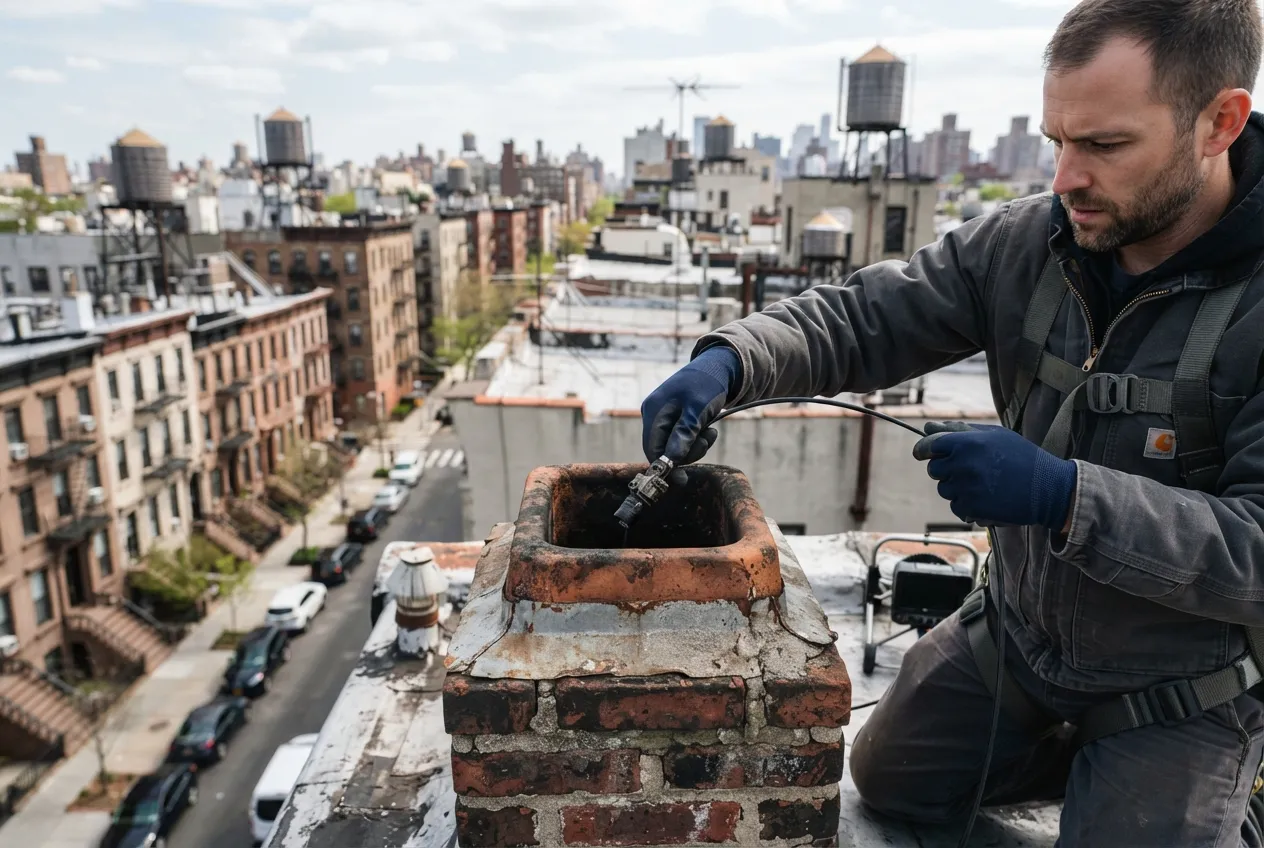
- Clearing of nests and nesting material from the flue, with a camera check down the flue when blockage is suspected.
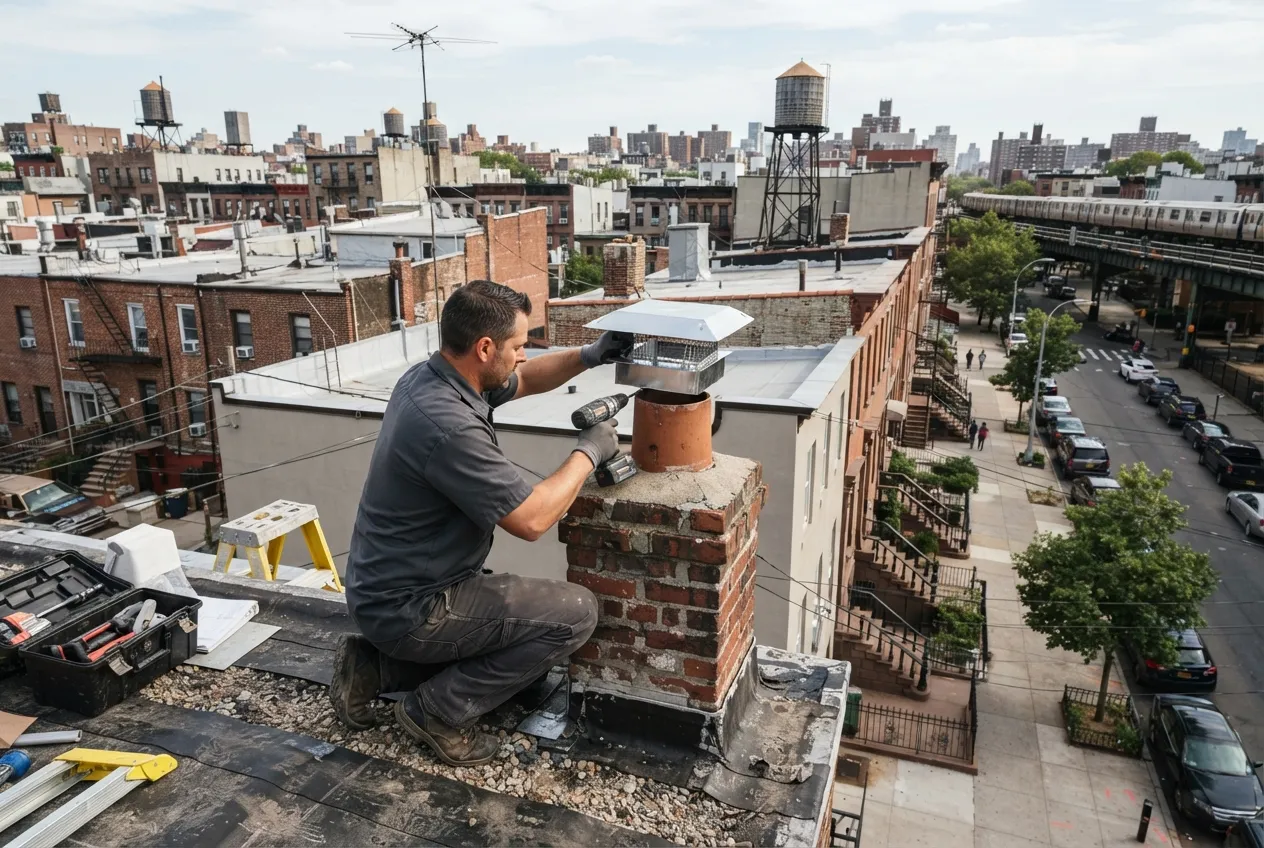
- Installation of a cap with a mesh screen sized for your flue, or a multi-flue cap where a masonry chimney has more than one flue.
- For factory-built chimneys, a new chase cover with a sloped or cross-broken top so water runs off instead of pooling, plus a storm collar sealed around the flue pipe.
- Secure fastening suited to your chimney, so the cap or cover stays put in high wind.
- Before-and-after photos and a short written note on the condition of the crown, flashing and flue.
How our crew works inside your home and on the roof
Most of this job happens on the roof, but we still protect the inside of your home. Before anyone climbs up, the crew lays drop cloths from the door to the fireplace and covers the hearth. If there is nesting material or debris in the flue, we seal the fireplace opening and run HEPA vacuums while we work so soot and dust stay out of the room.
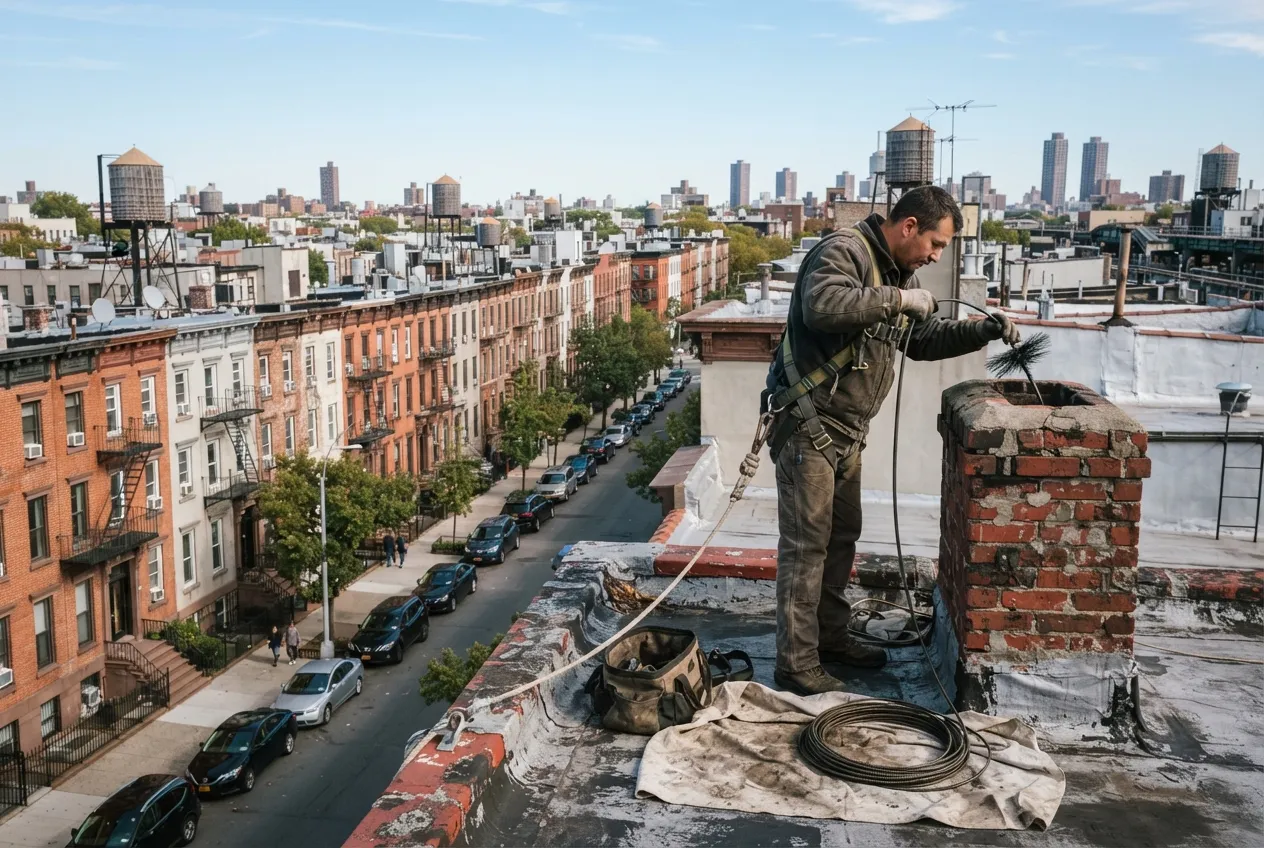
When animals or nests have been in the chimney, we clear the flue with rotary brushes and remove the material from the smoke shelf and damper area. If we suspect damage further down, we run a camera through the flue so you can see what we see. We do not trap or handle live wildlife; if an animal is still inside, we will tell you and schedule the cap after it has been removed.
On the roof, the crew sets up safe access, checks the crown and flashing, and measures before cutting or fitting anything. We fit the cap or chase cover, seal it, and test that it is secure. Before leaving, we clean up the roof and the work area inside.
Time for your annual chimney check?
The standard we follow
The NFPA 211 standard calls for chimneys, fireplaces and vents to be inspected once a year. Chimney professionals use three inspection levels. A Level 1 inspection fits when nothing about the system has changed. A Level 2 inspection applies when the system changes, such as a new appliance or a switch of fuel, or when the home is sold. A Level 3 inspection is used when a hidden hazard can only be reached by opening part of the chimney or building. A routine cap replacement usually goes along with a Level 1 inspection; if we find signs of deeper damage, we will explain whether a higher level makes sense.
Fuel matters at the top of the chimney too. When a New York City building converts its boiler from oil to gas, the chimney has to be evaluated as part of the work, and a new liner is often needed because gas exhaust produces acidic condensate that can corrode a masonry flue. If your system has changed, we check that the cap suits the appliance it serves.
What affects the price
Every chimney is different, so we quote after we have seen yours. These are the main factors that change the scope of the job.
- Chimney height, roof pitch and how easy it is to reach the chimney safely.
- Fuel type and appliance, since wood, gas and oil flues can need different caps.
- Number, size and shape of the flues, and the size of the chase top on factory-built chimneys.
- Condition of the crown, flue tiles and existing hardware.
- How much nesting material, debris or buildup has to be cleared from the flue.
- Whether a camera inspection or related repairs, such as crown or flashing work, are needed.
How a visit works
You book a time, and we confirm the appointment and ask a few questions about your fireplace, stove or boiler and what you have noticed. On the day, the technician protects the work area, inspects the chimney, and walks you through what was found before starting.
Many caps and chase covers can be measured and installed in the same visit. Custom or multi-flue parts may need a second trip once the part is ready. If you heat with your chimney, scheduling before New York City's heat season starts on October 1 avoids waiting during the busy months.