The short answer
Dryer vent cleaning removes the lint that builds up between your dryer and the outside, which restores airflow and lowers fire risk. The U.S. Fire Administration identifies failure to clean as the leading factor in home clothes dryer fires, so a vent that shows warning signs should be cleaned and checked.
Every load of laundry pushes warm, damp air and fine lint through your dryer vent. Some of that lint never makes it outside. It settles in bends, sags in flexible duct, and packs into the exterior hood or roof cap. Over time the vent narrows, the dryer runs hotter and longer, and the lint becomes fuel sitting next to a heat source. AshVanta Chimney Services cleans dryer vents for homeowners in New York City and nearby communities, from short runs in single-family homes to long, winding vents in townhouses that exit through the roof. Our certified technicians clean the full run from the dryer to the outside, check airflow, and tell you plainly what they found.
Signs you need it
Most homeowners notice a dryer vent problem through the dryer itself before they ever look at the duct. If you see one or more of these, the vent is likely restricted somewhere along its length.
- Clothes take two or more cycles to dry, or come out damp and hot
- The top of the dryer or the laundry room feels unusually warm
- A burning or scorched smell while the dryer runs
- Lint collecting around the dryer door, behind the machine, or on the floor
- The exterior flap barely opens, or you feel weak airflow outside while the dryer runs
- Lint or dust blowing out around duct joints or the outside hood
- Chirping, scratching or nesting material at the exterior vent, a sign birds or rodents have moved in
- It has been more than a year since the vent was cleaned, or you don't know when it last was
What is included
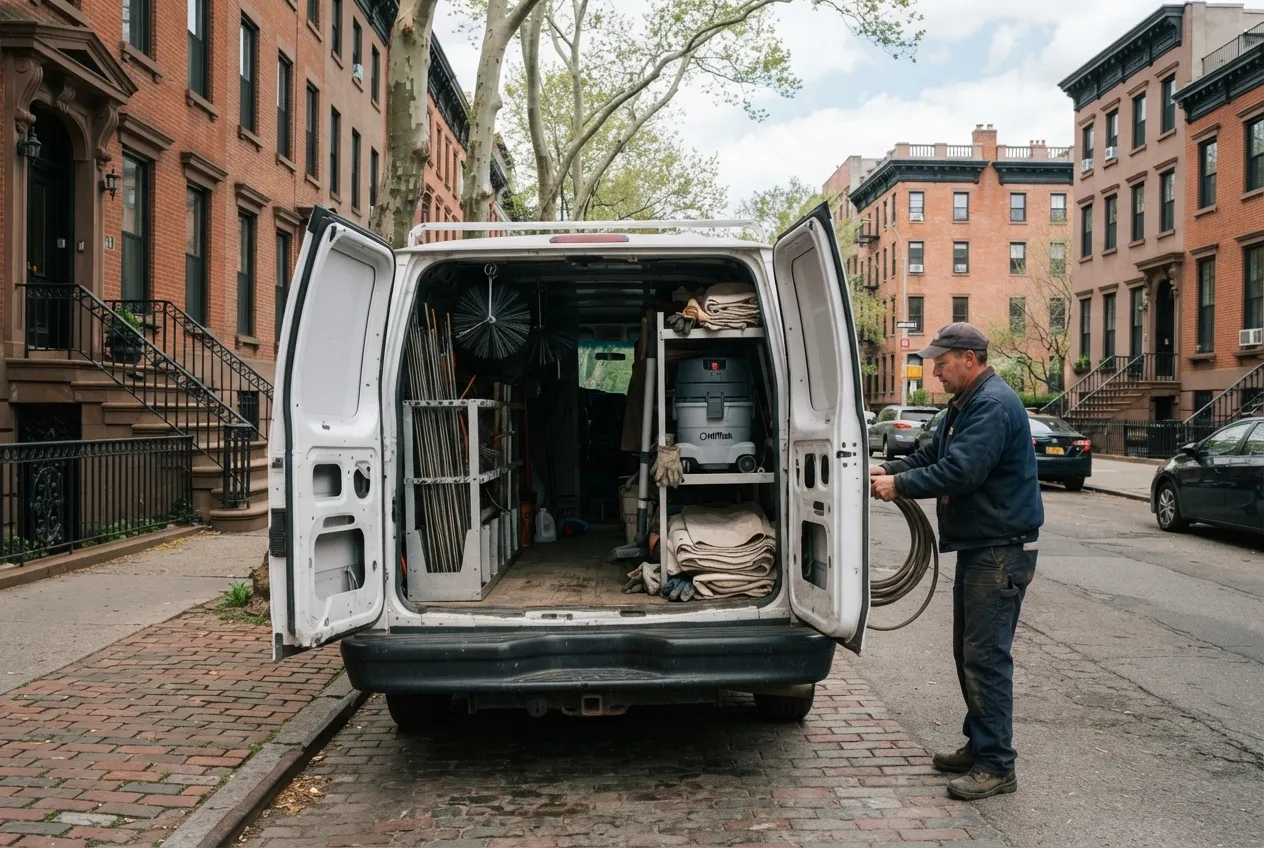
A standard dryer vent cleaning covers the entire run, not just the lint trap and the first few feet of duct. Here is what the crew does on a typical visit.
- Pull the dryer forward and disconnect the transition duct
- Clean the lint trap housing and the dryer's exhaust outlet
- Brush the full vent run with rotary brushes sized to the duct
- Vacuum loosened lint with a HEPA vacuum as it is pushed out
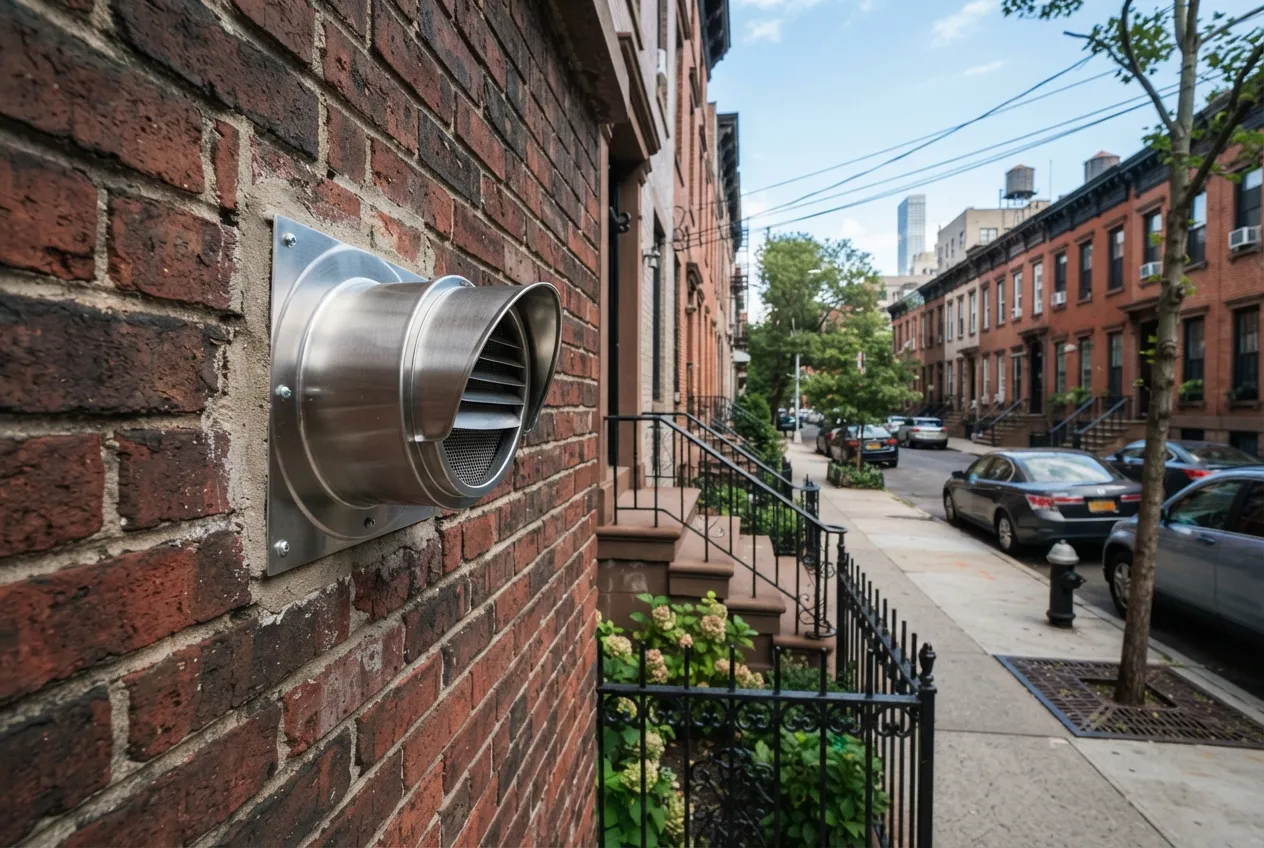
- Clear the exterior hood, flap or roof cap, including any nesting material
- Check that the exterior damper opens and closes freely
- Inspect the transition duct and note crushed, kinked or foil-type duct
- Measure airflow at the outside termination before and after cleaning where access allows
- Reconnect the dryer, run a test cycle and confirm air is moving outside
- Walk you through what we found and anything that needs repair
How the crew works inside your home and on the roof
Inside, we lay drop cloths from the entry to the laundry area and around the dryer before anything is moved. The dryer is pulled out carefully so the gas line or power cord is not strained. We run a HEPA vacuum at the open end of the duct while rotary brushes work through the line, so loosened lint is captured instead of drifting into the room. In tight laundry closets common in city apartments and townhouses, we work in short sections and keep the area contained.
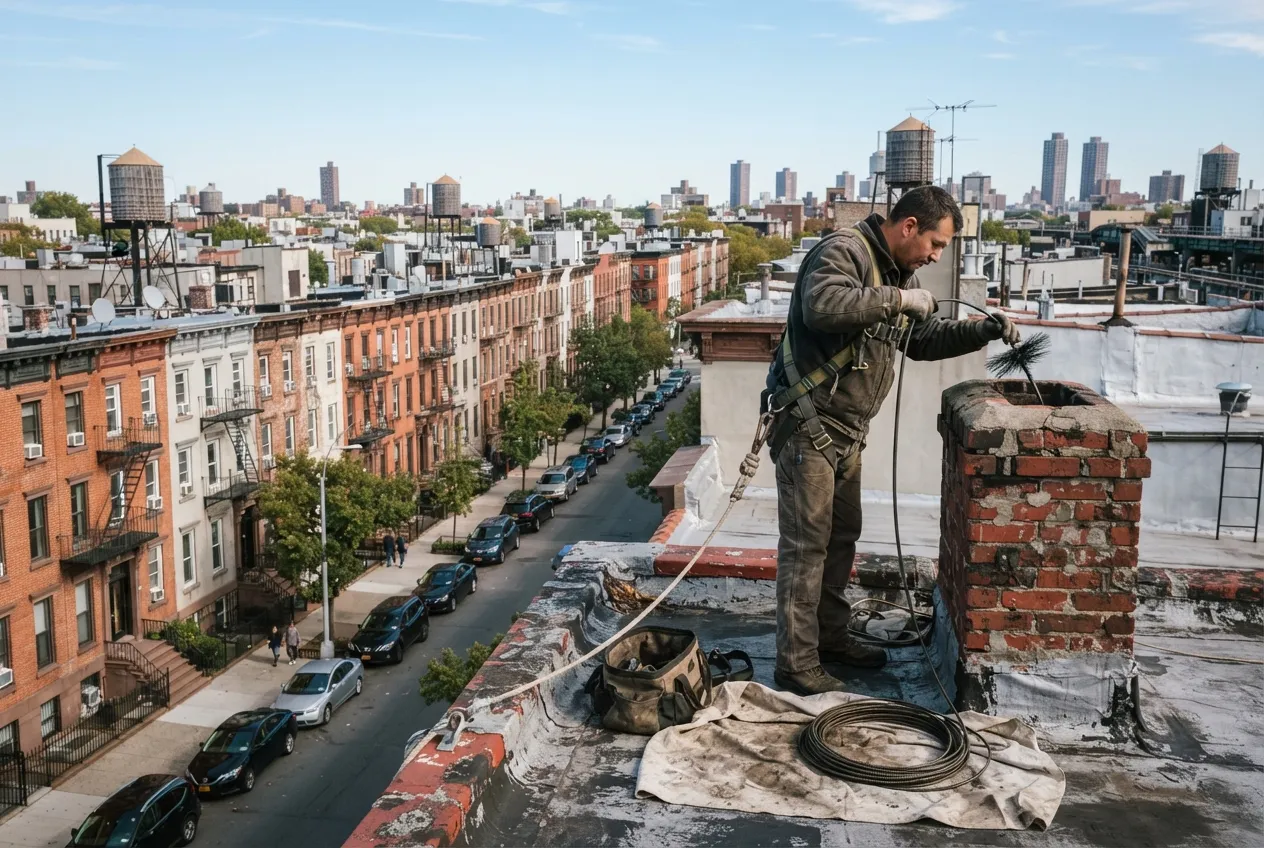
Many New York homes vent the dryer up through the building and out the roof instead of through a side wall. In those cases a technician works from the roof as well, cleaning down from the cap while the crew inside controls the other end. We only go on the roof when access is safe. For long vents, vents hidden behind finished walls, or lines with several turns, we use a camera to look inside the duct and find blockages, separated joints or damage that brushing alone would miss.
If you have a gas dryer, the vent also carries combustion byproducts, so we pay close attention to joints and connections that could let exhaust leak indoors.
Time for your annual chimney check?
Why regular cleaning matters
According to the U.S. Fire Administration, failure to clean is the leading factor contributing to clothes dryer fires in homes. Lint is lightweight and burns easily, and a restricted vent traps heat around it. Cleaning the lint screen after every load helps, but it does not reach the lint that settles deeper in the duct.
A clean vent also lets the dryer do its job. When air moves freely, loads dry faster and the machine doesn't work as hard. If your home also has a fireplace or wood stove, the NFPA 211 standard calls for chimneys, fireplaces and vents to be inspected once a year, and we can schedule that inspection during the same visit.
What affects the price
Every vent is different, so we look at the details before giving you a quote. The main factors are:
- Length of the vent run and how many bends or turns it has
- Where it ends: a side wall, a high exterior wall or the roof, and how easy that spot is to reach
- Building height and roof access, including whether a ladder or roof hatch is needed
- Duct type and condition, such as rigid metal versus flexible foil or plastic
- How much lint, debris or nesting material has built up
- Whether a camera inspection is needed to locate a hidden blockage
- Any repairs, such as replacing the transition duct, a damaged hood or a missing damper
How a visit works
When you reach out, we ask a few questions: where the dryer is, whether it is gas or electric, where the vent appears to exit, and what problems you have noticed. That helps us bring the right equipment and plan for roof access if needed.
On the day of the visit, the crew arrives, sets down drop cloths and looks over the dryer and vent before starting. Cleaning usually happens in one visit. When the work is done, we run the dryer, confirm airflow outside, clean up the work area and go over our findings with you, including photos or camera footage when we used it. If something needs repair, we explain the issue and your options before doing any additional work.