The short answer
Hallets Point homes usually need a new chimney liner when the original flue is cracked or deteriorated, when a boiler converts from oil to gas, or when a new heating appliance is installed. AshVanta inspects the flue first, then installs a liner sized and rated for the appliance it will vent.
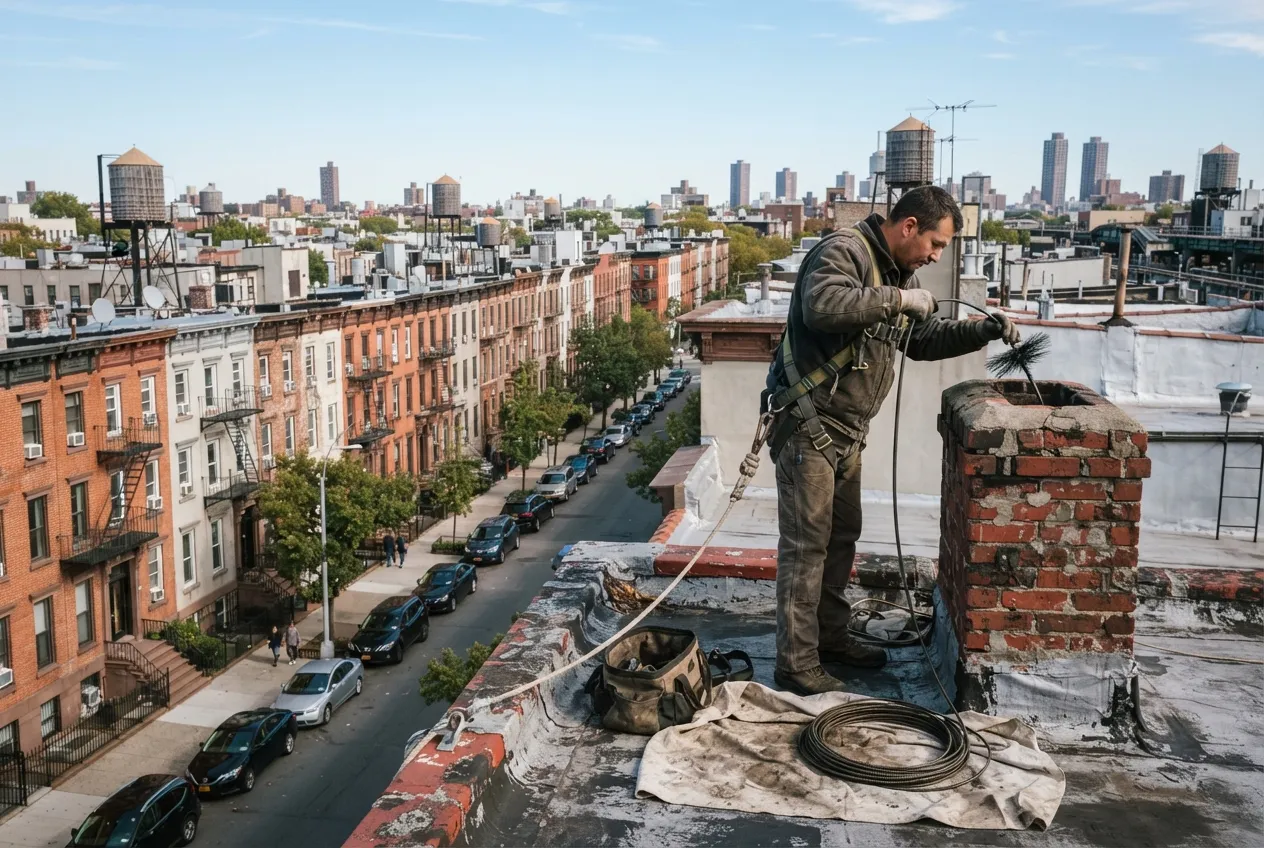
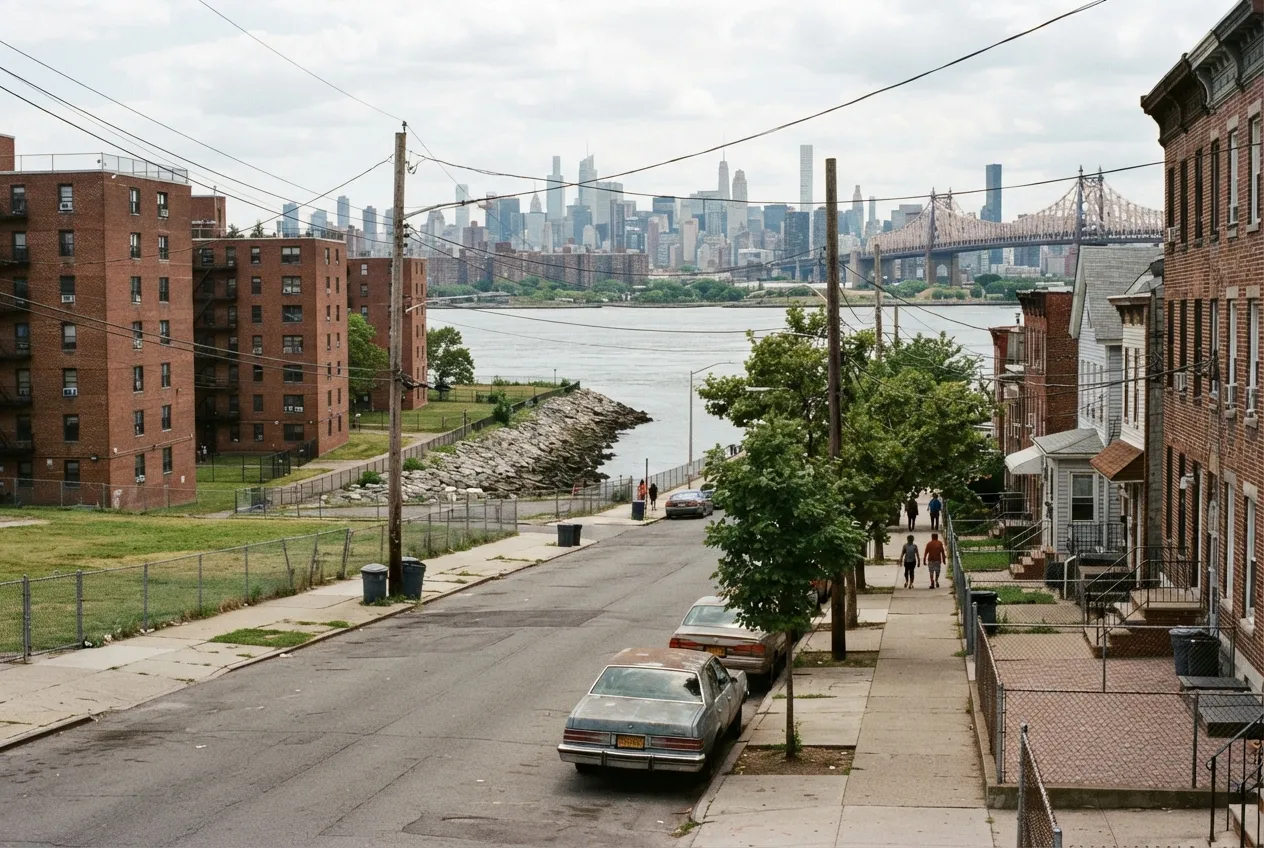
A chimney liner is the protective channel inside your chimney. It carries smoke, combustion gases and condensation from your fireplace, boiler or water heater safely outside, and it keeps heat and acidic byproducts away from the surrounding brick and framing. In Hallets Point, many chimneys serve older rowhouses, detached homes and pre-war apartment buildings, where original clay tile flues may be cracked or missing. Others serve heating systems that have changed fuel since the chimney was built. AshVanta Chimney Services sends certified technicians from our Yorkville office, about 2 miles away across the East River, to inspect flues and install liners sized for the appliance they serve.
Why Hallets Point Chimneys Often Need Relining
Many chimneys in this part of Queens are older masonry flues built for wood, coal or oil. Over decades, freeze-thaw cycles, settling and heat stress can crack clay tiles or open mortar joints. Gaps let heat reach nearby wood, let gases leak into living spaces, and let moisture soak into the brick.
Fuel changes are another common cause. When a New York City building converts its boiler from oil to gas, the chimney has to be evaluated as part of the work. A new liner is often needed because gas exhaust produces acidic condensate that can corrode a masonry flue. A chimney that worked for years with an oil burner can deteriorate once it starts venting gas.
- Cracked, shifted or missing clay flue tiles
- Boiler conversion from oil to gas
- A new furnace, boiler, water heater or wood stove
- Crumbling mortar or flakes of tile collecting at the base of the flue
- Staining, dampness or odors near the chimney inside the home
Inspection Comes Before Any Liner
We don't recommend a liner without looking inside the chimney first. The NFPA 211 standard calls for chimneys, fireplaces and vents to be inspected once a year, and it describes three inspection levels. A Level 2 inspection applies when the system changes, such as a new appliance or a switch of fuel, or when a home is sold. That makes it the usual starting point for relining work.
During a Level 2 inspection, our technicians run a camera through the flue to record its condition from top to bottom. We check the flue size against the appliance connected to it and look at the clearances around the chimney. If something hidden needs to be reached by opening part of the chimney or the building, that is a Level 3 inspection. We will explain why before any opening is made.
Choosing the Right Liner for Your Appliance
The right liner depends on what the chimney vents. A liner that is too large can let exhaust cool and condense. One that is too small can restrict draft. We size the liner from the appliance's requirements and the height of the chimney, not from a standard size.
- Stainless steel liners: common for gas and oil boilers and water heaters, and for many relining jobs where clay tiles have failed
- Insulated stainless liners: help keep exhaust warm in tall or exterior chimneys and can improve draft
- Cast-in-place liners: a poured lining that can also add strength to an older masonry flue, suited to some fireplace chimneys
- Clay tile replacement: an option in some rebuilds, though it usually means more masonry work
Time for your annual chimney check?
What Installation Involves
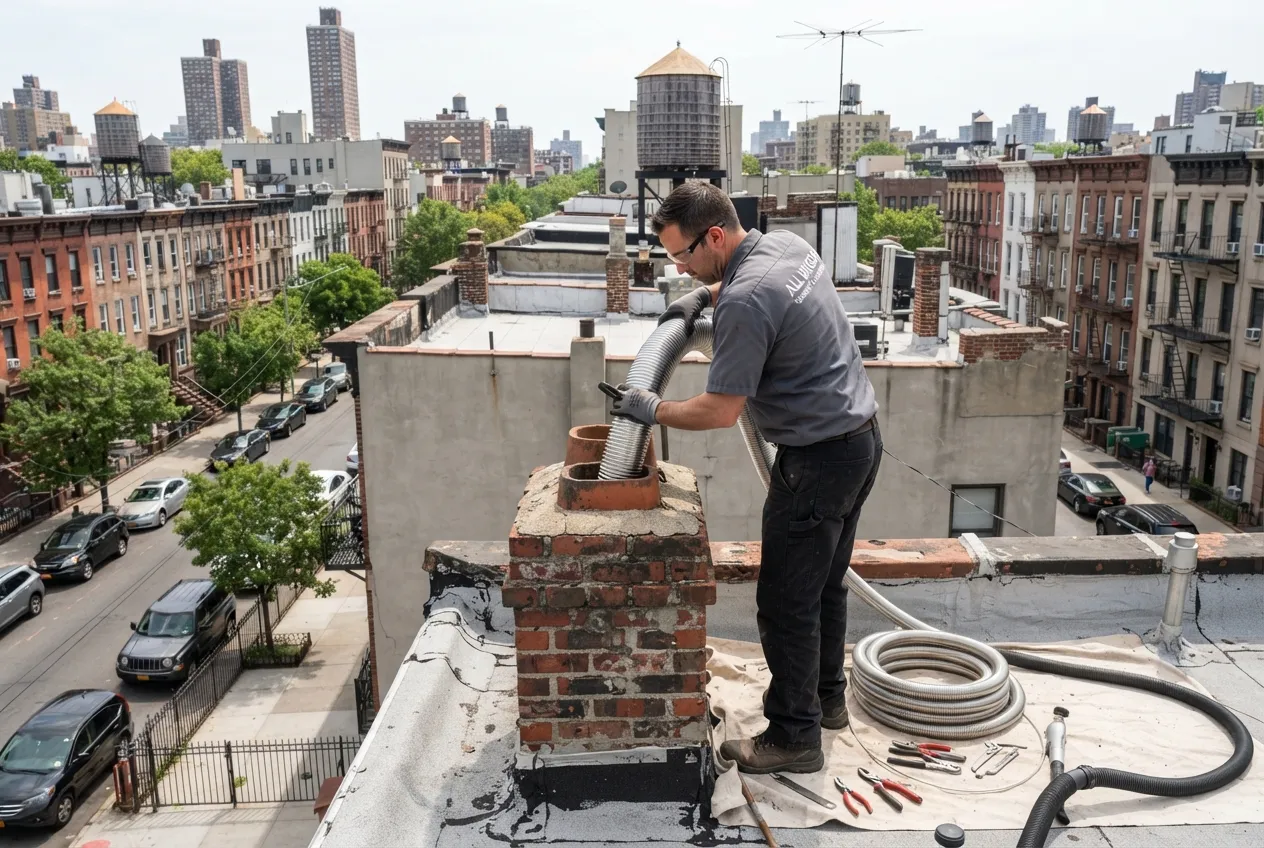
Most liner installations are done from the roof. Technicians clean the existing flue and lower the liner down the chimney. They connect it to the appliance at the bottom and fit a top plate and cap at the crown to keep out rain and animals. We protect the area around the appliance or fireplace and remove debris when the work is done.
In apartment buildings, the boiler and the roof access are often in shared spaces. We coordinate access with owners or building managers. For multi-unit buildings, timing matters. New York City's heat season runs from October 1 through May 31, and owners must keep apartments at the city's minimum temperatures during that period. We help plan boiler chimney work so heat is not interrupted when tenants depend on it.
Serving Hallets Point and Nearby Neighborhoods
Our technicians work in Hallets Point and the neighborhoods around it, including Old Astoria in Queens and Roosevelt Island, Yorkville, the Upper East Side and Lenox Hill in Manhattan. If you're planning a boiler conversion, adding an appliance, or worried about the condition of an older flue, start with an inspection. We'll show you what we find.
More services in Hallets Point
- Chimney Sweep in Hallets PointLocal service & repairs
- Chimney Inspection in Hallets PointLocal service & repairs
- Chimney Repair in Hallets PointLocal service & repairs
- Air Duct Cleaning in Hallets PointLocal service & repairs