The short answer
Chimney repair fixes the masonry, crown, flashing, cap, damper and flue liner problems that let water, smoke and animals into your home. AshVanta inspects first using the NFPA 211 inspection levels and shows you photos of what we find. You get a written estimate, and we make the repair with your home protected throughout.
A chimney takes a beating in New York. Freeze-thaw cycles crack mortar, rain gets behind loose flashing, and a long heating season puts steady stress on the flue. Small problems like a cracked crown or a few spalling bricks let water into the masonry, and water is what turns a minor fix into a rebuild. AshVanta Chimney Services repairs masonry chimneys and flues for homes and small buildings across New York City and nearby cities. Our certified technicians find the cause of the problem first. They show you what they found and explain your options before any work begins. Then they make the repair cleanly, with your home protected from start to finish.
Signs You Need Chimney Repair
Most chimney damage shows up gradually. If you notice any of these signs, have the chimney looked at before the next cold stretch.
- Water in the firebox, or damp stains on the ceiling or wall next to the chimney after rain
- White, chalky staining on the brick, called efflorescence, which means water is moving through the masonry
- Brick flakes, mortar crumbs or pieces of flue tile collecting in the firebox
- A smoke or creosote smell in the room, especially on humid days or when the fireplace isn't in use
- Poor draft, where smoke rolls into the room instead of going up the flue
- Scratching, chirping or nesting noises, which usually point to a missing or damaged chimney cap
- Cracked or crumbling bricks, a leaning stack, or rusted flashing you can see from the street
What Our Chimney Repair Includes
Every repair visit starts with an inspection, so we fix the real problem and not just the symptom. Depending on what we find, the work can include:
- Visual inspection of the firebox, smoke chamber, damper and accessible flue
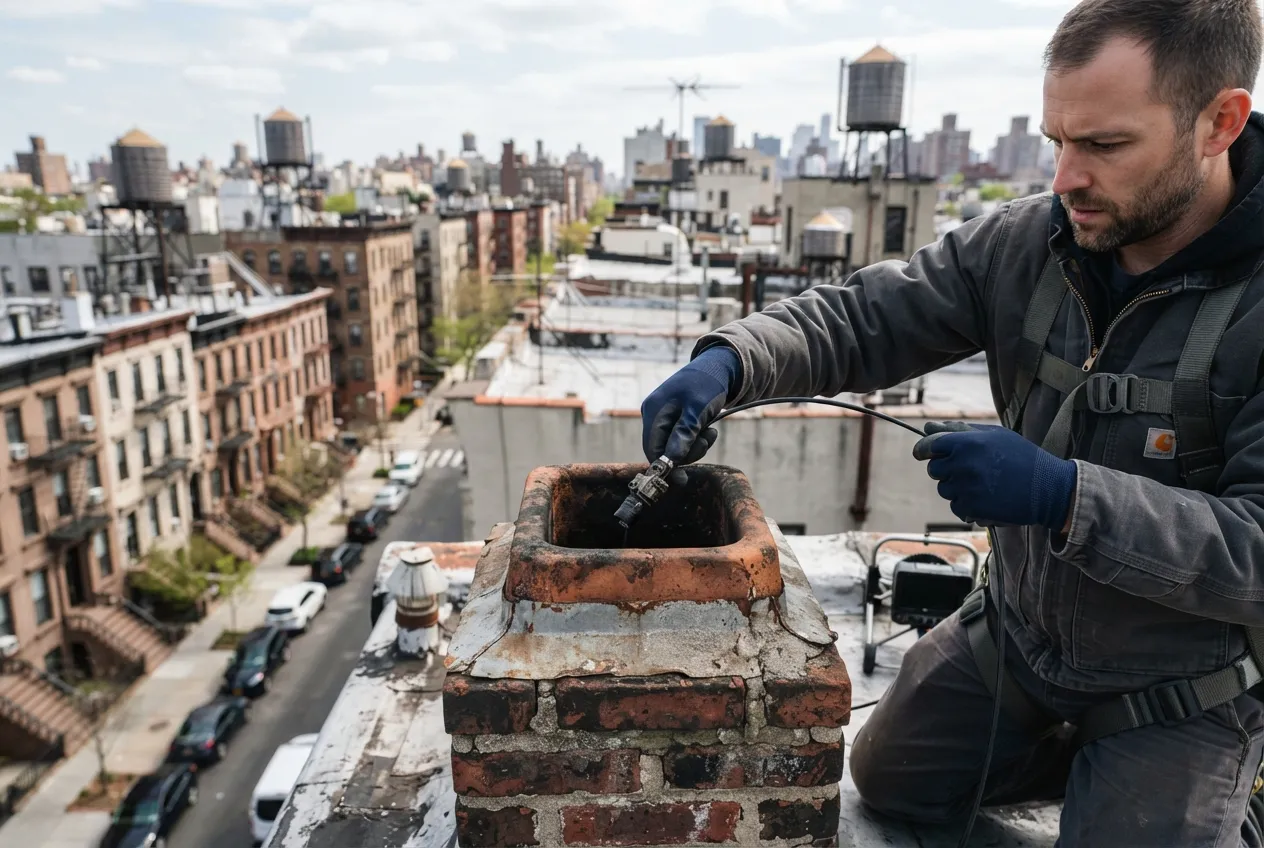
- Camera inspection of the flue liner when cracks, gaps or hidden damage are suspected
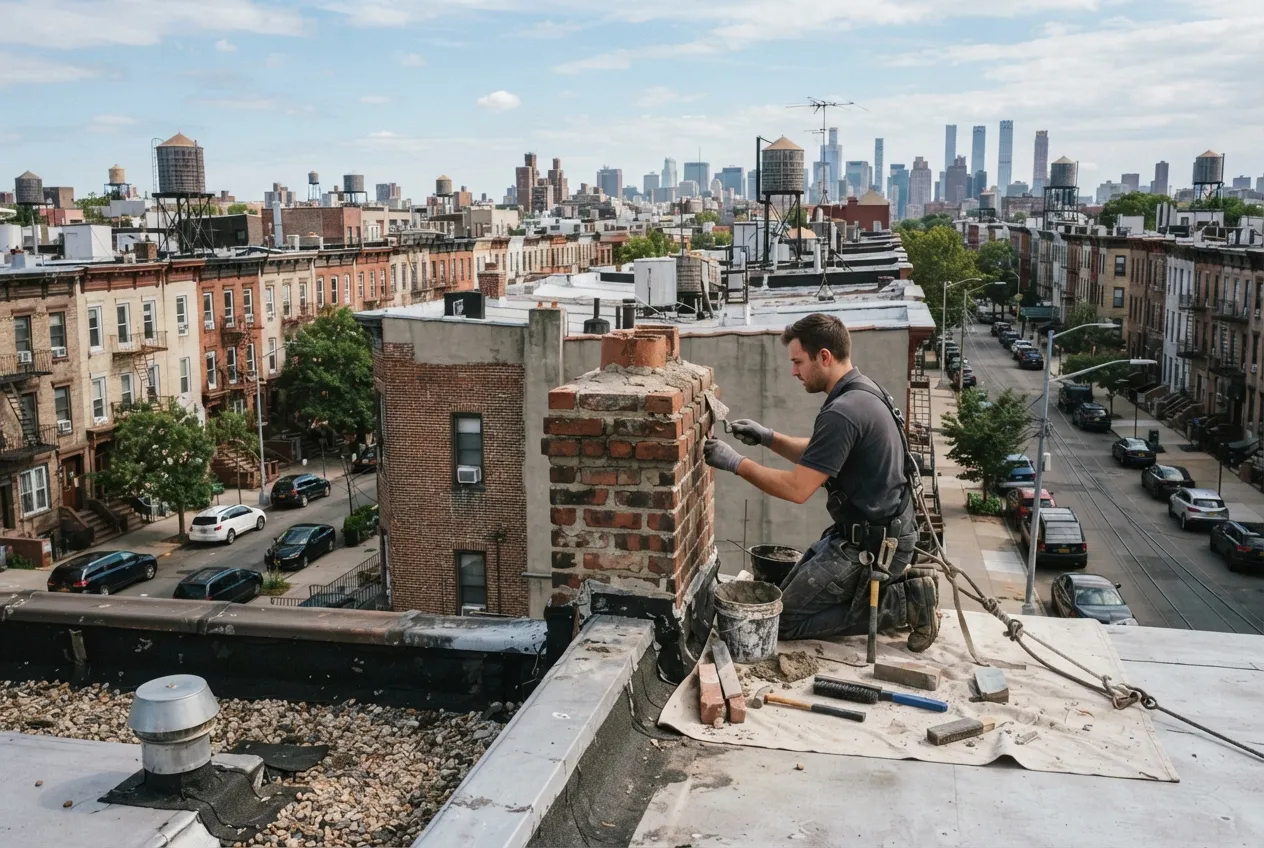
- Repointing, which means removing failed mortar joints and packing in new mortar
- Replacing cracked or spalled bricks
- Crown repair or rebuild so water sheds away from the flue
- Flashing repair or replacement where the chimney meets the roof
- Chimney cap installation or replacement to keep out rain, animals and debris
- Flue liner repair or new liner installation, including liners for oil-to-gas conversions
- Damper repair, or replacement with a top-sealing damper
- Firebox and smoke chamber repair with heat-rated materials
- Photos of the problem areas and the finished work, plus a written summary
How Our Crew Works Inside Your Home and on the Roof
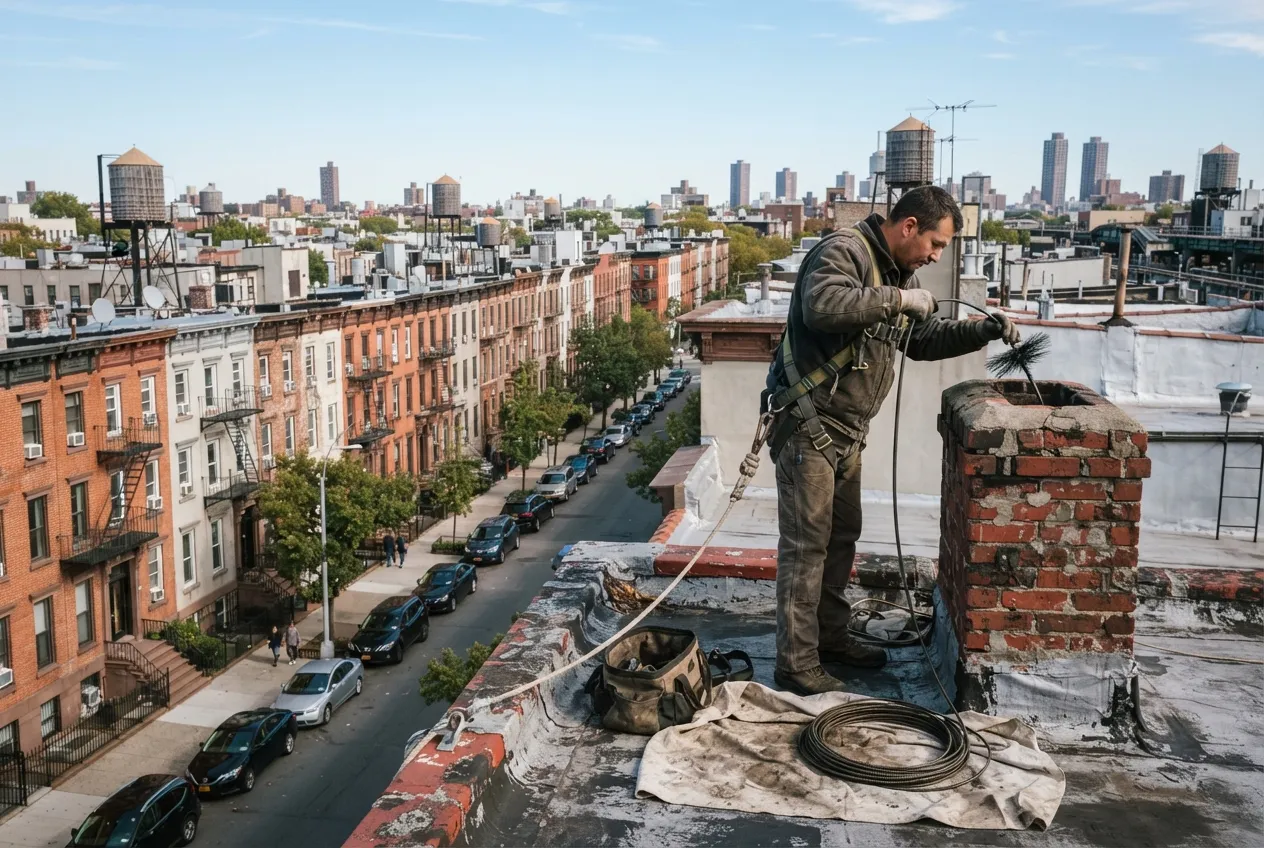
Inside your home, we lay drop cloths from the door to the fireplace. We seal the fireplace opening before any brushing or demolition starts, and HEPA vacuums run while we work to catch soot and masonry dust at the source. If the flue needs cleaning before it can be inspected or repaired, we use rotary brushes sized to the liner. Then we run a camera up the flue so you can see the condition of the tiles and joints on a screen.
On the roof, the crew sets up safe access first, using anchors and ladders suited to the building's height and roof pitch. We protect the roofing around the stack and remove loose material by hand. Mortar and brick are staged so nothing lands in gutters or on neighboring property, and debris comes down in bags, never over the edge.
Before we leave, we clean up and walk you through the work. We also show you before-and-after photos of areas you can't easily see yourself.
Time for your annual chimney check?
Repairs That Follow the NFPA 211 Standard
The NFPA 211 standard calls for chimneys, fireplaces and vents to be inspected once a year. Chimney professionals use three inspection levels, and we use them to decide how closely to look before recommending repairs:
Fuel conversions matter in New York City. When a building converts its boiler from oil to gas, the chimney has to be evaluated as part of the work. A new liner is often needed because gas exhaust produces acidic condensate that can corrode a masonry flue. We can evaluate the chimney and install the liner as part of that project.
Timing matters too. The city's heat season runs from October 1 through May 31, and during those months building owners must keep apartments heated to the city's minimum temperatures. Scheduling repairs in late spring or summer keeps your boiler and fireplace available when you need them.
- Level 1 applies when nothing about the system has changed. We check the readily accessible parts of the chimney and fireplace.
- Level 2 applies when the system changes, for example a new appliance or a switch of fuel, or when the home is sold. We usually run a camera through the flue at this level.
- Level 3 applies when a hidden hazard has to be reached by opening part of the chimney or the building.
What Affects the Cost of Chimney Repair
You get a written estimate after the inspection, once we know the scope. The main factors are:
If something unexpected turns up once work begins, we stop and talk with you before going further.
- Chimney height and roof access, including steep pitches, multi-story buildings and any equipment needed to reach the stack
- Fuel type, since wood, gas and oil systems have different liner and material requirements
- Flue size and condition, including whether the existing liner can be repaired or must be replaced
- How much creosote or soot has to be cleaned out before repair work can start
- Whether a camera inspection or a Level 2 or Level 3 inspection is needed
- The extent of the repair, from a few joints of repointing to a crown rebuild or partial teardown
How a Repair Visit Works
Contact us and tell us what you're noticing. We schedule a time and confirm the address and any access details, such as roof hatches or approval from building management.
On the day of the visit, the technician inspects the chimney, takes photos, and explains what's wrong and why. You get a written estimate, with options when more than one approach makes sense. Small repairs can often be done during the same visit. Larger jobs like rebuilds and relining are scheduled once we have the right materials and crew lined up.
When the work is done, we clean up, review the photos with you, and let you know when your next inspection is due.
Chimney Repair by city
- Chimney Repair in YorkvilleLocal service & repairs
- Chimney Repair in Carnegie HillLocal service & repairs
- Chimney Repair in Upper East SideLocal service & repairs
- Chimney Repair in Upper West SideLocal service & repairs
- Chimney Repair in Manhattan ValleyLocal service & repairs
- Chimney Repair in East HarlemLocal service & repairs
- Chimney Repair in Lenox HillLocal service & repairs
- Chimney Repair in Roosevelt IslandLocal service & repairs
- Chimney Repair in Old AstoriaLocal service & repairs
- Chimney Repair in Hallets PointLocal service & repairs
- Chimney Repair in Lincoln SquareLocal service & repairs
- Chimney Repair in Morningside HeightsLocal service & repairs