The short answer
If your Yorkville chimney has a cracked or missing flue lining, or your building is converting its boiler from oil to gas, you likely need a new liner sized to the appliance it serves. AshVanta's certified technicians inspect the flue first, then recommend and install a liner that matches your fuel, your appliance and the chimney's construction.
AshVanta Chimney Services is based in Yorkville, so liner work here means serving our own neighbors. Most chimneys in this part of Manhattan were built generations ago, for coal, wood or oil, and many of them now vent equipment their builders never imagined. A sound liner keeps hot exhaust and corrosive condensate inside the flue and away from old brick, mortar and the framing around it. Our certified technicians install liners in brownstones, rowhouses, walk-ups and pre-war apartment buildings across the 10028 and 10128 ZIP codes. We explain what we find, what the options are, and why a particular liner fits your chimney and appliance.
Why Yorkville Chimneys Often Need New Liners
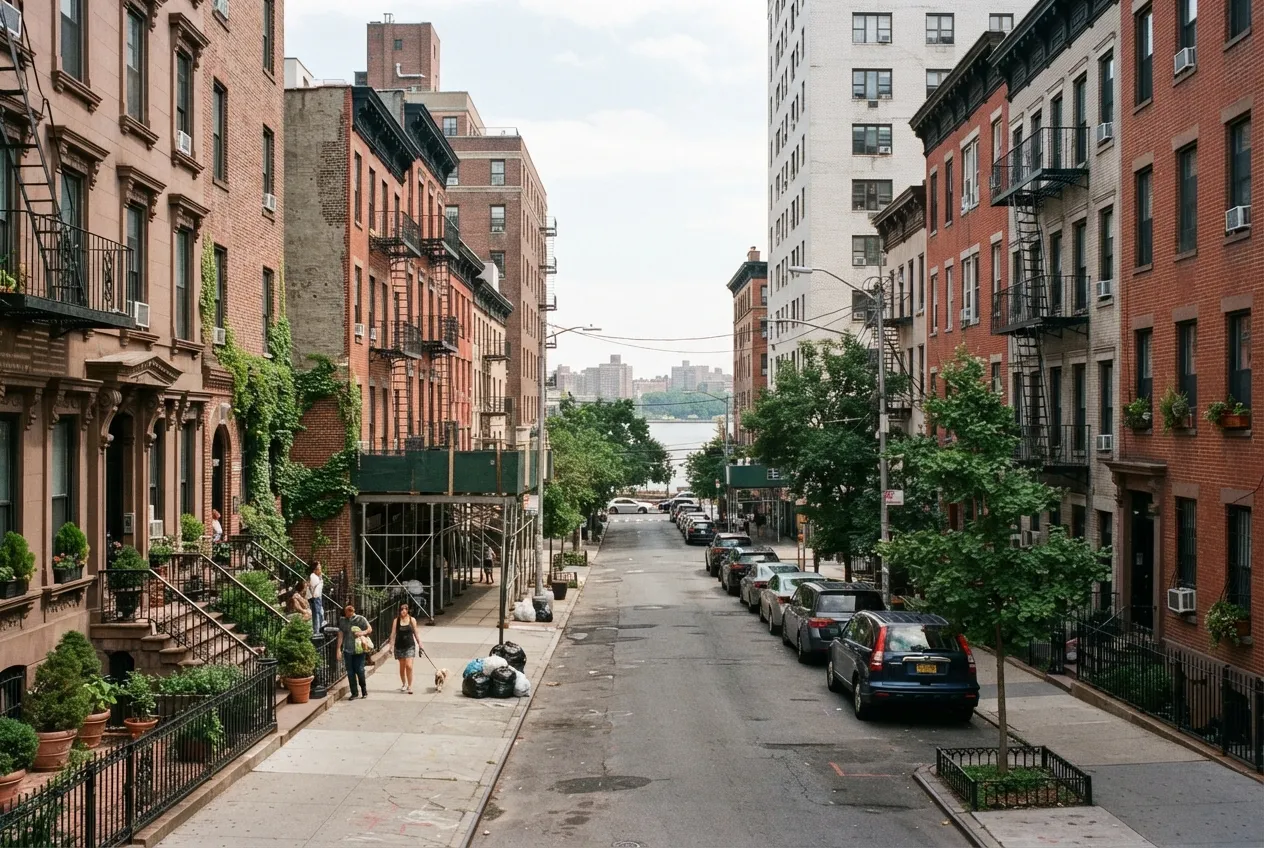
Much of Yorkville's housing stock is older masonry: brownstones and rowhouses with several fireplaces stacked floor over floor, tenement-style walk-ups, and larger pre-war apartment buildings with a central boiler flue. Many of these chimneys were built with clay tile liners, and some were built with no liner at all, only the brick and parge of the flue walls.
Over decades, freeze-thaw cycles, building settlement, chimney fires and moisture break down that original lining. Cracked tiles, gaps at the joints and crumbling mortar let heat and combustion gases reach parts of the building they were never meant to touch. A new liner restores a continuous, sealed path from the appliance to the top of the chimney.
Oil-to-Gas Conversions and Your Flue
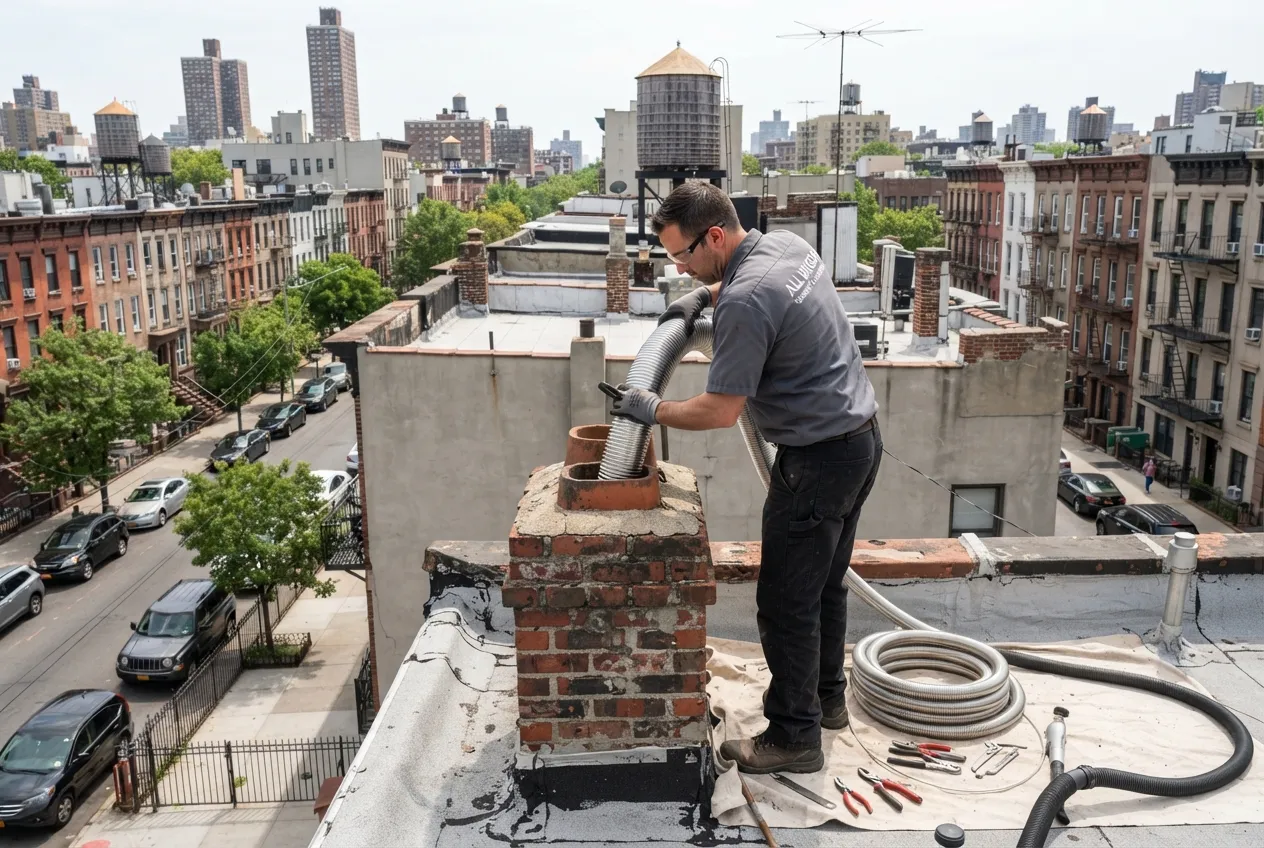
Many Manhattan buildings have moved, or are moving, from oil to gas heat. When a New York City building converts its boiler from oil to gas, the chimney has to be evaluated as part of the work. A new liner is often needed, because gas exhaust produces acidic condensate that can corrode a masonry flue over time.
An old flue that handled oil for years may also be the wrong size for a modern gas boiler or water heater. A flue that is too large lets exhaust cool and condense on the way up, which speeds up that corrosion and can hurt draft. We measure the appliance's venting needs and size the liner to match, working alongside your boiler contractor or building management so the chimney side of the conversion is handled properly.
Liner Options We Install
The right liner depends on what the chimney vents and how the flue is built. After the inspection, we walk you through the choices that make sense for your home.
- Stainless steel liners for gas, oil and wood appliances, sized to the appliance and run continuously from connection to chimney top
- Insulated stainless liners where clearances are tight or where better draft and less condensation are needed
- Liners for wood-burning fireplaces in brownstones and rowhouses where the original tile is cracked or missing
- Relining of boiler and water heater flues in walk-ups and pre-war apartment buildings
- New chimney caps and top plates to seal the liner and keep out rain, debris and animals
Time for your annual chimney check?
How the Job Works
Every liner job starts with an inspection. The NFPA 211 standard calls for chimneys, fireplaces and vents to be inspected once a year, and it describes three levels. A Level 2 inspection applies when the system changes, such as a new appliance or a switch of fuel, or when a home is sold, which covers most liner projects. That usually includes a camera inspection of the flue's interior. A Level 3 inspection is only needed when a hidden hazard has to be reached by opening part of the chimney or building.
Once we agree on a plan, we protect floors and furnishings, prepare the flue, install and connect the liner, and seal the top. We then check draft and the connection at the appliance, and give you photos and a plain explanation of the finished work. In multi-unit buildings, we coordinate roof access and scheduling with the super or management company.
Timing Around Heat Season
New York City's heat season runs from October 1 through May 31, when building owners must keep apartments heated to the city's minimum temperatures. Boiler flue work in an apartment building is easiest to schedule outside that window, or with careful planning so heat is not interrupted for long. If you own a building or manage a co-op in Yorkville, contacting us well before fall gives everyone room to plan.
Besides Yorkville, we also install liners in the Upper East Side, Carnegie Hill, Lenox Hill, Roosevelt Island and Old Astoria.
More services in Yorkville
- Chimney Sweep in YorkvilleLocal service & repairs
- Chimney Inspection in YorkvilleLocal service & repairs
- Chimney Repair in YorkvilleLocal service & repairs
- Air Duct Cleaning in YorkvilleLocal service & repairs