
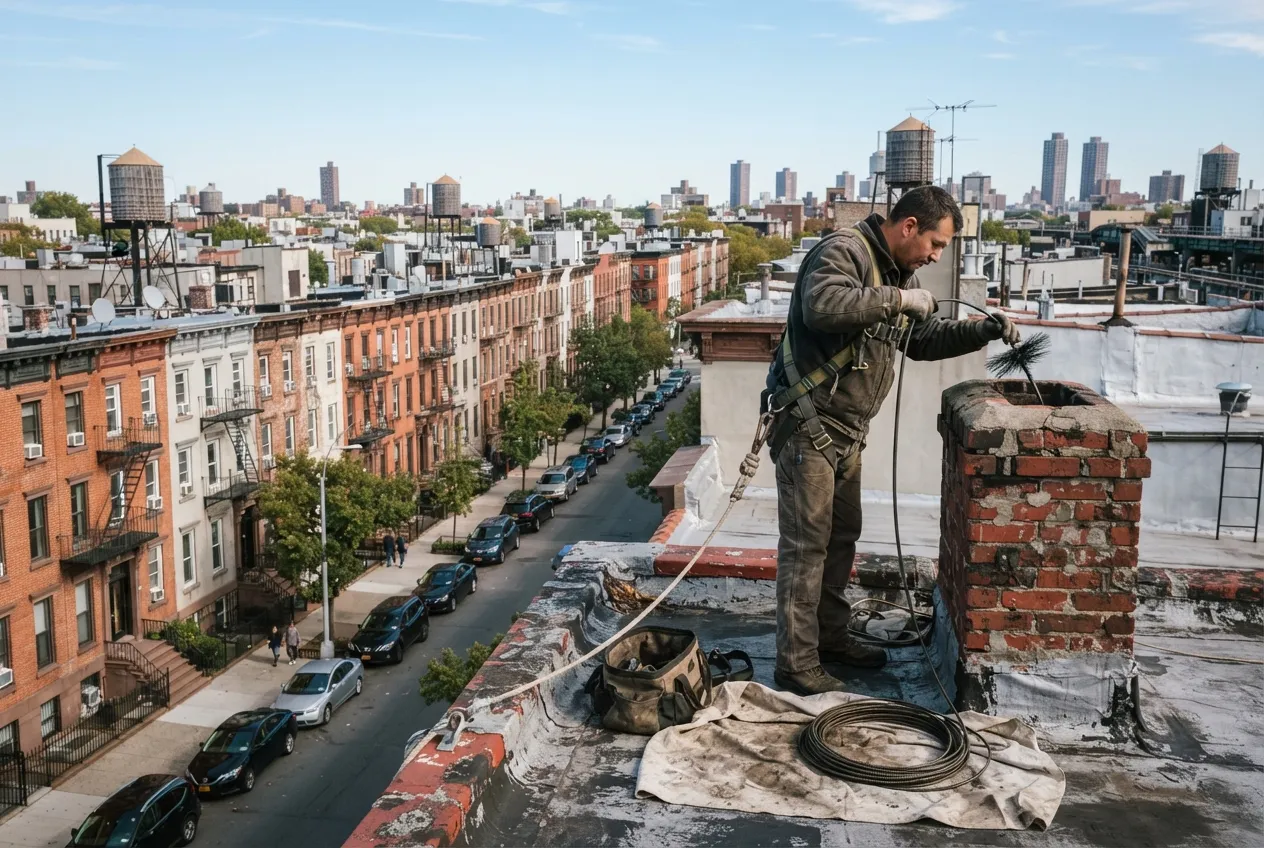
How AshVanta Approaches Chimney, Vent and Duct Work in New York
Serving New York and nearby cities.
- Diagnosis before any repair
- Photos of every finding
- Written price before we start
We start with a question rather than a brush: what is actually going on inside your chimney, dryer vent or ductwork? Each visit is built around answering it. We look first, then explain what we found in plain language, and only then do the work the system needs. This page covers how that plays out in New York homes, from older masonry row houses to apartments with shared venting.
Looking before we clean
A dirty flue is easy to spot. A cracked tile, a gap at the smoke chamber or a loose cap is not, and cleaning a chimney without checking for those problems leaves the job half done. Our certified technicians follow the NFPA 211 standard, which calls for chimneys, fireplaces and vents to be inspected once a year.
The standard sets out three levels of inspection, and we tell you which one fits your situation and why:
- Level 1, when nothing about the system has changed since it was last checked
- Level 2, when something has changed, such as a new appliance or a different fuel, or when the home is being sold
- Level 3, when a suspected hazard is hidden and part of the chimney or building has to be opened to reach it
Built around how New York homes are heated
Heating in this city runs on a calendar. Heat season lasts from October 1 through May 31, and building owners must keep apartments at the city's minimum temperatures during those months. We encourage owners and homeowners to schedule inspections and repairs outside that window when they can, so a flue problem doesn't turn into a heating problem in January.
Fuel conversions come up often here. When a building switches its boiler from oil to gas, the chimney has to be evaluated as part of the project. Gas exhaust produces acidic condensate that can eat into a masonry flue, so a new liner is often needed. We look at the existing flue, explain whether it can safely handle the new appliance, and lay out what relining would involve if it can't.
Straight answers on dryer vents and air ducts
Dryer vents are where we're most direct. The U.S. Fire Administration identifies failure to clean as the leading factor contributing to home clothes dryer fires. Lint builds up quietly, especially in the long or bent vent runs common in apartments and attached houses, so we check the full length of the run and not just the opening behind the machine.
Air ducts call for a more careful conversation. Following U.S. EPA guidance, we recommend duct cleaning when there is substantial visible mold, signs of vermin, or excessive dust and debris. Duct cleaning has not been shown to prevent health problems, and we won't suggest otherwise. We also discuss chemical treatments carefully before any are used, and we're glad to walk you through our process step by step. The EPA itself encourages homeowners to ask questions like these, especially about very cheap advertised offers.
What to expect
How a visit goes
-
We show you the problem
You get photos from inside the flue, vent or duct, along with a plain explanation of what each one shows. You see what we see before you decide anything.
-
We fix what is needed
We separate urgent safety issues from things that can be planned for later. If a sweep is all your chimney needs, a sweep is all we recommend.
-
We respect your home and building
We cover work areas, contain soot and dust, and coordinate with your super or managing agent when a building requires it.
Find out what your chimney or vents need
Tell us about your home, what you have noticed, and when you are available. We will set up an inspection, show you what we find, and give you a written price before any work begins.