The short answer
Upper East Side chimneys usually need a new liner when a boiler converts from oil to gas, when an inspection finds a cracked or deteriorated flue, or when a new appliance is connected. AshVanta inspects the chimney, sizes a liner to the appliance it serves, and installs it so exhaust leaves the building safely.
A chimney liner is the protective channel inside the flue that carries smoke and exhaust out of your home and keeps heat and corrosive gases away from the surrounding masonry. Many Upper East Side brownstones, rowhouses and pre-war apartment buildings still rely on original clay tile flues, or on flues never designed for the appliances now connected to them. AshVanta Chimney Services installs liners for homes and buildings across the Upper East Side from our office in Yorkville, about a mile away. Our certified technicians focus on sizing the liner correctly, connecting it properly, and leaving the chimney ready for the next heating season.
Why Upper East Side Chimneys Often Need New Liners
Much of the housing stock here is older masonry construction. Townhouses and pre-war buildings were often built with clay tile flue liners, or with no liner at all. Over many decades, heat cycles, moisture and freeze-thaw weather can crack tiles, loosen mortar joints and leave gaps where heat and gases reach brick and framing.
The most common trigger we see is a boiler conversion. When a New York City building converts its boiler from oil to gas, the chimney has to be evaluated as part of the work. A new liner is often needed because gas exhaust produces acidic condensate that can corrode a masonry flue that handled oil exhaust without trouble for years.
Signs Your Flue May Need a Liner
Some liner problems are visible from the firebox or the roof, but many are only found with a camera inspection. Watch for these warning signs:
- Pieces of clay tile or flaky masonry collecting at the base of the chimney or in the cleanout
- White staining, dampness or a musty smell around the chimney breast
- Water dripping into the boiler room or fireplace
- A planned conversion from oil to gas, or a new boiler, water heater or insert
- Exhaust odors or backdrafting near a furnace, boiler or fireplace
- An inspection report noting cracked, missing or mis-sized flue tiles
How We Install a Chimney Liner
Every job starts with an inspection. The NFPA 211 standard calls for chimneys, fireplaces and vents to be inspected once a year, and it describes a Level 2 inspection when the system changes, such as a new appliance or a switch of fuel, or when a home is sold. Before a liner goes in, we use a camera to record the condition of the flue, measure its size and offsets, and confirm what appliance it serves.
Next, we size the liner to the appliance rather than to the opening. A liner that is too large can let exhaust cool and condense; one that is too small can restrict draft. For gas boilers and water heaters, we typically use a stainless steel liner suited to acidic condensate. For wood-burning fireplaces, the right approach depends on the flue shape and the condition of the existing tiles.
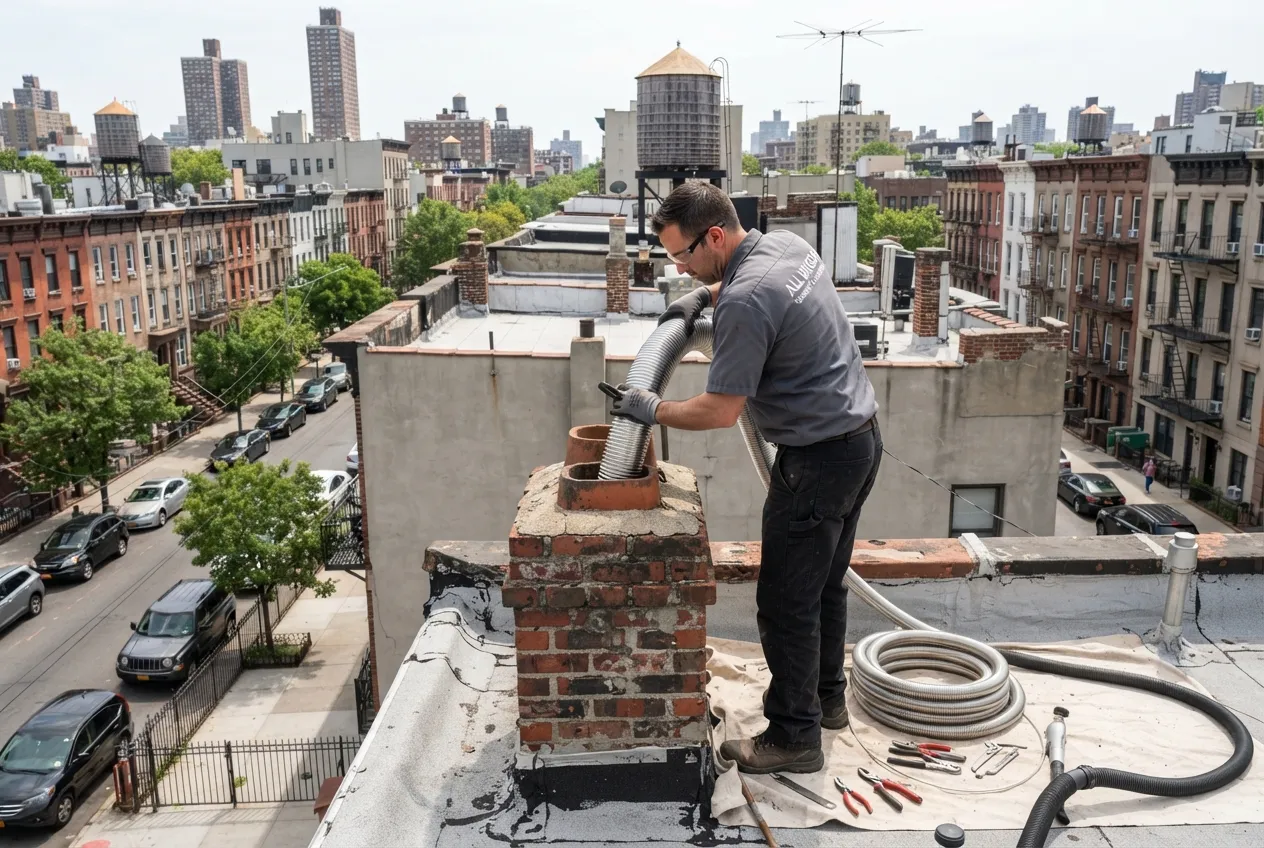
During installation, we clean the flue, run the liner from the top of the chimney down to the appliance connection, seal the connections, and fit a top plate and cap. In multi-unit and attached buildings, we plan roof access and protect interior finishes and common areas while we work.
Time for your annual chimney check?
Timing Around the Heat Season
New York City's heat season runs from October 1 through May 31, when building owners must keep apartments heated to the city's minimum temperatures. For buildings with a central boiler, it makes sense to schedule liner work, especially an oil-to-gas conversion, during the warmer months so the boiler can be shut down without affecting tenants. If a problem turns up mid-season, we will talk through your options with you and coordinate with your heating contractor.
Areas We Serve Near the Upper East Side
We install chimney liners throughout the Upper East Side, including ZIP codes 10021, 10028, 10044, 10065, 10075, 10128 and 10162. Our crews also work in nearby Carnegie Hill, Lenox Hill, Roosevelt Island and Yorkville, as well as Old Astoria across the river. Because our office is close by, we can schedule inspections and follow-up visits without long travel windows.
More services in Upper East Side
- Chimney Sweep in Upper East SideLocal service & repairs
- Chimney Inspection in Upper East SideLocal service & repairs
- Chimney Repair in Upper East SideLocal service & repairs
- Air Duct Cleaning in Upper East SideLocal service & repairs