The short answer
Air duct cleaning is worth doing when there's a visible problem: dust blowing from vents, renovation debris, pests, musty odors, visible mold or weak airflow. AshVanta's certified technicians brush and HEPA-vacuum your supply and return ducts and show you before-and-after results, without promising health benefits.
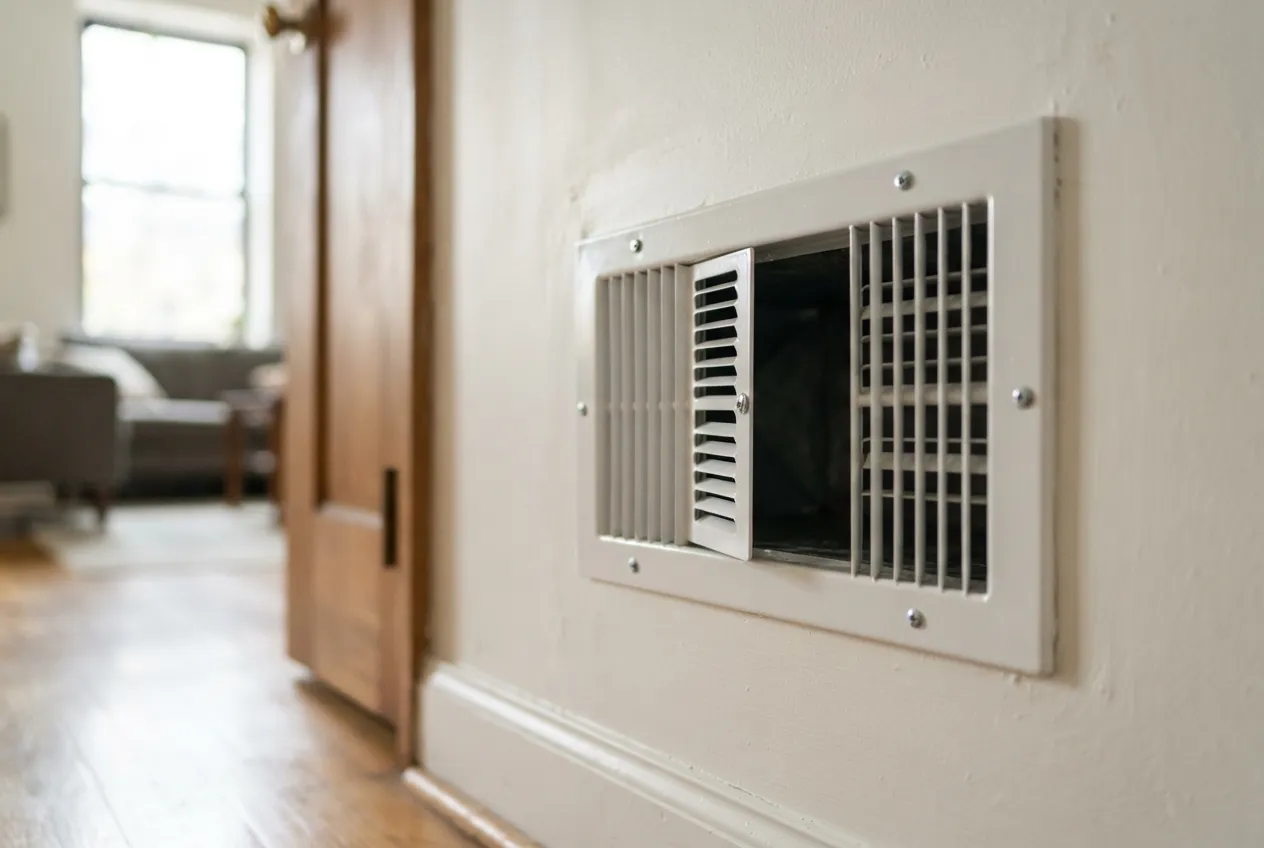
Forced-air heating and cooling systems push a lot of air through your home, and over time the ducts can collect dust, pet hair, construction debris and sometimes nesting material from mice or insects. AshVanta Chimney Services cleans residential air ducts for homeowners in New York and nearby cities. Our certified technicians clean supply and return ducts, registers and the accessible parts of the air handler with rotary brushes and HEPA-filtered vacuum equipment, and we show you what came out. We'll also be straight with you: duct cleaning removes visible dust, debris, pest material and odor sources and helps air move freely through the system. It has not been shown to prevent health problems, and we won't claim that it does.
Signs you need it
Duct cleaning makes the most sense when there's a specific problem to fix, not on a fixed calendar. These are the things homeowners usually notice before they call us:
- Dust puffing out of supply registers when the heat or air conditioning starts
- Gray buildup on register grilles and on the first few inches of duct visible behind them
- Dust settling on furniture soon after cleaning, even with a fresh filter in place
- Drywall dust, plaster or sawdust left after a renovation, especially if the system ran during the work
- Scratching or scurrying in walls or ceilings near duct runs, or droppings and nesting material at a register
- A musty, stale or burnt-dust smell when the system kicks on
- Weak airflow at some registers while others blow normally
- Visible mold growth on duct surfaces or inside the air handler
What's included
Every standard air duct cleaning covers the full supply and return side of one forced-air system. If you have more than one system or zone, we'll note that when we schedule. Here's what the visit includes:
- A walkthrough with you to hear what you've noticed and locate registers, returns and the air handler
- A camera look inside representative duct runs before cleaning so you can see their condition
- Drop cloths over floors and furniture along our work path
- Rotary brushing and agitation of supply and return ducts
- Collection of loosened debris with HEPA-filtered vacuum equipment
- Removal, washing and reinstallation of register and return grilles
- Cleaning of accessible air handler areas, such as the blower compartment and return plenum
- A filter check, with a note of the filter size your system takes
- Before-and-after photos or camera footage, plus a written note of anything that needs repair, such as disconnected, crushed or leaking ducts
How our crew works in your home
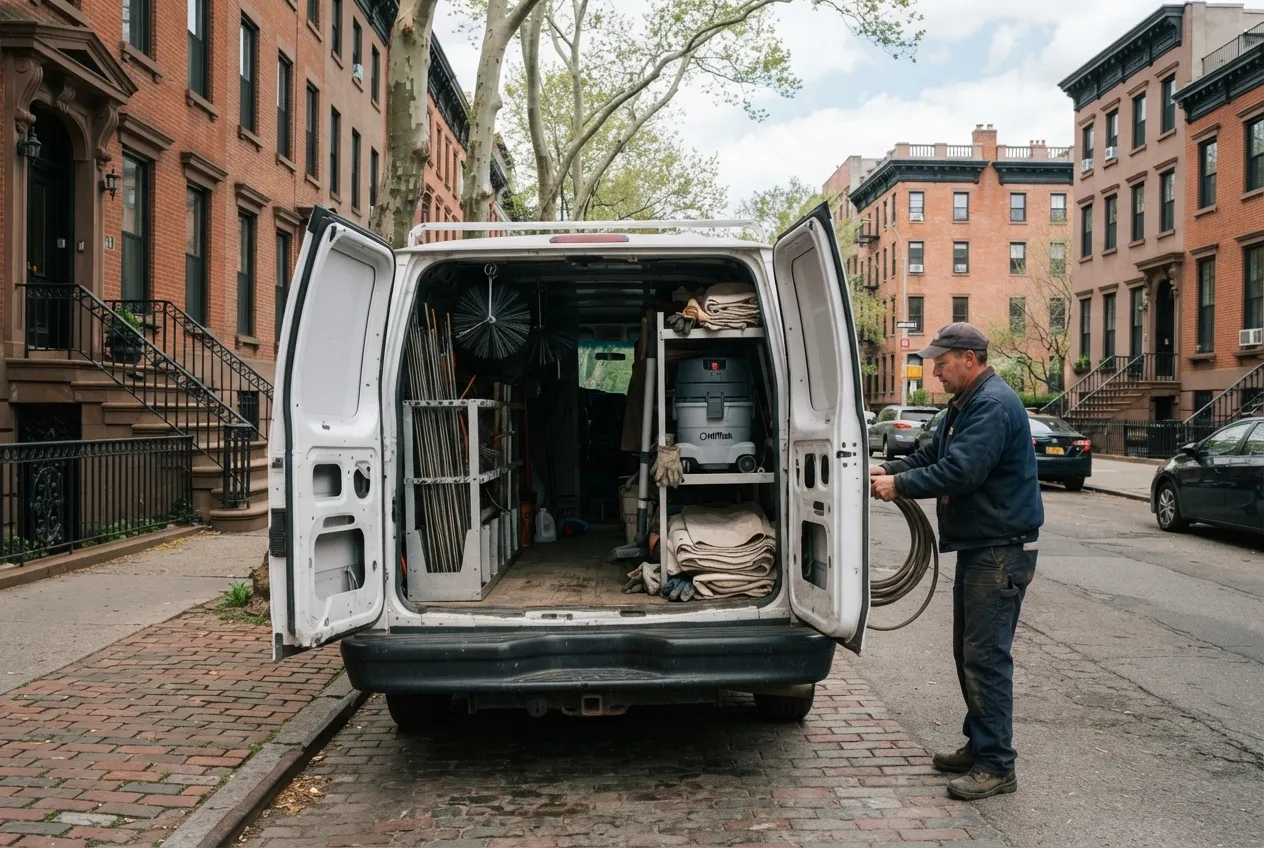
We start by laying drop cloths from your entry to the work areas and wearing shoe covers indoors. With the system turned off, we cover registers we aren't working on so loosened dust is pulled toward our vacuum instead of into your rooms. A HEPA-filtered vacuum is connected to the duct system to keep it under suction while we work.
Rotary brushes are fed through each supply and return run to knock dust and debris off the duct walls, and the vacuum carries it out. Where a run is long or hard to see, we use a camera to check our work. Flexible ducts are cleaned more gently than sheet metal because they tear more easily.
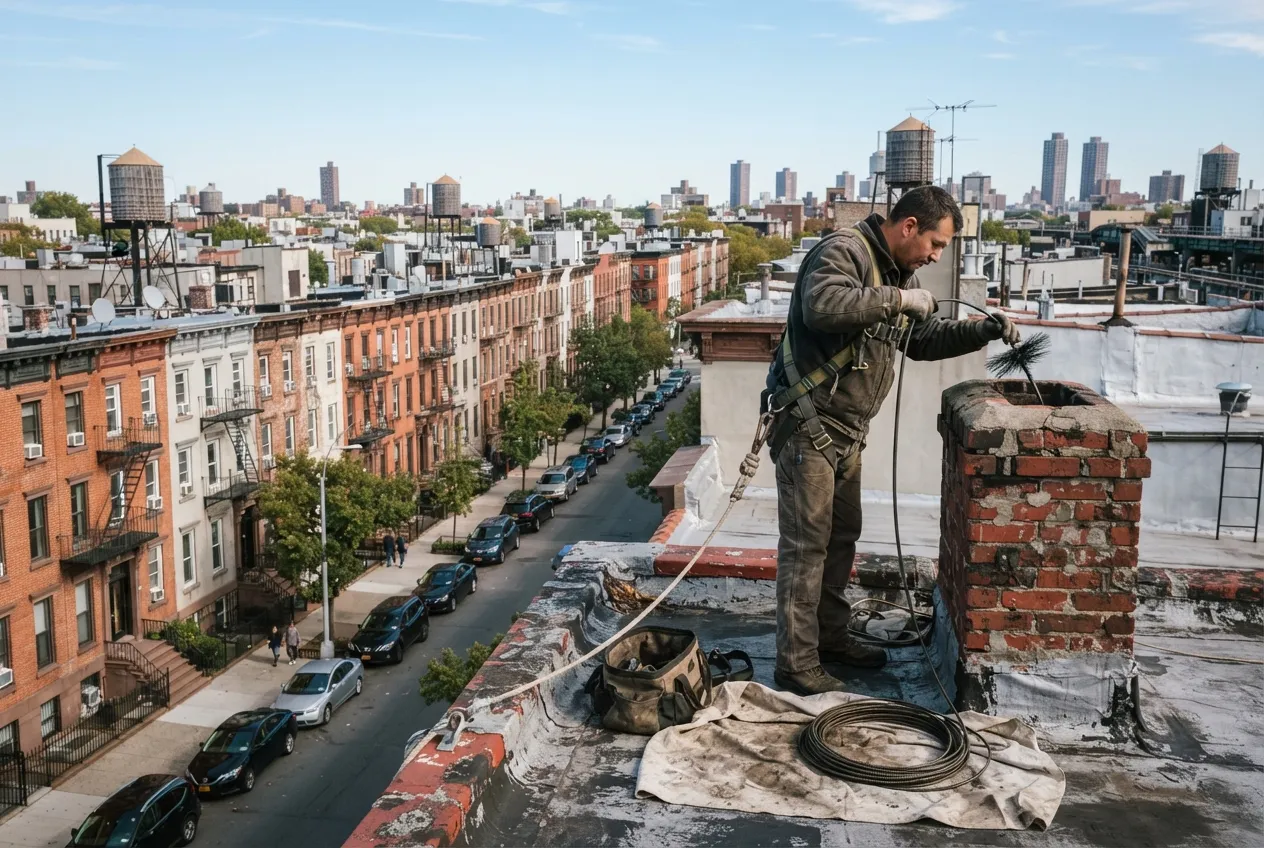
Air duct work happens inside the house. Ducts, registers and the air handler are reached from the living space, basement, attic or utility closet, so this service doesn't require roof access. If your chimney or dryer vent also needs attention, we treat that as separate work and tell you before starting.
We don't spray sanitizers, deodorizers or duct coatings as a routine add-on. If one seems worth considering, we explain what it is and why, and you decide.
Time for your annual chimney check?
The guidance we follow
The chimney standard NFPA 211 doesn't cover household air ducts, so we follow the U.S. EPA's guidance. The EPA advises cleaning air ducts when there is substantial visible mold growth, vermin, or excessive dust and debris. It also says duct cleaning has not been shown to prevent health problems, which is why we describe our work in terms of what you can see, smell and feel at the registers.
The EPA also warns homeowners to research the process before responding to very cheap advertised duct cleaning offers, and to be careful with chemical treatments. We think that's sound advice. Ask any company exactly what it will clean, what equipment it uses and what it plans to apply inside your ducts.
If you find mold, the moisture source behind it, such as a leaking condensate line or poorly insulated ductwork, needs to be fixed too, or the growth may return.
What affects the price
We give you an estimate after we understand your system, because no two homes are laid out the same. The main factors are:
- Size of the home and the number of supply and return registers
- Length and layout of the duct runs, including multiple floors or zones
- Access, such as tight attics, crawlspaces, high ceilings, crowded utility closets or building rules for when contractors can work
- Type of system, such as a gas or oil furnace, a heat pump or a separate air handler for central air
- How much buildup there is, including renovation debris or nesting material
- Duct material and condition, since flexible or damaged ducts take more care
- Whether extra camera inspection or repairs like resealing or reconnecting ducts are needed
How a visit works
When you contact us, we ask what you've noticed, how many systems you have and where the air handler is located. We then schedule a time and let you know how to prepare, usually by clearing a path to the registers and the equipment.
On the day of the visit, the technicians walk the home with you, take a camera look inside the ducts, protect your floors and furniture, and turn off the system before cleaning. After cleaning, we reinstall the grilles, restart the system, check airflow at the registers and show you the before-and-after photos or footage.
You'll get a written note of what we cleaned and anything we saw that needs repair. Because the system has to be off while we work, many owners prefer spring or fall. If you own a building in New York City, keep in mind that heat season runs from October 1 through May 31, when apartments must stay heated to the city's minimum temperatures, so plan any shutdown during that period carefully.
Air Duct Cleaning by city
- Air Duct Cleaning in YorkvilleLocal service & repairs
- Air Duct Cleaning in Carnegie HillLocal service & repairs
- Air Duct Cleaning in Upper East SideLocal service & repairs
- Air Duct Cleaning in Upper West SideLocal service & repairs
- Air Duct Cleaning in Manhattan ValleyLocal service & repairs
- Air Duct Cleaning in East HarlemLocal service & repairs
- Air Duct Cleaning in Lenox HillLocal service & repairs
- Air Duct Cleaning in Roosevelt IslandLocal service & repairs
- Air Duct Cleaning in Old AstoriaLocal service & repairs
- Air Duct Cleaning in Hallets PointLocal service & repairs
- Air Duct Cleaning in Lincoln SquareLocal service & repairs
- Air Duct Cleaning in Morningside HeightsLocal service & repairs