The short answer
If your Lincoln Square chimney has a damaged clay liner, no liner at all, or a newly converted or replaced heating appliance, it likely needs a properly sized new liner. Our certified technicians inspect the flue, recommend a liner that matches the appliance, and install it so exhaust vents safely and the masonry is protected.
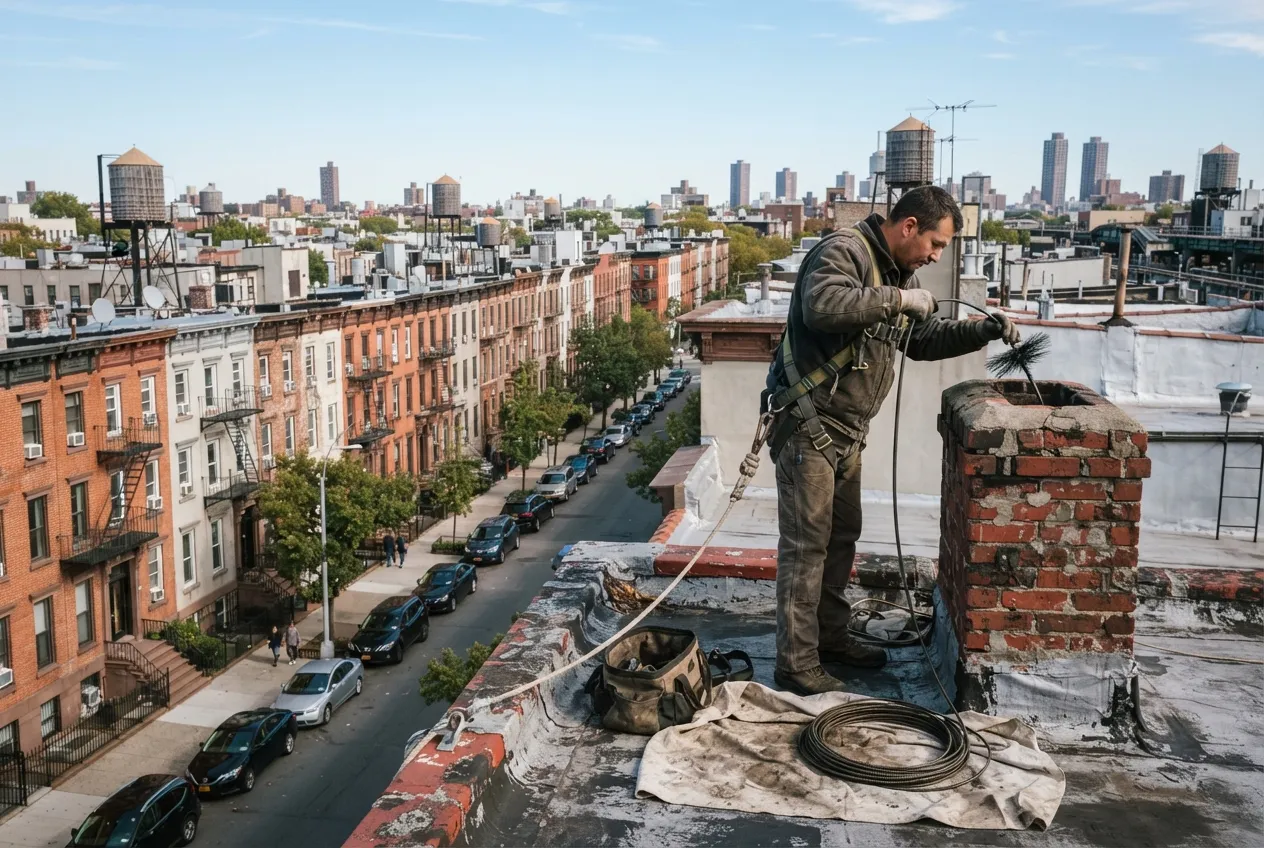
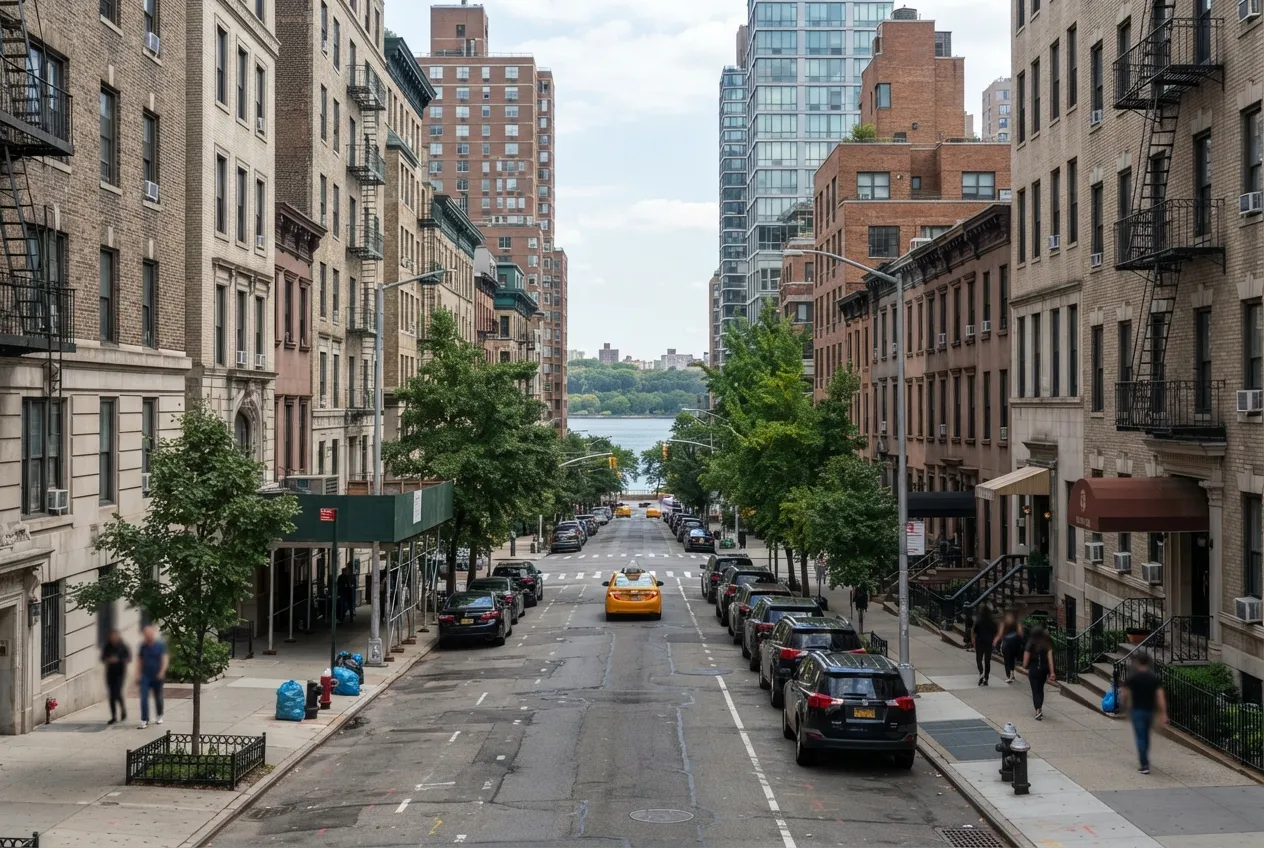
A chimney liner is the protective channel inside your flue. It carries smoke and exhaust out of the building and keeps heat and corrosive byproducts away from the surrounding brick and mortar. In Lincoln Square, much of the housing stock has been standing for generations. Original clay tile liners are often cracked, missing sections, or sized for equipment that was replaced long ago. AshVanta Chimney Services installs new liners for brownstones, rowhouses, pre-war apartment buildings and other homes in ZIP codes 10023 and 10069. Our office is in Yorkville, about two miles east.
Why Lincoln Square Chimneys Often Need New Liners
Older masonry chimneys in Manhattan face several stresses at once. Clay tile liners crack from heat cycling and years of freezing and thawing, and mortar joints wear away until gaps open between sections. Buildings settle over time, which can shift tiles out of alignment.
Fuel changes are another common reason. When a New York City building converts its boiler from oil to gas, the chimney has to be evaluated as part of the work. A new liner is often needed because gas exhaust produces acidic condensate that can corrode a masonry flue. A liner sized for an old oil burner may also be too large for a modern gas appliance. An oversized flue lets exhaust cool too quickly, which increases condensation and can weaken draft.
- Pieces of clay tile or flaking masonry at the base of the flue or in the cleanout
- White staining, damp spots or peeling paint on walls next to the chimney
- Odors or poor draft from a fireplace, furnace or boiler
- A recent or planned conversion from oil to gas, or a new appliance
- An inspection report that found cracked, missing or unlined sections
Matching the Liner to Your Appliance and Flue
There is no single liner that fits every chimney. The right choice depends on what is venting through the flue: a wood-burning fireplace, a gas or oil boiler, a water heater, or a combination. It also depends on the flue's shape, height and condition. We measure the flue and review the appliance's venting requirements before recommending a liner. That way the diameter supports proper draft and the material holds up to that type of exhaust.
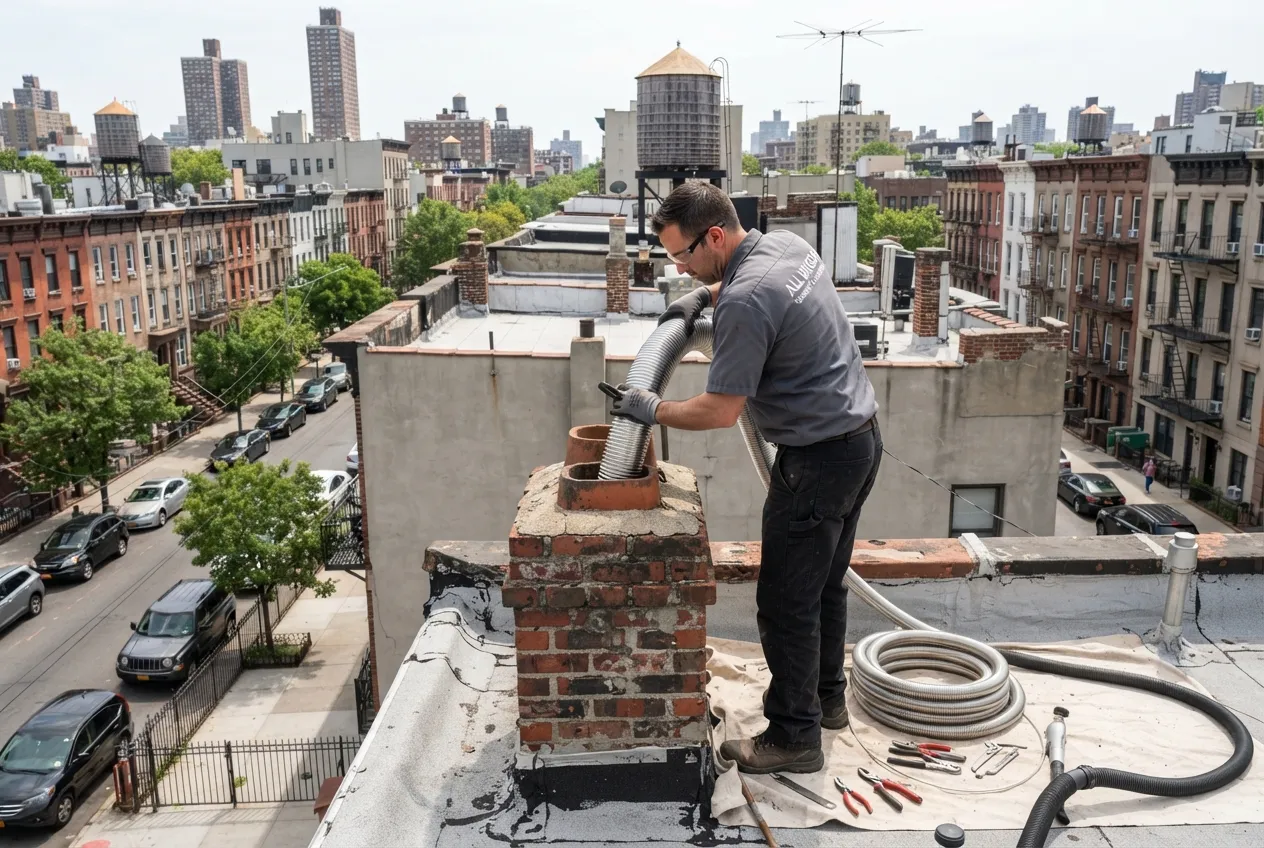
Stainless steel liners are a common choice for relining older Manhattan chimneys because they can be fitted inside an existing masonry flue. Where the flue has bends or offsets, a flexible liner can follow the path of the chimney. Insulation may be recommended to keep exhaust warm, improve draft and reduce condensation.
How the Installation Works
The NFPA 211 standard calls for chimneys, fireplaces and vents to be inspected once a year. It describes a Level 2 inspection for times when the system changes, such as a new appliance or a switch of fuel, or when a home is sold. Most liner projects begin with that kind of evaluation, often using a camera to look at the full length of the flue.
- Inspect the chimney and flue, and document the current condition
- Clean the flue so the new liner goes into a clear passage
- Measure and select the liner size and type for the connected appliance
- Install the liner, connections and any insulation, working from the roof and the appliance end
- Fit a top plate and chimney cap to keep out rain, debris and animals
- Check draft and connections, then review the results with you
Time for your annual chimney check?
Planning Around Heat Season and Building Logistics
New York City's heat season runs from October 1 through May 31. During those months, building owners must keep apartments heated to the city's minimum temperatures. If your liner serves a boiler that heats tenants or neighboring units, scheduling the work for late spring or summer avoids pressure to restore heat quickly. If a problem turns up during the heating season, we can talk through the options and timing with you.
Lincoln Square projects often involve roof access through a building, coordination with a superintendent or managing agent, and timing with a boiler or plumbing contractor during a fuel conversion. We plan these details with you ahead of time so the work moves smoothly and the building stays as undisturbed as possible.
Serving Lincoln Square and Nearby Neighborhoods
Along with Lincoln Square, we install chimney liners for homes and buildings on the Upper West Side, the Upper East Side, Carnegie Hill, Lenox Hill and Roosevelt Island. Whether you own a single brownstone or manage a pre-war apartment building, we start by looking at your chimney and explaining what we find in plain terms.
More services in Lincoln Square
- Chimney Sweep in Lincoln SquareLocal service & repairs
- Chimney Inspection in Lincoln SquareLocal service & repairs
- Chimney Repair in Lincoln SquareLocal service & repairs
- Air Duct Cleaning in Lincoln SquareLocal service & repairs