The short answer
A chimney inspection checks whether your chimney and fireplace or heating appliance can vent safely, and the NFPA 211 standard calls for one every year. Our certified technicians inspect inside your home and on the roof, use a camera when the situation calls for it, and give you written findings with photos.
A chimney inspection tells you whether your fireplace, wood stove or heating appliance can vent safely. Our certified technicians check the flue, the masonry, the cap and crown, and the connection to the appliance. Then they walk you through what they found in plain terms. In New York City and the surrounding area, chimneys range from tall masonry flues on brownstones and walk-ups to newer metal systems in suburban homes, and each type has its own weak points. Whether you use your fireplace every weekend or are buying a house with one you have never lit, an inspection is the place to start.
Signs you need it
Many chimney problems stay hidden until they get worse. These are the warning signs homeowners most often notice before they call for an inspection:
Even with no symptoms, schedule an inspection before the first fire of the season. You should also book one after a chimney fire, after a strong storm, and before you buy or sell a home.
- A smoky or tar-like creosote smell, especially on humid days or when the air conditioning runs
- Poor draft, such as smoke rolling into the room, fires that are hard to start, or cold air pouring down the flue
- Debris, mortar grit, or flakes of brick or tile collecting in the firebox
- White, chalky staining on the brick inside or outside, a sign that water is moving through the masonry
- Scratching, chirping or nesting sounds from inside the flue
- Water, rust or damp ash in the firebox after rain
What's included in a chimney inspection
Every inspection covers the parts of the system that can be reached and seen without opening walls or ceilings. Here is what our technicians check:
If something needs attention, we explain what it is, why it matters and what your options are. We do not pressure you to book a repair on the spot.
- Firebox, firebrick and mortar joints, checked for cracks, gaps and heat damage
- Damper operation and seal
- Smoke chamber and smoke shelf, checked for creosote buildup and debris
- Flue liner condition along its visible length, including cracks, missing mortar and offsets
- Creosote level and type, and whether the flue needs sweeping
- Clearances to nearby wood and other combustible materials where accessible
- Exterior masonry, crown, flashing and chimney cap
- Appliance connection for wood stoves, inserts, furnaces and boilers
- Signs of animal entry, nesting or blockage
- Written findings with photos and clear recommendations
How we work inside your home and on the roof
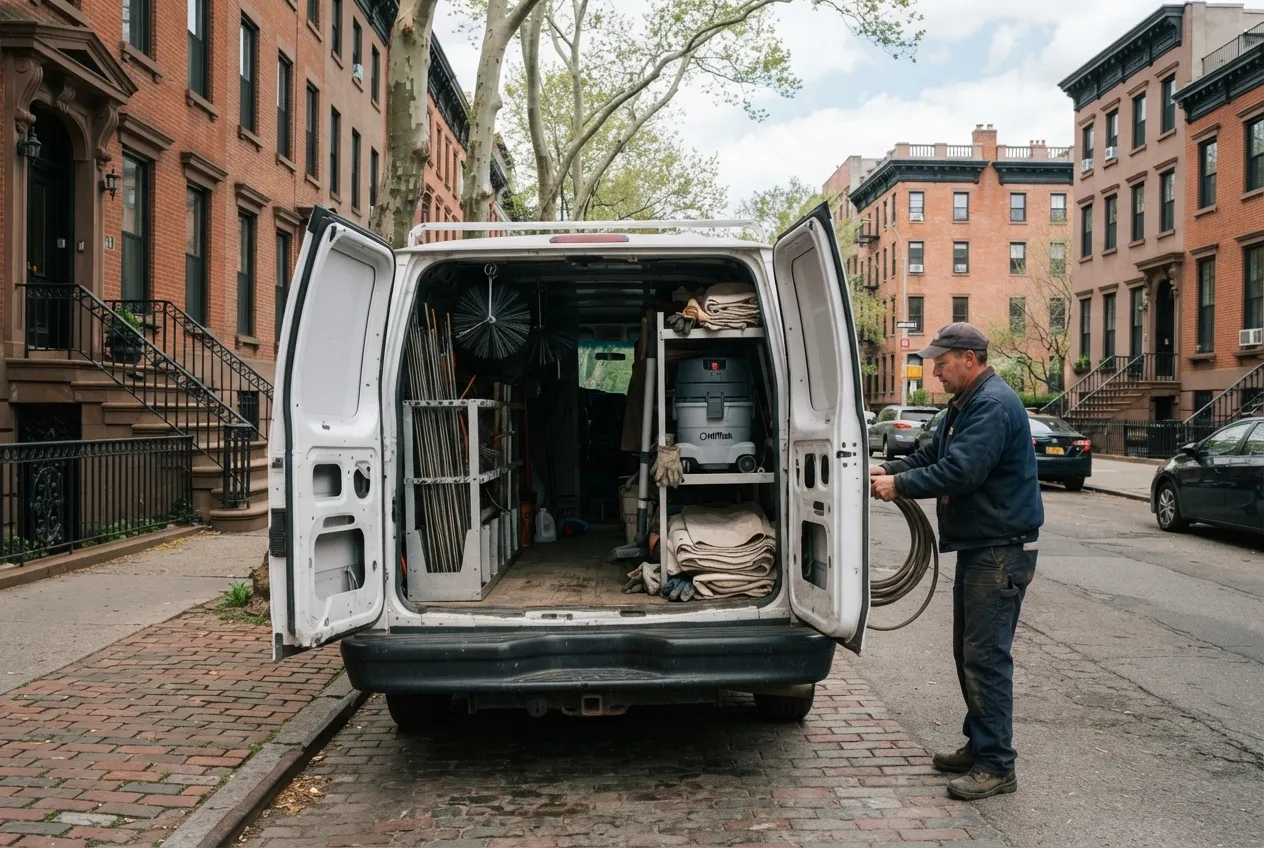
Inside, the crew lays drop cloths from the door to the fireplace and covers the hearth and nearby furniture. A HEPA vacuum runs whenever the damper is opened or the firebox is disturbed. That way soot and dust stay in the chimney instead of settling in your living room. If heavy creosote or debris blocks the view, we can sweep the flue with rotary brushes before inspecting it, with your approval.
For a Level 2 inspection, we run a video camera up the flue to see the liner from the inside. The camera shows cracks, gaps between tiles and deterioration that cannot be seen from the firebox or the roof. You are welcome to watch the footage with us.
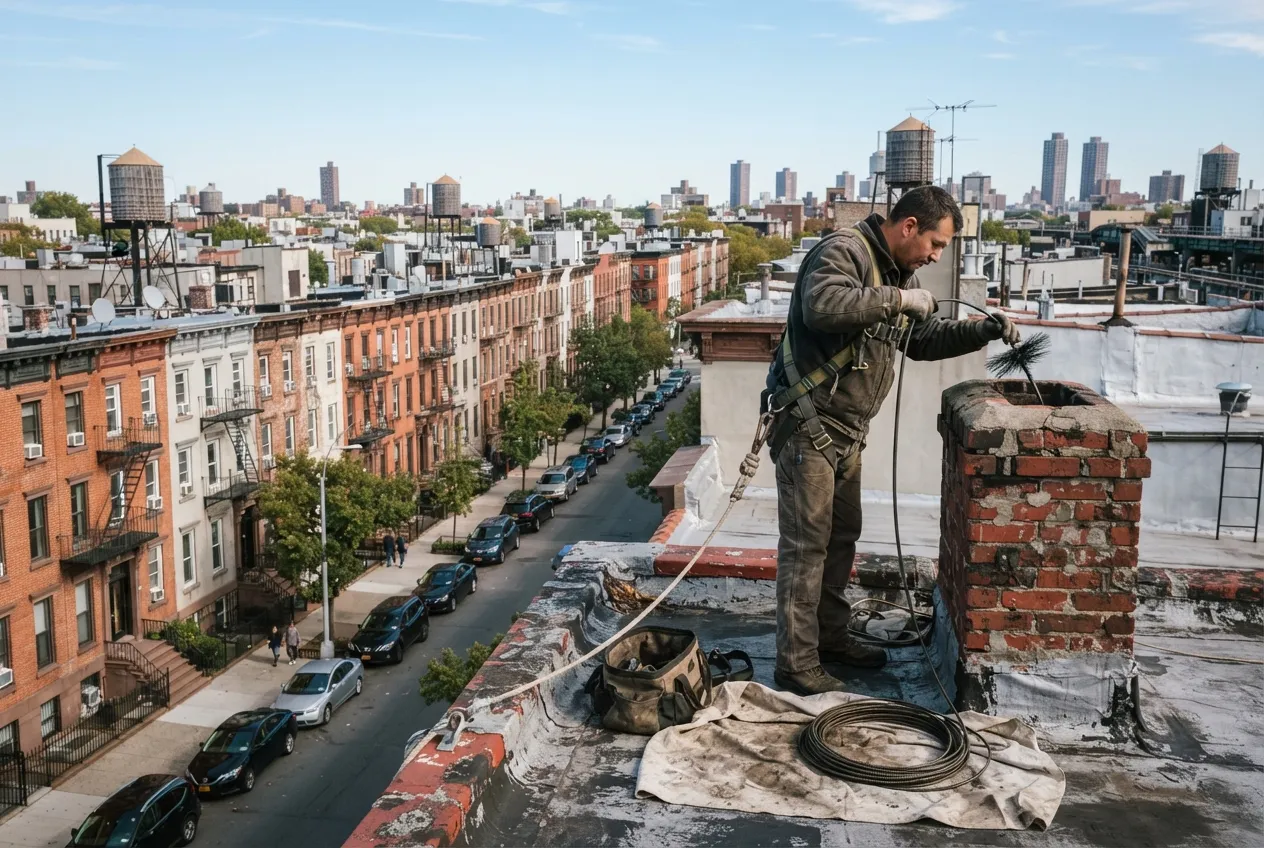
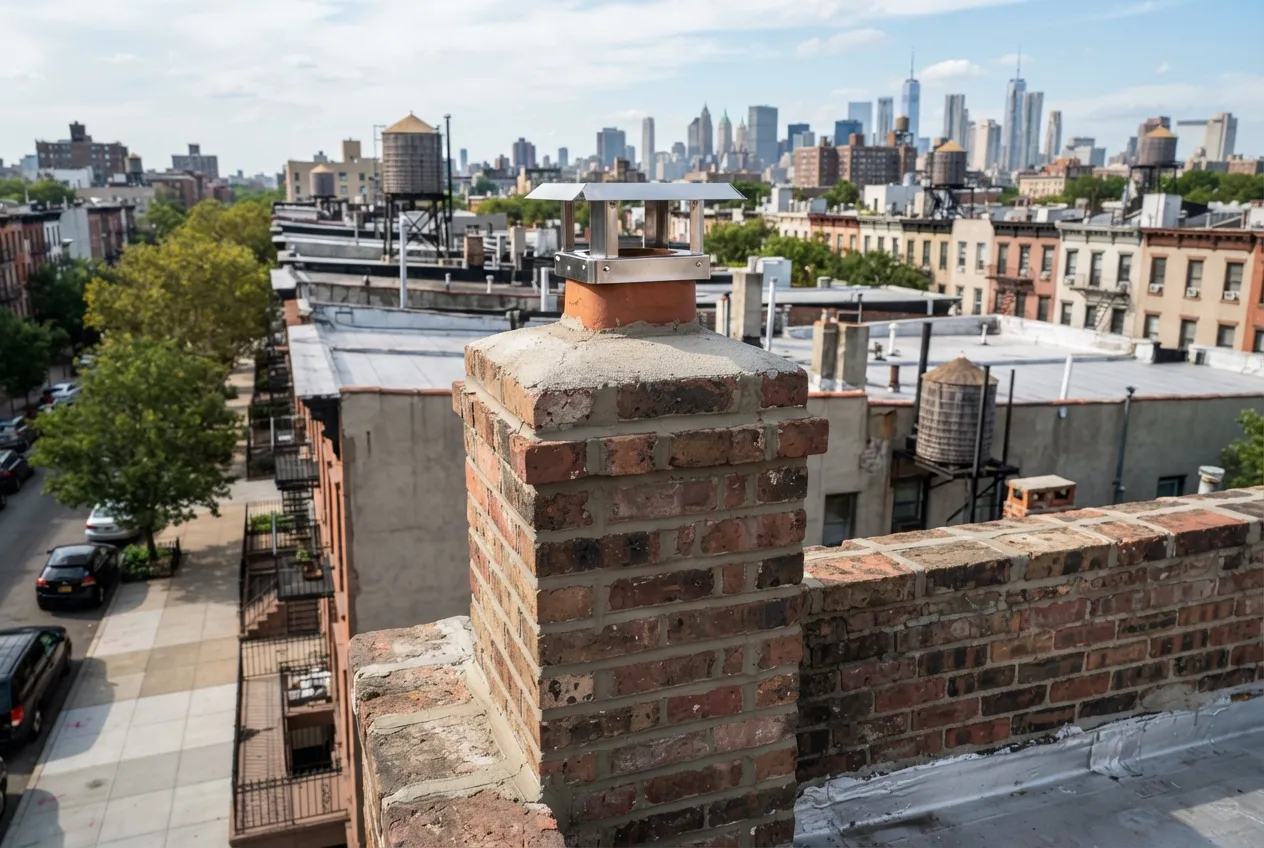
On the roof, technicians use proper ladders and fall protection, and they only go up when conditions are safe. They check the crown for cracks, the cap and spark screen, the flashing where the chimney meets the roof, and the brick and mortar above the roofline. If your building's roof is reached through a bulkhead or hatch, we coordinate access with the super or building management ahead of time.
Time for your annual chimney check?
The standards we follow
We follow the NFPA 211 standard, which calls for chimneys, fireplaces and vents to be inspected once a year. Chimney professionals use three inspection levels, and we tell you which one fits your situation before work begins.
In New York City, converting a boiler from oil to gas means the chimney has to be evaluated as part of the work. A new liner is often needed, because gas exhaust produces acidic condensate that can corrode a masonry flue. The city's heat season runs from October 1 through May 31, so late summer or early fall is a sensible time to inspect heating flues, before the boiler runs every day.
- Level 1: for a system that has not changed and is in regular use. This is a visual check of the readily accessible parts of the chimney and appliance.
- Level 2: for when something changes, such as a new appliance or a switch from one fuel to another, or when the home is being sold. It includes a camera inspection of the flue.
- Level 3: for when a hidden hazard has to be reached by opening part of the chimney or building, usually after a Level 2 inspection finds a serious concern.
What affects the price
We give you a quote before any work starts. The main factors are:
- Chimney height and how easy the roof is to reach, including steep pitches and building access
- Fuel type, since wood, gas and oil each leave different residue and call for different checks
- Flue size, shape and condition, and whether the chimney has more than one flue
- How much creosote, soot or debris has built up
- Whether a camera inspection is needed, and whether a repair is recommended afterward
How a visit works
When you book, we ask about your chimney, how you use it and any problems you have noticed, so we can recommend the right inspection level. We confirm an arrival window and any building access details. Please let the fireplace or appliance cool completely before we arrive.
On the day of the visit, the technician walks through the space with you, protects the area, and inspects inside and on the roof. Before leaving, they review the findings with you, and you receive a written report with photos. If the chimney needs sweeping or repair, we explain your options and schedule the work at a time that suits you.
Chimney Inspection by city
- Chimney Inspection in YorkvilleLocal service & repairs
- Chimney Inspection in Carnegie HillLocal service & repairs
- Chimney Inspection in Upper East SideLocal service & repairs
- Chimney Inspection in Upper West SideLocal service & repairs
- Chimney Inspection in Manhattan ValleyLocal service & repairs
- Chimney Inspection in East HarlemLocal service & repairs
- Chimney Inspection in Lenox HillLocal service & repairs
- Chimney Inspection in Roosevelt IslandLocal service & repairs
- Chimney Inspection in Old AstoriaLocal service & repairs
- Chimney Inspection in Hallets PointLocal service & repairs
- Chimney Inspection in Lincoln SquareLocal service & repairs
- Chimney Inspection in Morningside HeightsLocal service & repairs