The short answer
Under the NFPA 211 standard, chimneys, fireplaces, and vents should be inspected once a year, at Level 1, 2, or 3 depending on your situation. In Old Astoria, older masonry, shared walls, and oil-to-gas boiler conversions make a yearly check especially worthwhile. Schedule it before heat season starts on October 1.
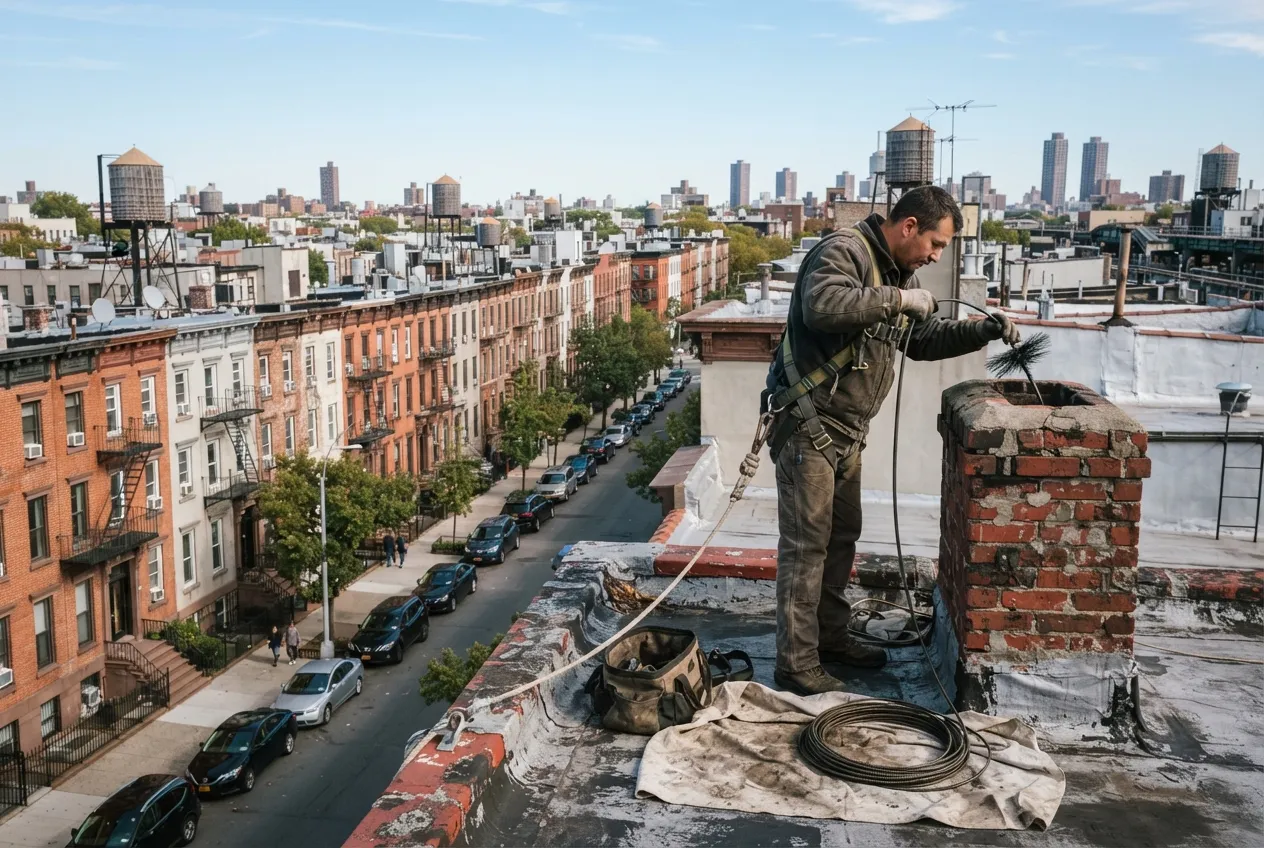
Old Astoria has a mix of attached brick rowhouses, two-family homes, detached frame houses, and pre-war apartment buildings. Many of them still rely on chimneys that were built for coal or oil decades ago. AshVanta Chimney Services inspects chimneys, fireplaces, and appliance vents across the neighborhood from our office in Yorkville, about 2 miles away. Our certified technicians look at the whole venting system, explain what they find in plain terms, and tell you which problems need attention now and which can wait. The goal is simple: know the condition of your chimney before you depend on it.
What we check in Old Astoria homes
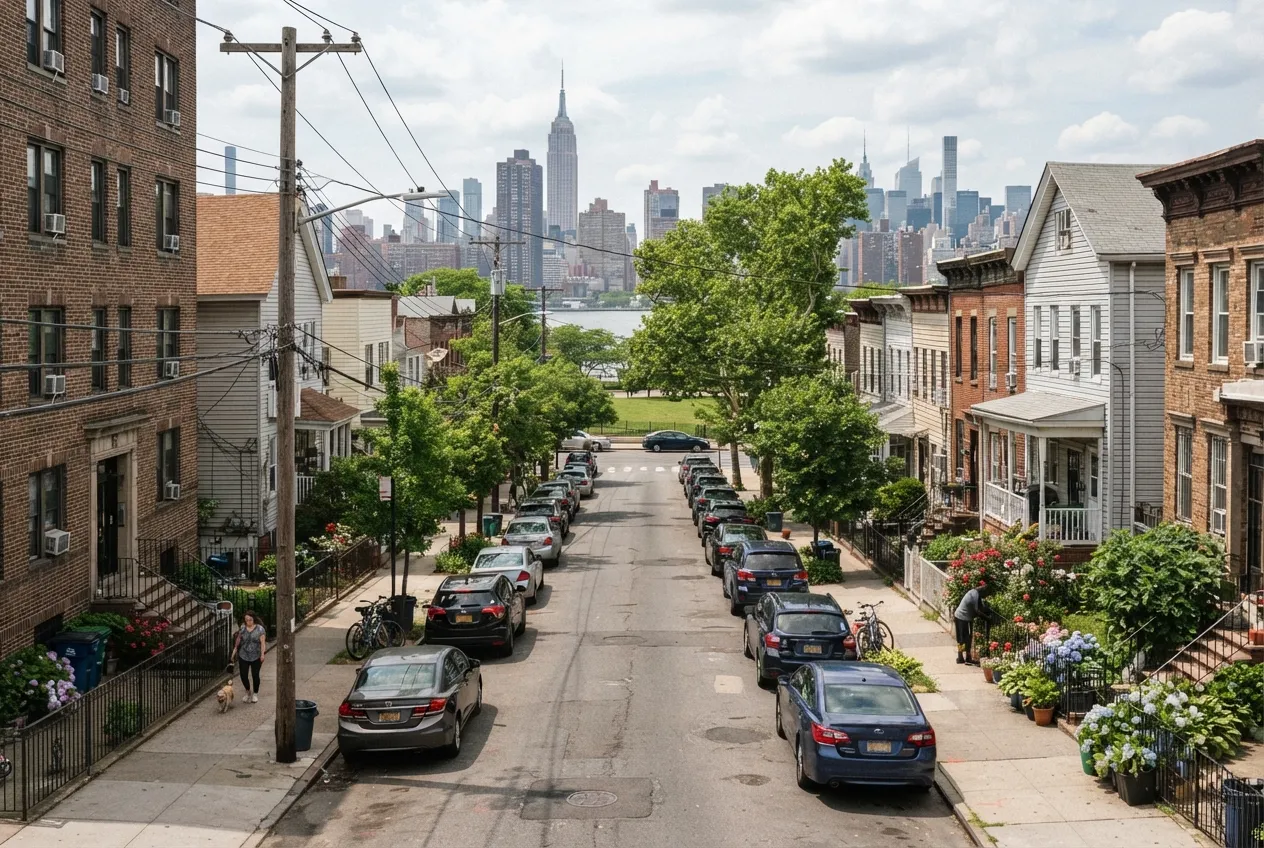
Housing in Old Astoria ranges from attached rowhouses that share party walls to detached homes and multi-unit pre-war buildings with tall boiler chimneys. Each layout raises different concerns. In attached homes, a cracked flue or failing mortar can let smoke or heat reach a neighbor's wall. In older apartment buildings, the chimney often serves a boiler that runs for months at a time. In detached houses, the exposed chimney takes the full force of wind, rain, and freeze-thaw cycles.
A standard inspection covers the parts you can reach without opening walls or tearing anything apart:
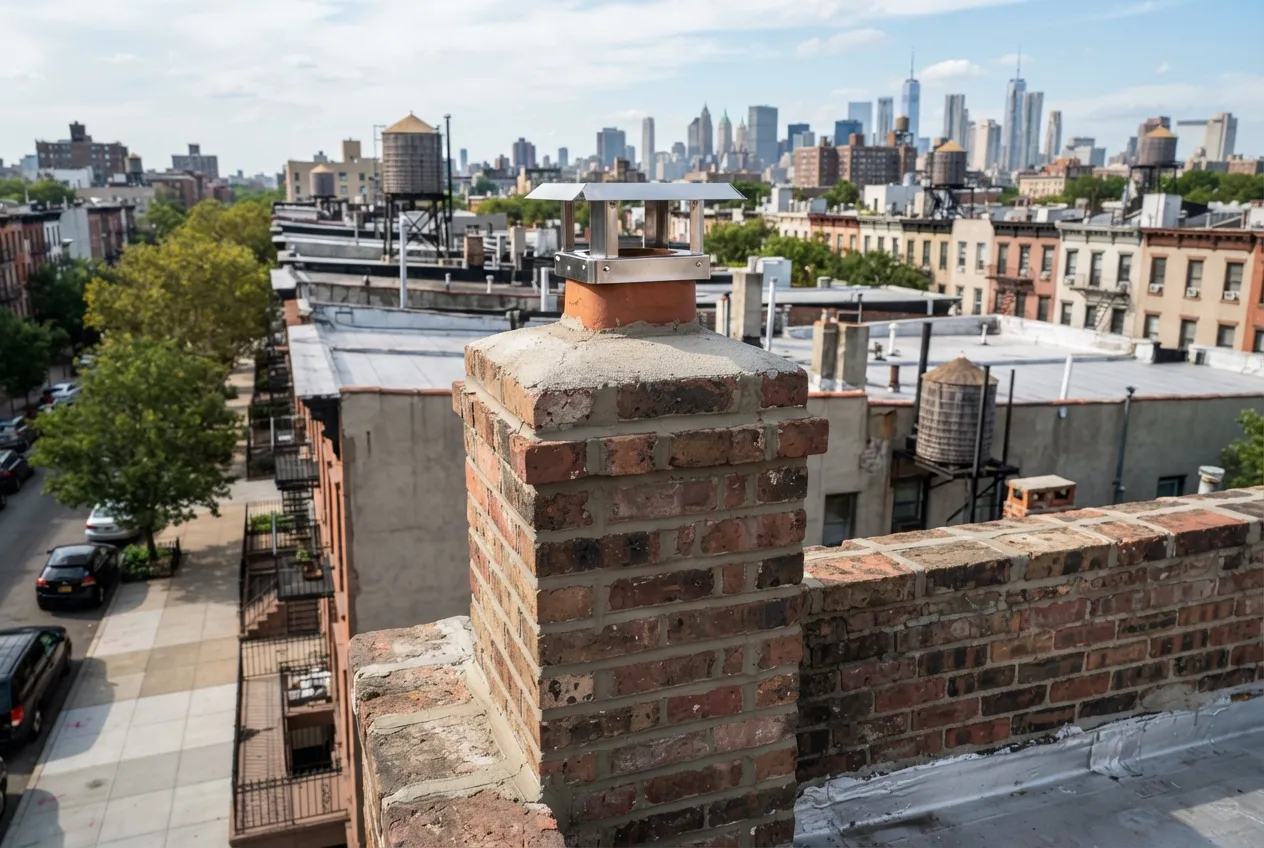
- Chimney crown, cap, and flashing where water usually gets in
- Exterior brick and mortar joints for cracking, spalling, or leaning
- Flue liner condition, including gaps, cracks, and deterioration
- Creosote and soot buildup in wood-burning fireplaces
- Damper operation, firebox, and smoke chamber
- Connections between the boiler, furnace, or water heater and the chimney
- Blockages from debris, nests, or fallen masonry
- Clearance from combustible materials where it can be seen
Which inspection level you need
Chimney professionals use three levels of inspection. Which one fits depends on what has changed in your home, not on how old the chimney is.
We will recommend a level after asking about your appliances, your fuel, and any recent work. If a Level 1 inspection turns up something that needs a closer look, we explain why before going further.
- Level 1: for a chimney in regular use when nothing about the system has changed. This is the routine annual check.
- Level 2: when the system changes, such as a new boiler or stove, a switch from oil to gas, or a relined flue. It is also the right level when a home is being sold. Level 2 includes a camera scan of the flue interior.
- Level 3: when a hidden hazard is suspected and the only way to reach it is to open part of the chimney or the building, such as a wall or chase.
Oil-to-gas conversions and flue liners
A good number of Old Astoria buildings have moved, or are planning to move, from oil heat to natural gas. When a New York City building converts its boiler from oil to gas, the chimney has to be evaluated as part of the job. Gas exhaust produces acidic condensate that can corrode an unlined or old masonry flue over time, so a new liner is often needed.
If your building has converted recently, or a conversion is coming, a Level 2 inspection shows whether the existing flue can handle gas exhaust safely. If it can't, we explain the liner options and why they matter. That way you can plan the work with your heating contractor instead of finding the problem afterward.
Time for your annual chimney check?
Timing your inspection around heat season
New York City's heat season runs from October 1 through May 31. During those months, building owners must keep apartments at the city's minimum temperatures. For owners of multi-family buildings, a chimney problem in January can mean a boiler that cannot safely run while tenants still need heat.
The most practical time to inspect is late spring through early fall. That gives you room to schedule any repairs before the boiler is needed. Homeowners with wood-burning fireplaces benefit from the same timing, because a clean, inspected chimney is ready for the first cold night. If you missed that window, an inspection during heat season is still far better than none.
What you get after the visit
After the inspection, we go over what we found while we are still there. Then we give you written findings that describe the condition of each part of the system. If we recorded camera footage of the flue, we can walk you through it so you can see the issue for yourself.
We separate urgent safety problems from routine maintenance and items to watch. You can then decide what to do and when. We don't push cleaning or repairs your chimney doesn't need.
Besides Old Astoria, we also inspect chimneys in Hallets Point, Yorkville, the Upper East Side, Lenox Hill, and Roosevelt Island.
More services in Old Astoria
- Chimney Sweep in Old AstoriaLocal service & repairs
- Chimney Repair in Old AstoriaLocal service & repairs
- Air Duct Cleaning in Old AstoriaLocal service & repairs
- Chimney Liner Installation in Old AstoriaLocal service & repairs