The short answer
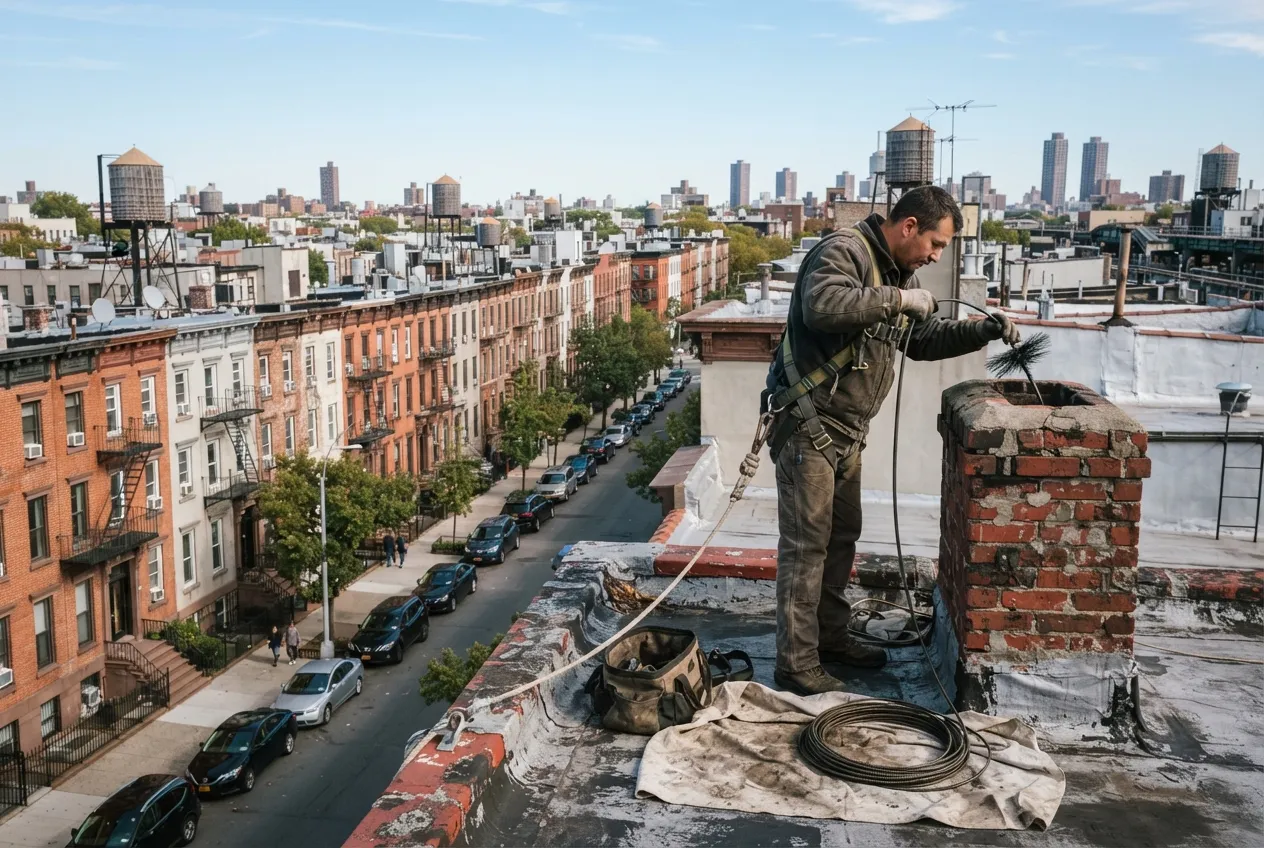
Chimney repair in Old Astoria usually means fixing worn mortar joints, cracked crowns, failed flashing, damaged flue liners, or a chimney that no longer suits a converted heating system. We inspect first, explain what we find in plain terms, and recommend repairs based on the condition of your specific chimney.
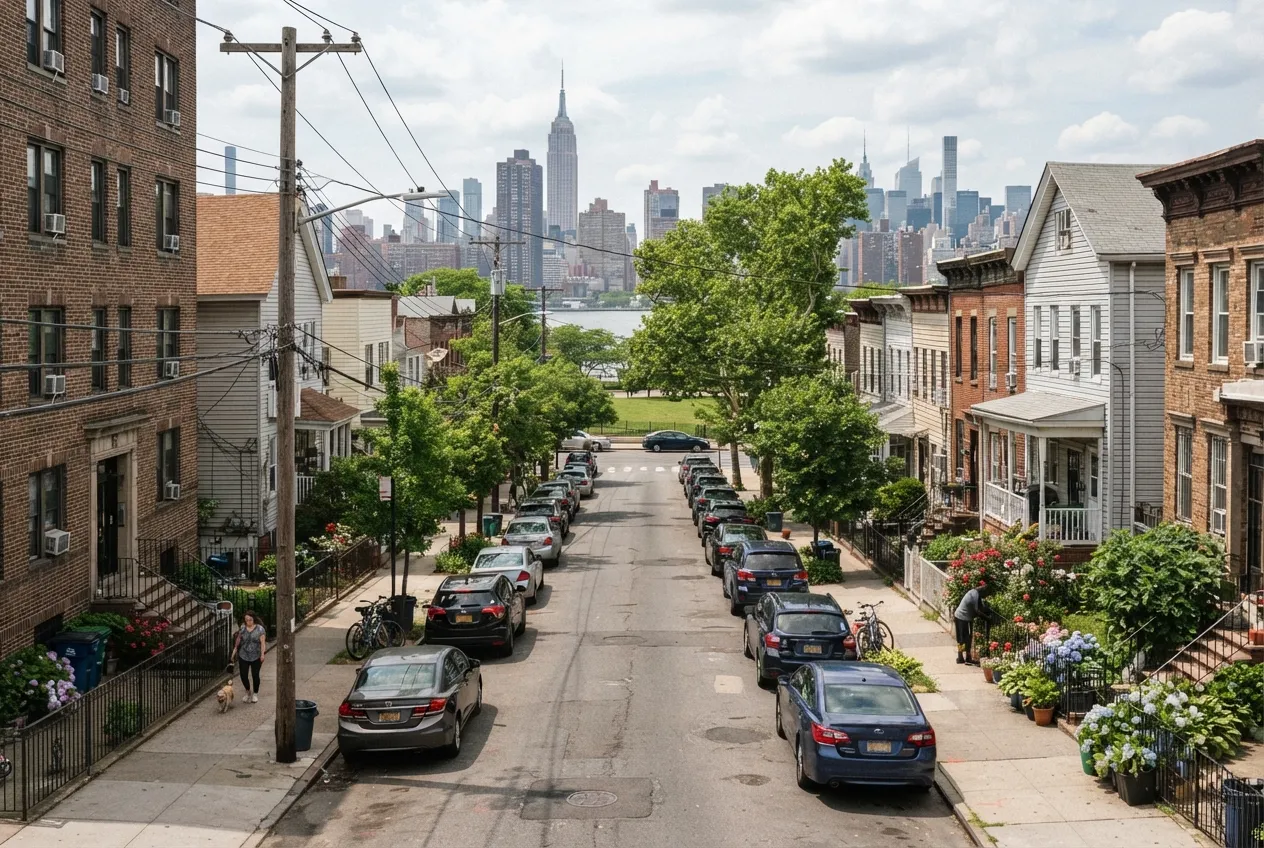
Old Astoria has a mix of attached brick rowhouses, detached frame and masonry homes, and pre-war apartment buildings, and many of their chimneys have been through decades of New York winters, roof work and heating changes. AshVanta Chimney Services repairs chimneys in Old Astoria from our base in Yorkville, Manhattan, about 2 miles away. Our certified technicians start by finding out why a chimney is failing, not just where it looks bad, so the repair fits the problem and the building.
Common Chimney Problems in Old Astoria Homes
Most chimney damage here comes from water. Rain and melting snow soak into brick and mortar, freeze, expand, and slowly push the masonry apart. On attached rowhouses, a shared or closely spaced chimney can also let water travel into a neighbor's wall or yours. On older detached homes, the chimney often stands taller and more exposed, so the top courses of brick take the most weather.
Here are the issues we see most often:
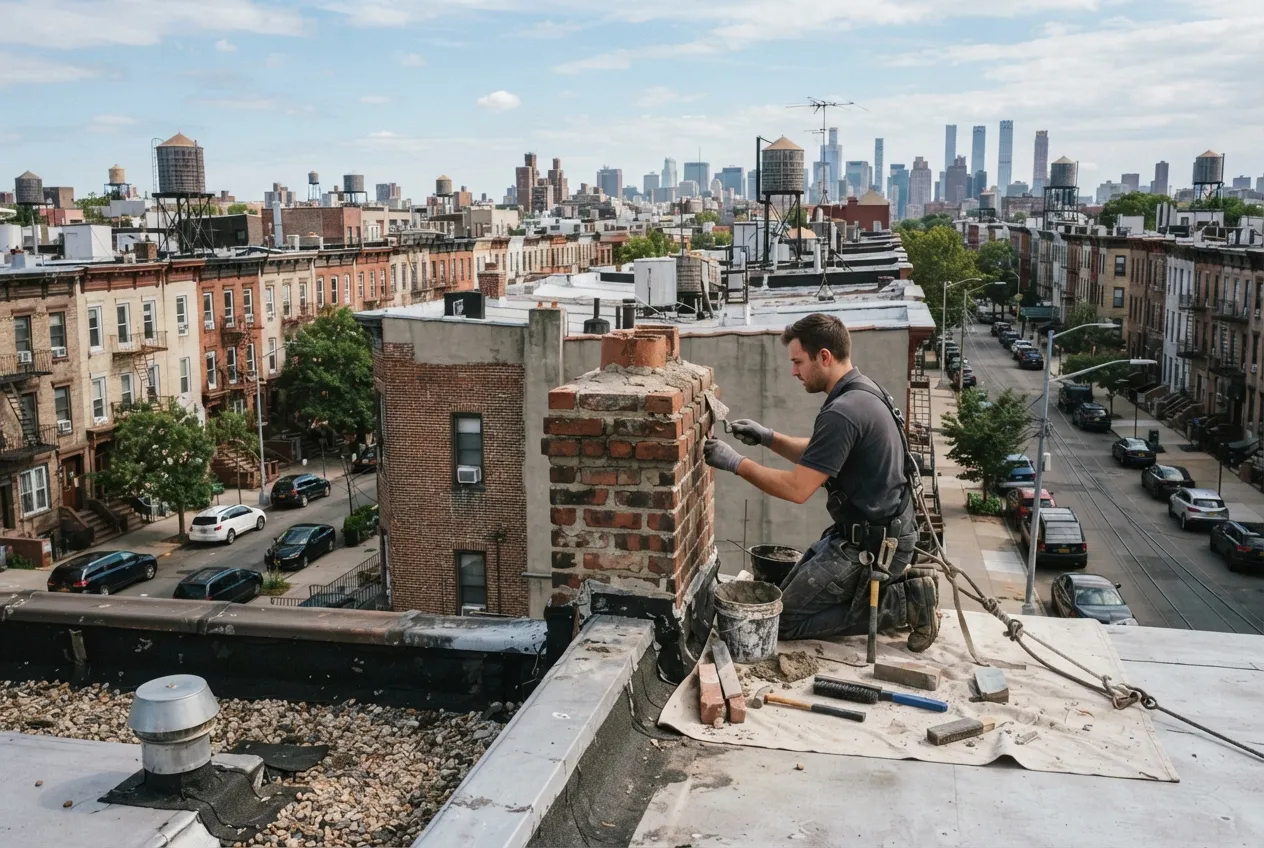
- Crumbling or recessed mortar joints that let water into the brick
- Cracked or missing chimney crowns, the concrete cap at the top of the masonry
- Loose or failed flashing where the chimney meets the roof, causing ceiling or wall stains
- Spalling brick, where the face of the brick flakes or pops off
- Damaged or missing chimney caps that let in rain, debris and animals
- Cracked clay flue tiles or a deteriorated liner inside the chimney
- White staining (efflorescence) on interior or exterior brick, a sign of moisture moving through the masonry
Repairs After an Oil-to-Gas Conversion
Many Queens buildings that once burned heating oil have switched to gas. When a New York City building converts its boiler from oil to gas, the chimney has to be evaluated as part of that work. A new liner is often needed, because gas exhaust produces acidic condensate that can corrode an unlined or poorly lined masonry flue over time.
If your home or building converted and the chimney was never checked, or you notice crumbling material at the base of the flue, rust on the appliance connector, or moisture where the vent meets the chimney, it is worth having us look. We can assess the flue and, where needed, install a liner sized for the new appliance.
How We Approach a Repair
The NFPA 211 standard calls for chimneys, fireplaces and vents to be inspected once a year. It also describes three inspection levels. A Level 1 inspection applies when nothing about the system has changed. A Level 2 inspection is called for when the system changes, such as a new appliance or a switch of fuel, or when a home is sold. A Level 3 inspection is used when a hidden hazard has to be reached by opening part of the chimney or building.
For most repair calls, we begin with the inspection level that fits your situation. We look at the exterior masonry, crown, cap and flashing, and we examine the flue from the inside, often with a camera. Then we walk you through what we found, which repairs are urgent, which can wait, and what each one involves. You decide what moves forward.
Time for your annual chimney check?
Timing Repairs Around the Heating Season
New York City's heat season runs from October 1 through May 31, and building owners must keep apartments heated to the city's minimum temperatures during that time. For owners of multi-unit buildings, a chimney problem that takes a boiler offline in midwinter can become a serious issue for tenants.
Late spring and summer are usually the easiest times to schedule masonry and liner work, since mortar and crown repairs need suitable weather to cure and the heating system can be shut down with less disruption. If something is already leaking or venting poorly, though, it should not wait for a convenient season.
Serving Old Astoria and Nearby Neighborhoods
We work throughout Old Astoria and in nearby Hallets Point, as well as across the river in Yorkville, the Upper East Side, Lenox Hill and Roosevelt Island. Whether you own a single-family home, a two-family rowhouse, or manage a pre-war apartment building, we can inspect your chimney and explain your repair options clearly.
More services in Old Astoria
- Chimney Sweep in Old AstoriaLocal service & repairs
- Chimney Inspection in Old AstoriaLocal service & repairs
- Air Duct Cleaning in Old AstoriaLocal service & repairs
- Chimney Liner Installation in Old AstoriaLocal service & repairs