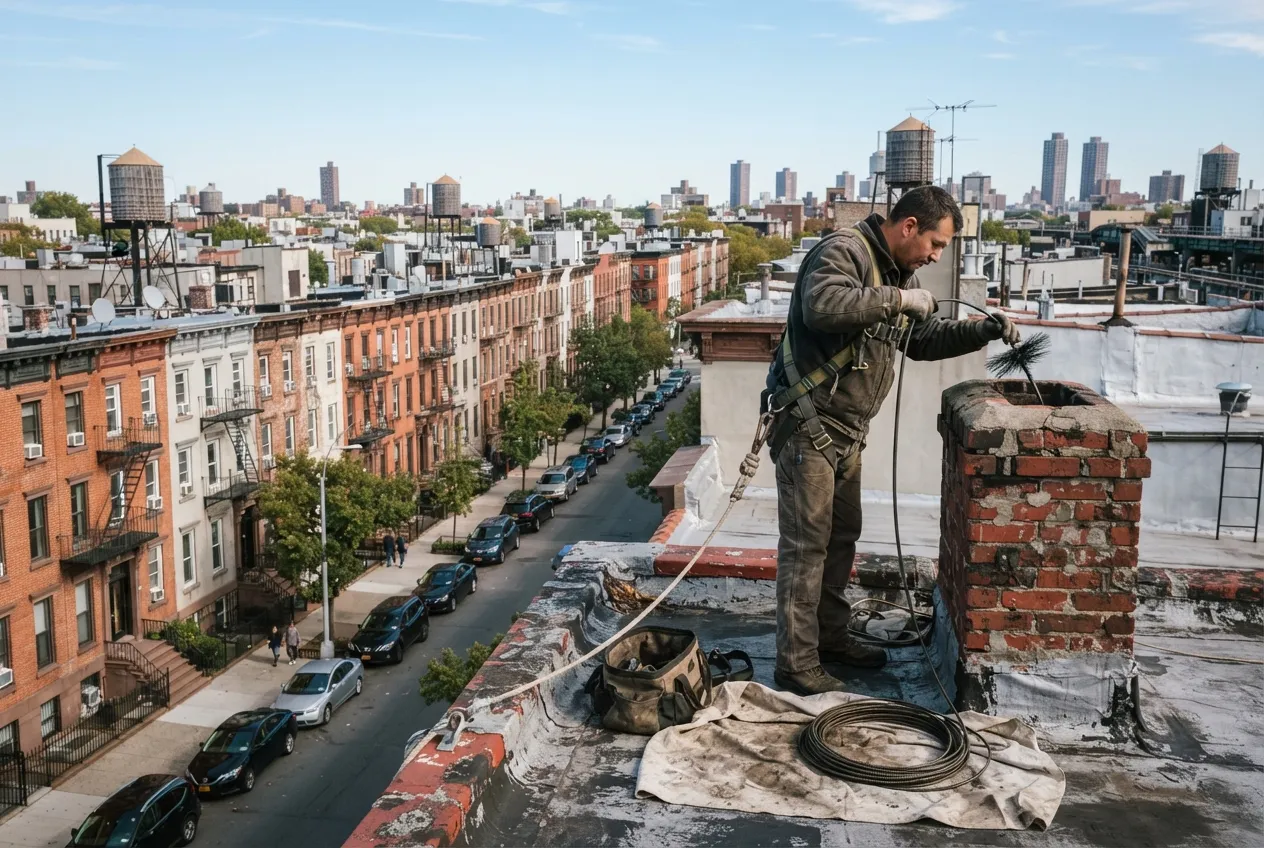
The short answer
AshVanta repairs chimneys in Carnegie Hill brownstones, townhouses and pre-war buildings, including mortar, crowns, caps, flashing, flue tiles and liners after oil-to-gas conversions. Every job starts with an inspection, and we suggest scheduling larger work outside New York City's October-to-May heat season.
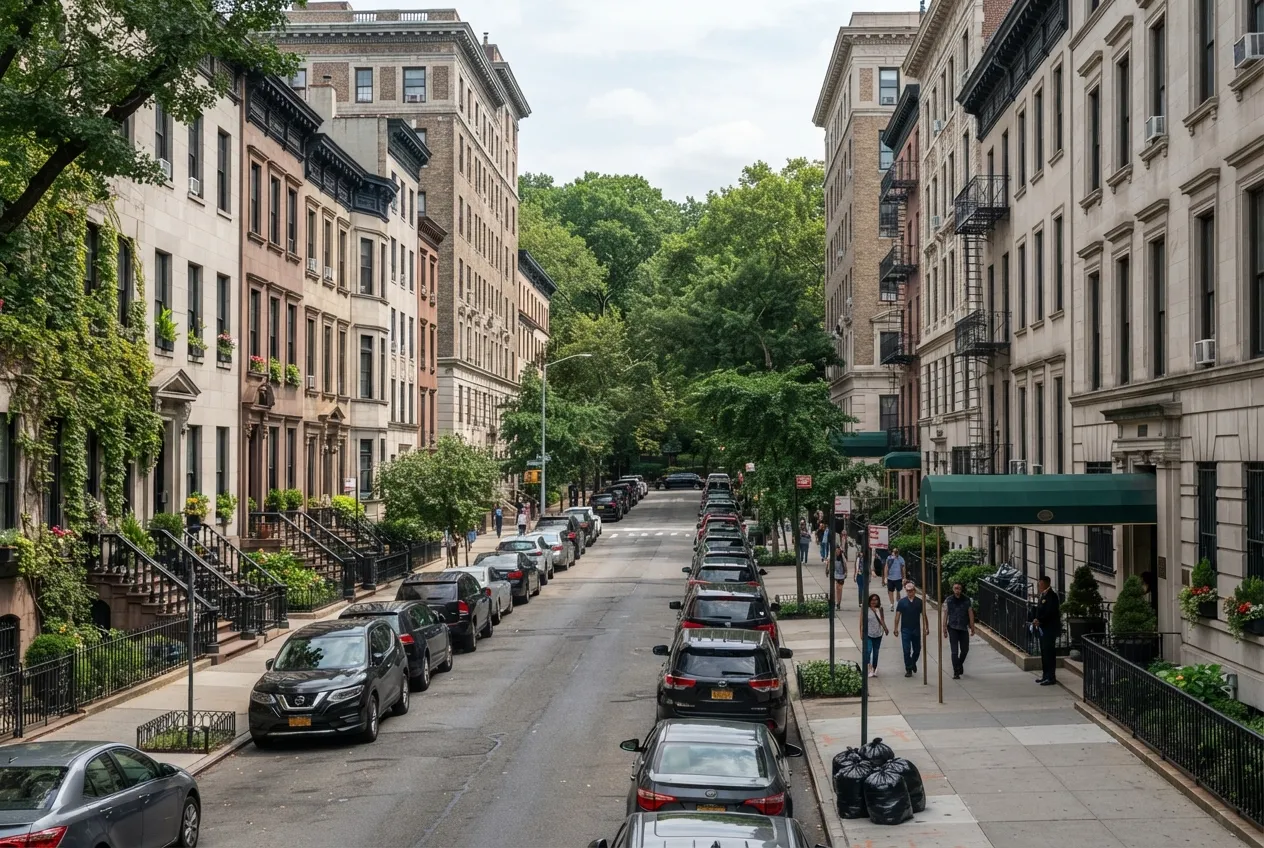
Carnegie Hill's brownstones, townhouses and pre-war apartment buildings were built with masonry chimneys that have since handled wood fires, coal, oil and gas. AshVanta Chimney Services repairs those chimneys from our office in Yorkville, about a mile away. Our certified technicians work out why a chimney is failing, whether from water, heat, acidic exhaust or age, and fix the cause rather than only the visible damage. Below is what we commonly repair in the neighborhood, how we approach older masonry, and what to expect when we visit.
Common chimney problems in Carnegie Hill homes
Most chimney damage we see in the neighborhood starts with water. Rain and snowmelt get in through a cracked crown, a missing cap or failing flashing. That water then freezes and thaws inside the brick all winter. Over time, mortar joints wash out and bricks spall. Moisture can show up as stains on an interior wall or ceiling near the chimney breast.
Fireplaces that are used only now and then develop their own problems. A damper can rust open, a firebox can crack, and gaps can open between flue tiles and let heat reach nearby wood framing. These are hard to spot from the hearth, so we look up the flue with a camera.
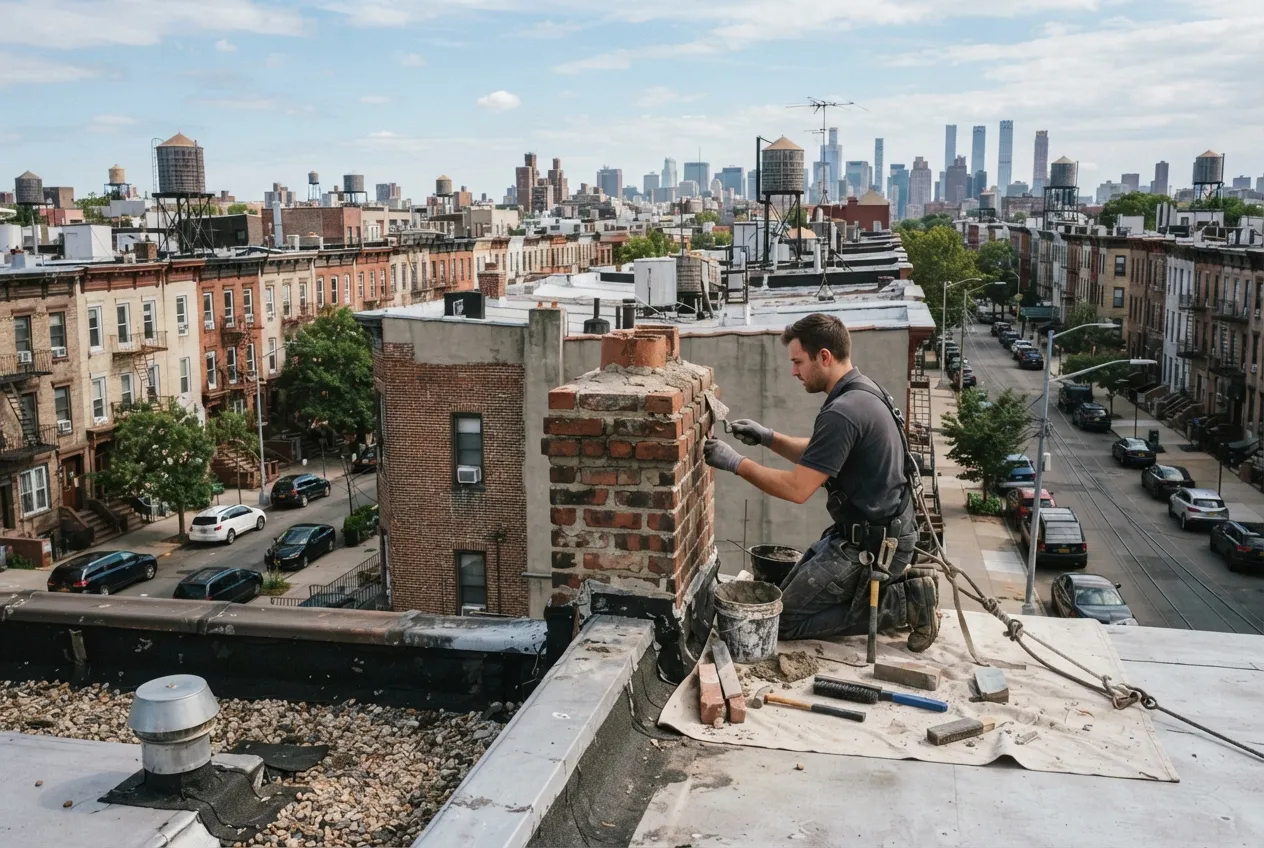
- Repointing worn mortar joints with a mortar suited to older brick
- Rebuilding or resurfacing cracked chimney crowns
- Replacing spalled or loose bricks at the top of the stack
- Installing or replacing chimney caps to keep out rain, birds and debris
- Resealing or replacing flashing where the chimney meets the roof
- Repairing cracked flue tiles and damaged smoke chambers
- Fixing or replacing fireplace dampers that no longer seal
Repairs after an oil-to-gas conversion
Many buildings in the area have switched their boilers from oil to gas. When a New York City building makes that conversion, the chimney has to be evaluated as part of the work. A new liner is often needed because gas exhaust produces acidic condensate, and that condensate can corrode a masonry flue that was never designed for it.
If your building converted without a liner, or the liner may be the wrong size, watch for crumbling material at the base of the flue, white staining on the outside brick, or water collecting at the cleanout. We can inspect the flue, size and install a liner for the connected appliance, and repair masonry the condensate has already damaged.
Inspection comes before repair
The NFPA 211 standard calls for chimneys, fireplaces and vents to be inspected once a year, and every repair job we do starts with an inspection. Chimney professionals use three inspection levels, and the right one depends on your situation:
After the inspection, we show you photos of what we found. We explain which repairs are urgent and which can wait, and we give you a written scope before any work begins.
- Level 1: nothing about the system has changed and you want the yearly check
- Level 2: you've added a new appliance, switched fuels, or are buying or selling the home
- Level 3: a hidden hazard has to be reached by opening part of the chimney or the building
Time for your annual chimney check?
Plan repairs around heat season
New York City's heat season runs from October 1 through May 31. During those months, building owners must keep apartments heated to the city's minimum temperatures. A boiler chimney that fails in January is a serious problem for any owner with tenants.
For that reason, we encourage Carnegie Hill owners to schedule inspections and larger masonry or relining work in late spring or summer. Warm, dry weather also helps mortar and crown repairs cure properly. If something can't wait, we'll say so plainly and help you keep the system safe until the full repair is done.
Townhouses, brownstones and co-op buildings
A single-family townhouse and a pre-war co-op building call for different planning. In a townhouse, we usually work directly with the owner and reach the chimney from the roof and the fireplace. In larger buildings, we coordinate with the superintendent or managing agent on roof access, building rules and work hours. We can also provide a clear written description of the work for the board or managing agent to review.
Beyond Carnegie Hill, we also serve nearby Yorkville, Lenox Hill, the rest of the Upper East Side, Roosevelt Island and the Upper West Side.
More services in Carnegie Hill
- Chimney Sweep in Carnegie HillLocal service & repairs
- Chimney Inspection in Carnegie HillLocal service & repairs
- Air Duct Cleaning in Carnegie HillLocal service & repairs
- Chimney Liner Installation in Carnegie HillLocal service & repairs