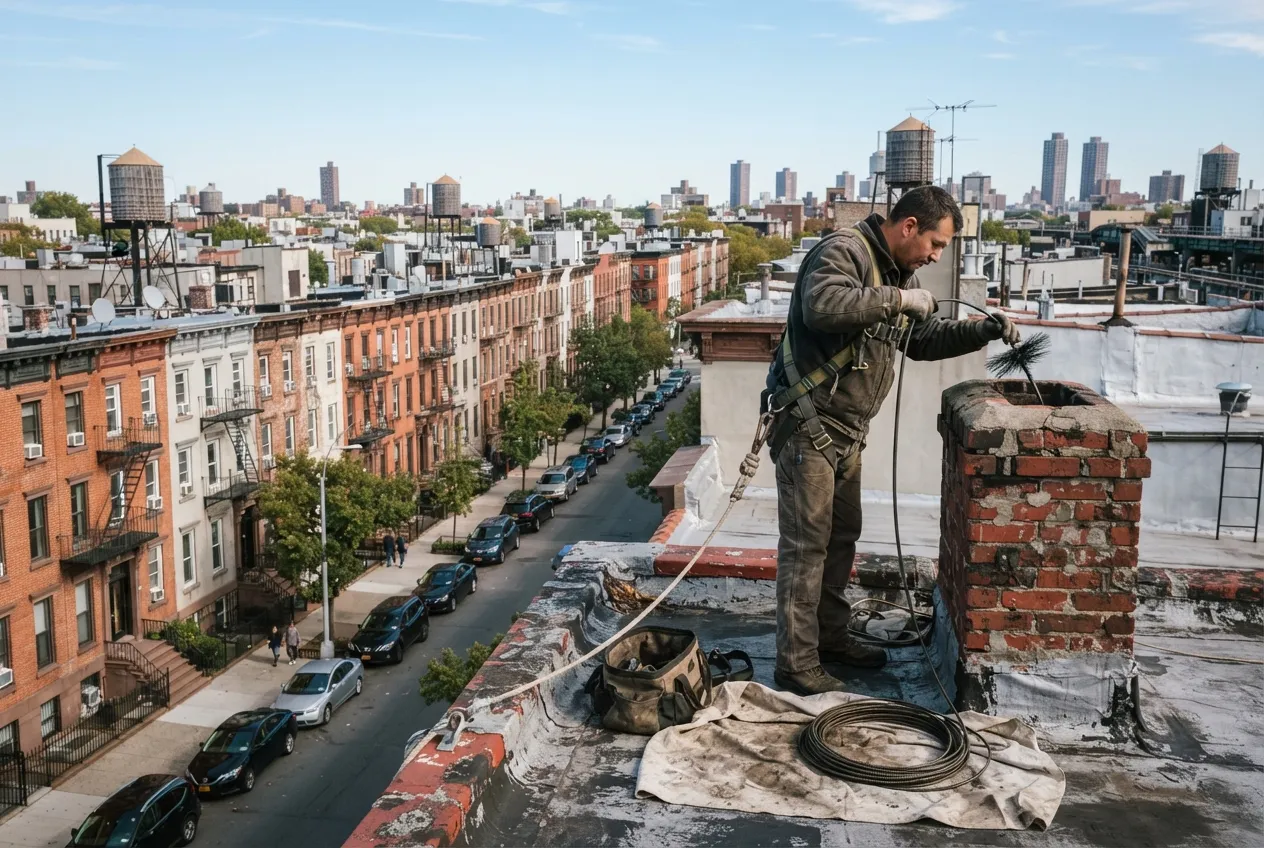
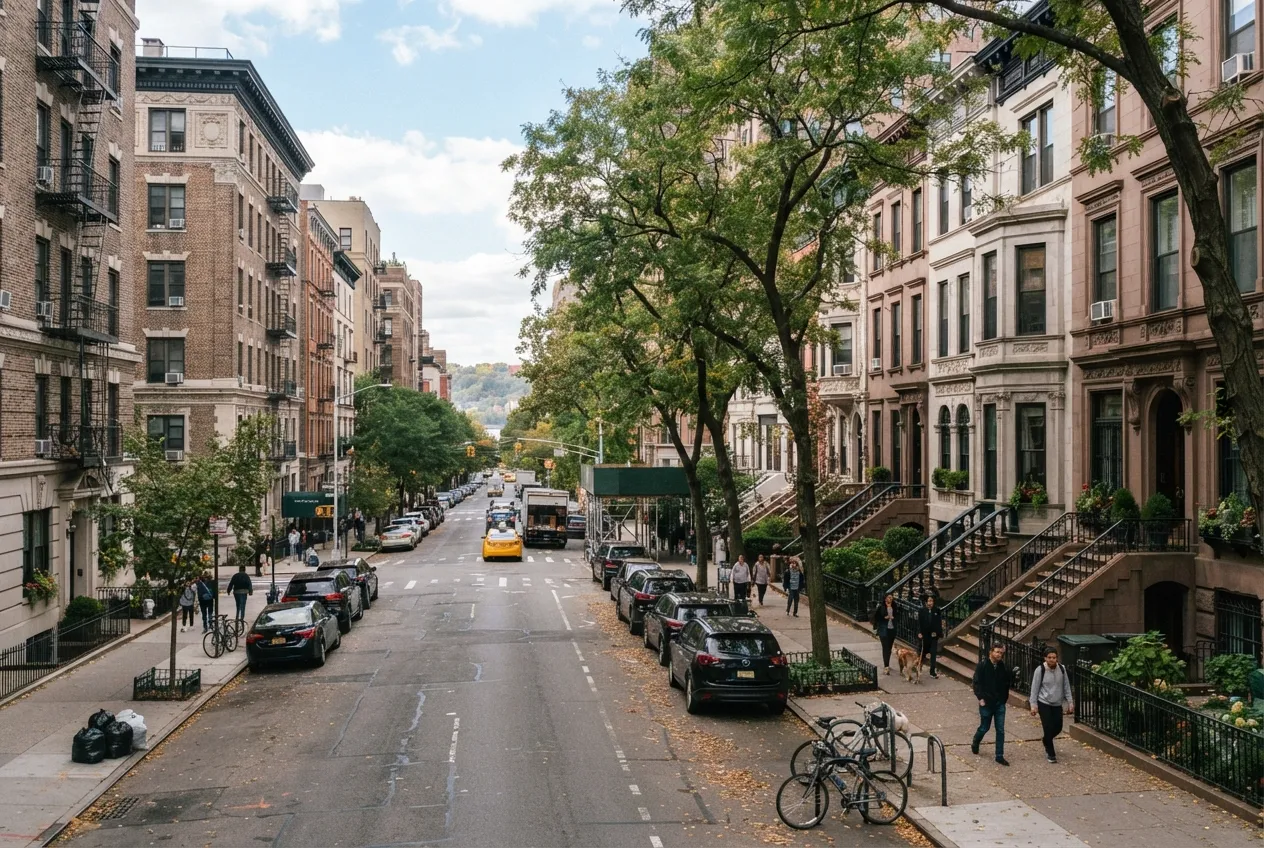
The short answer
A chimney sweep removes creosote, soot and debris from your flue and checks the system for damage. The NFPA 211 standard calls for chimneys, fireplaces and vents to be inspected once a year, and older Upper West Side brownstones and pre-war buildings benefit from that schedule. AshVanta's certified technicians serve ZIP codes 10023, 10024, 10025 and 10069 from our nearby Yorkville office.
Many Upper West Side homes still have working fireplaces: brownstones and rowhouses with a fireplace on each floor, pre-war apartments with a decorative mantel that someone wants to use again, and buildings whose boiler chimney runs up through the middle of the structure. AshVanta Chimney Services sweeps and inspects chimneys across ZIP codes 10023, 10024, 10025 and 10069. Our office in Yorkville is about a mile east, so reaching the neighborhood is a short trip for our certified technicians. This page covers what a sweep involves here and why older flues need more attention.
Why Upper West Side Chimneys Need Regular Sweeping
Most chimneys in this part of Manhattan were built long before modern fireplace inserts and gas appliances existed. Many brownstone flues were designed for coal or wood. Over the decades they have been patched, capped, reopened or shared between floors. A flue that sat unused for years can hold nests, fallen mortar or leftover soot that blocks the draft the first time a fire is lit.
Wood fires leave creosote, a tar-like residue that builds up on the flue walls. Thin layers are normal. Thick or glazed deposits can catch fire inside the chimney. Sweeping removes that fuel, and it gives the technician a clear view of the flue walls so cracks, gaps and loose liner sections are easier to spot.
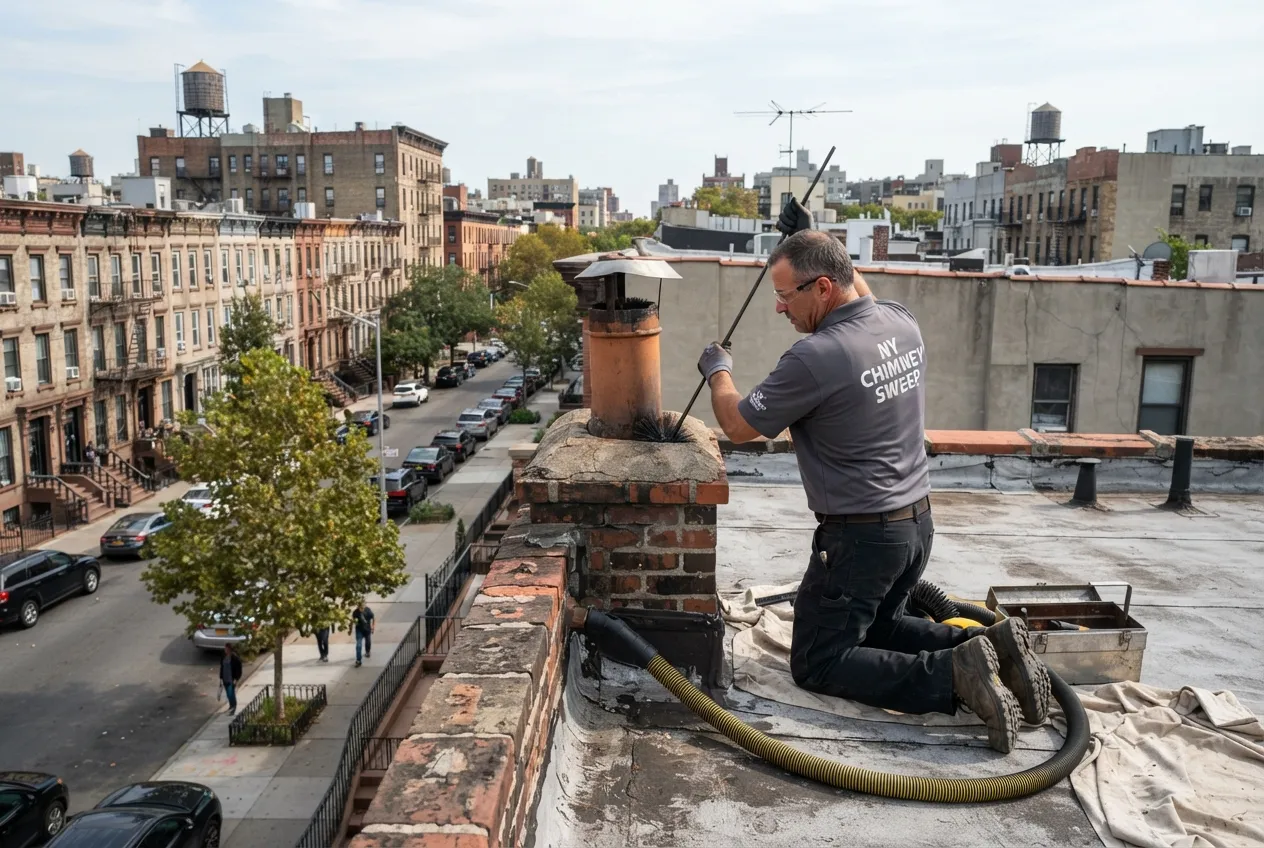
What Happens During a Sweep
We work cleanly because most Upper West Side fireplaces sit in finished living rooms, often with original woodwork and plaster nearby. Before we begin, we protect the floor and seal off the fireplace opening.
A typical visit includes:
- Drop cloths and a sealed opening to keep soot out of the room
- Brushing the flue from below, from the roof, or both, depending on access
- HEPA vacuum collection of loosened soot and creosote
- Cleaning the smoke chamber, smoke shelf and firebox
- Checking the damper so it opens, closes and seals properly
- A visual inspection of the flue, crown and cap where we can reach them
- A plain-language report on what we found and any repairs to consider
Sweeping and the Annual Inspection
The NFPA 211 standard calls for chimneys, fireplaces and vents to be inspected once a year. Chimney professionals use three levels. A Level 1 inspection fits when nothing about the system has changed. A Level 2 inspection applies when something changes, such as a new appliance or a switch of fuel, or when the home is being sold. A Level 3 inspection is needed when a hidden hazard can only be reached by opening part of the chimney or building.
For most homeowners who use their fireplace regularly, it makes sense to sweep and inspect in the same visit. If you are buying or selling a brownstone or rowhouse in the neighborhood, ask us about a Level 2 inspection, which includes a video scan of the flue's interior.
Time for your annual chimney check?
Oil-to-Gas Conversions and Building Chimneys
Many pre-war apartment buildings and larger townhouses on the Upper West Side have converted, or plan to convert, their boilers from oil to gas. When a New York City building makes that change, the chimney has to be evaluated as part of the work. A new liner is often needed because gas exhaust produces acidic condensate that can corrode a masonry flue.
We can sweep the existing flue so it can be evaluated properly and explain what we see inside. That gives owners and building managers clearer information for planning the conversion.
Timing Your Sweep Around Heat Season
New York City's heat season runs from October 1 through May 31. During that time, building owners must keep apartments heated to the city's minimum temperatures. Boiler chimneys get steady use for eight months, and fireplace owners tend to light their first fires as soon as the weather turns.
Late spring and summer are good times to book a sweep. You get the flue cleaned after a season of use, and there is time to make repairs before fall. We also serve nearby Lincoln Square, Manhattan Valley, Carnegie Hill, the Upper East Side and Yorkville, so neighbors on both sides of the park can plan around the same schedule.
More services in Upper West Side
- Chimney Inspection in Upper West SideLocal service & repairs
- Chimney Repair in Upper West SideLocal service & repairs
- Air Duct Cleaning in Upper West SideLocal service & repairs
- Chimney Liner Installation in Upper West SideLocal service & repairs