The short answer
A chimney sweep removes soot, creosote and debris from the flue and checks the chimney for damage that could cause a fire or let exhaust back into the home. The NFPA 211 standard calls for chimneys, fireplaces and vents to be inspected once a year. East Harlem owners of wood-burning fireplaces and heating-appliance flues should schedule a sweep and inspection before the heating season.
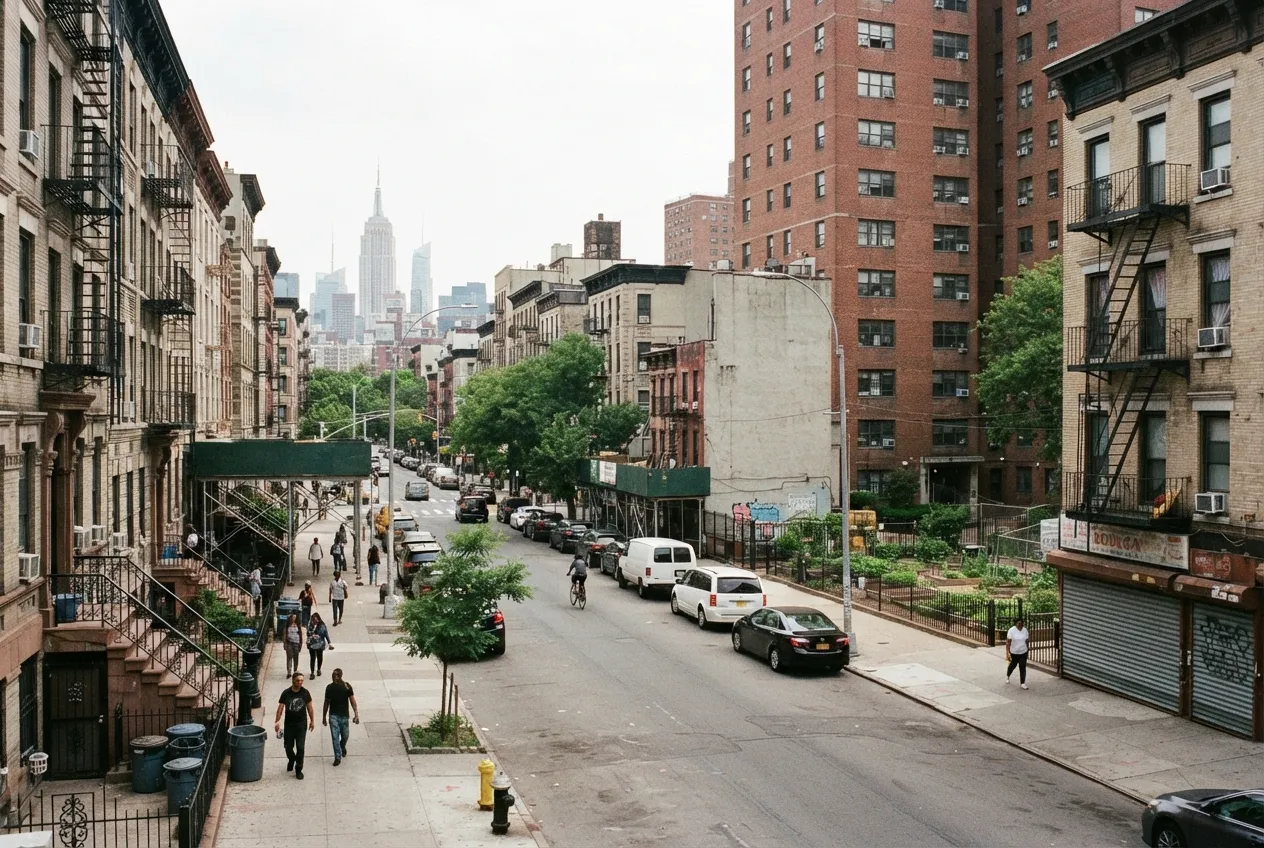
Many East Harlem homes still have working fireplaces, and many more have chimneys that vent a boiler, furnace or water heater. Brownstones, rowhouses and pre-war apartment buildings across ZIP codes 10029 and 10035 depend on flues that are often a century old or close to it. AshVanta Chimney Services sends certified technicians from our Yorkville office, about a mile southwest, to sweep and inspect these chimneys so smoke and exhaust go up and out the way they should.
What a Chimney Sweep Covers in an East Harlem Home
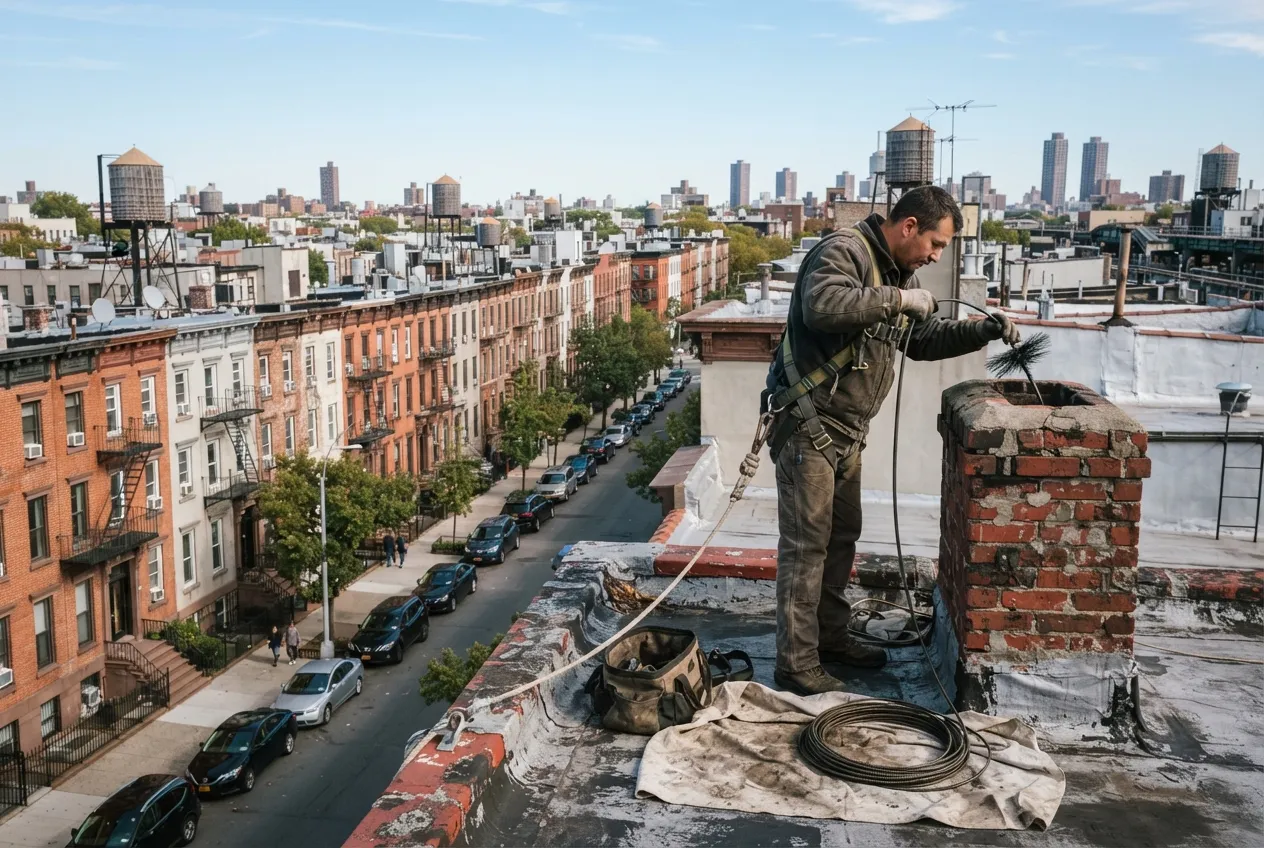
A sweep is more than running a brush up the flue. Our technicians protect the area around the fireplace or appliance connection, then brush and vacuum the firebox, smoke chamber and flue to remove soot, creosote, leaves, nesting material and loose masonry. Creosote is the tar-like residue wood smoke leaves behind. It burns hot and fast, so getting it out is the main reason to sweep a wood-burning fireplace.
While the flue is open and clean, we look at its condition. We check the damper, smoke shelf, flue walls, crown and cap, and we tell you plainly what we find.
- Brushing and vacuuming of the firebox, smoke chamber and flue
- Removal of creosote, soot, debris and animal nesting material
- Visual check of the damper, liner, crown and chimney cap
- A clear explanation of the chimney's condition and any repairs worth considering
Chimneys in Brownstones, Rowhouses and Pre-War Buildings
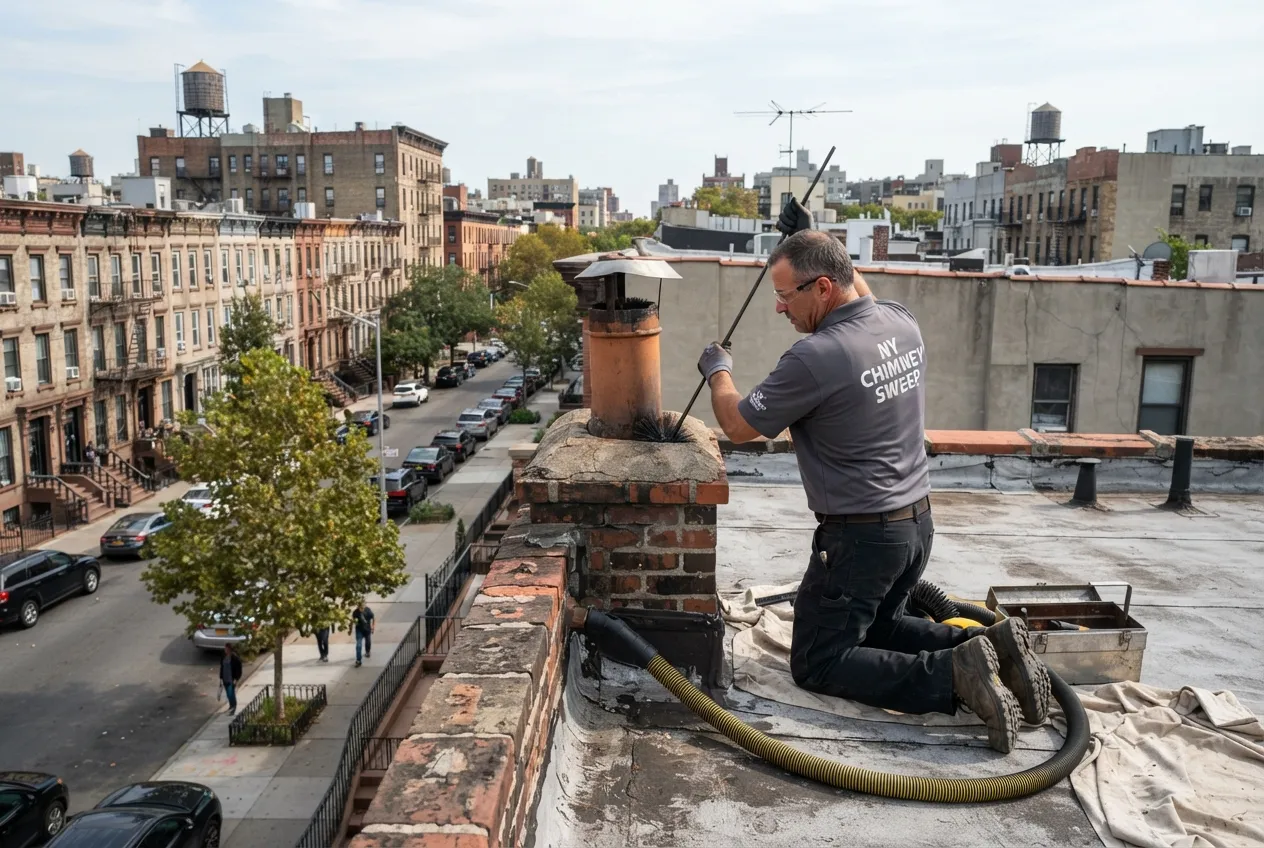
Much of East Harlem's housing was built when coal and wood heated every room. Many brownstones and rowhouses have more than one fireplace, and sometimes several flues run side by side through a shared masonry stack. Some fireplaces have been sealed, reopened or converted over the years, and the records are often lost. Before a sweep we figure out which flue serves which fireplace or appliance so nothing gets missed.
In pre-war apartment buildings, the chimney usually vents the building's boiler, not individual fireplaces. These flues carry exhaust all heating season, and mortar joints and old clay tile liners wear down over time. Sweeping and inspecting them keeps exhaust moving up the flue and away from residents.
Yearly Inspections and the Three Inspection Levels
The NFPA 211 standard calls for chimneys, fireplaces and vents to be inspected once a year. Chimney professionals use three levels of inspection, and the right one depends on what has changed.
A Level 1 inspection fits a chimney in steady use where nothing has changed. A Level 2 inspection applies when the system changes, such as a new appliance or a switch of fuel, or when the home is sold. A Level 3 inspection is needed only when a hidden hazard has to be reached by opening part of the chimney or the building. We'll tell you which level your situation calls for and why.
Time for your annual chimney check?
Timing Your Sweep Around the Heat Season
New York City's heat season runs from October 1 through May 31. During those months, building owners must keep apartments heated to the city's minimum temperatures, so a boiler flue that needs work in January causes real trouble for owners and tenants. Late spring and summer are the easiest times to sweep and inspect, because there's time to schedule repairs before the heat comes back on.
For fireplace owners, a sweep before the first fire of fall makes sense. If you burn wood often, you may need more than one sweep a season. Our technicians can judge that from how much creosote they find.
Oil-to-Gas Conversions and Chimney Liners
Some East Harlem buildings have switched or plan to switch their boilers from oil to gas. When a New York City building makes this conversion, the chimney has to be evaluated as part of the work. A new liner is often needed, because gas exhaust produces acidic condensate that can corrode a masonry flue. If your building is planning a conversion, a sweep and inspection early in the process shows what condition the flue is in before decisions get made.
More services in East Harlem
- Chimney Inspection in East HarlemLocal service & repairs
- Chimney Repair in East HarlemLocal service & repairs
- Air Duct Cleaning in East HarlemLocal service & repairs
- Chimney Liner Installation in East HarlemLocal service & repairs