The short answer
A chimney sweep removes soot, creosote and blockages from your flue so smoke and exhaust leave the home safely. In Morningside Heights, the best time to book is before the city's heat season starts on October 1, and the NFPA 211 standard calls for the chimney to be inspected once a year.
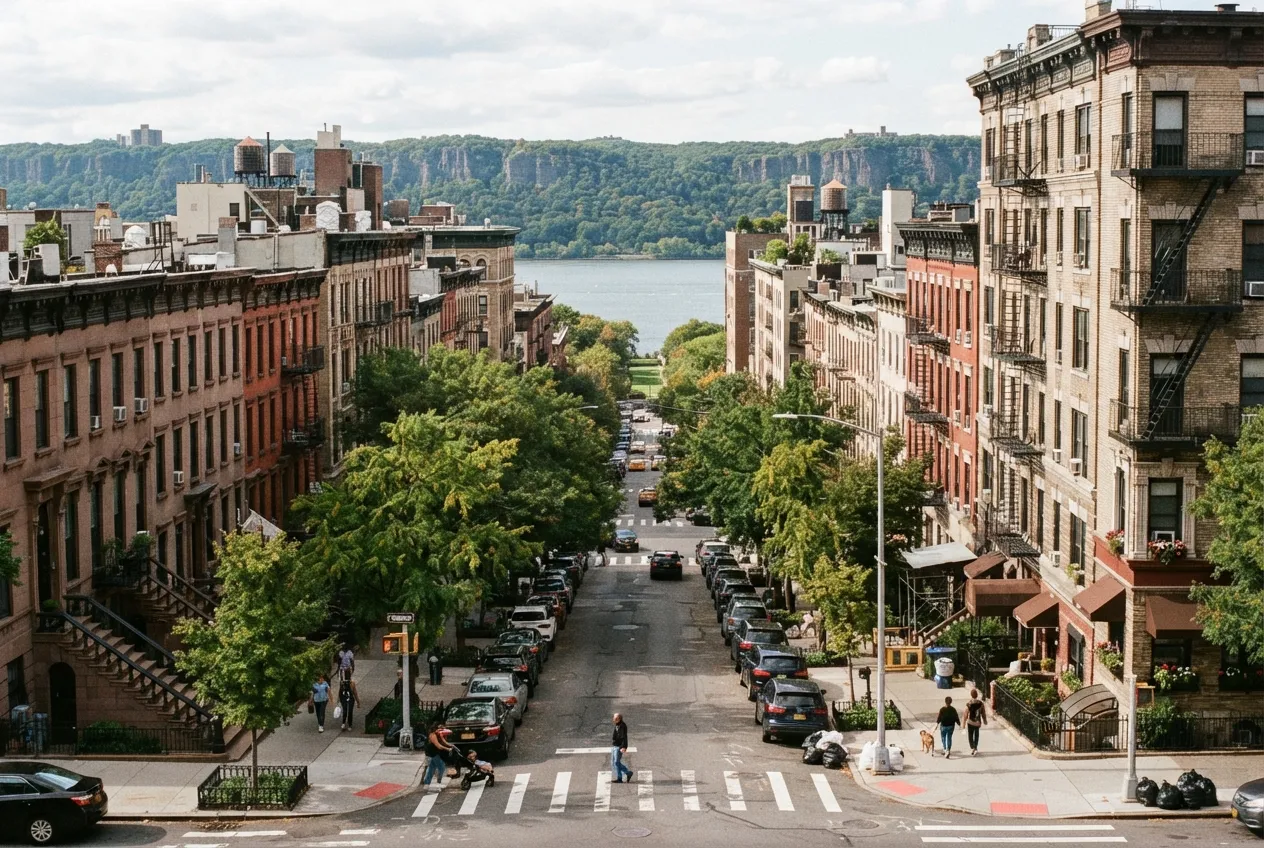
Morningside Heights is full of brownstones, rowhouses and pre-war apartment buildings, and many of them still have working fireplaces or masonry chimneys that vent a boiler. Over a season of use, those flues collect soot, creosote and debris that narrow the passage and can catch fire. AshVanta Chimney Services sends certified technicians about 2 miles north from our Yorkville office to sweep chimneys for homeowners and buildings in ZIP codes 10027 and 10115. This page explains what a sweep involves for the kinds of homes found here, when to schedule one, and what to have ready before we arrive.
What a Chimney Sweep Covers
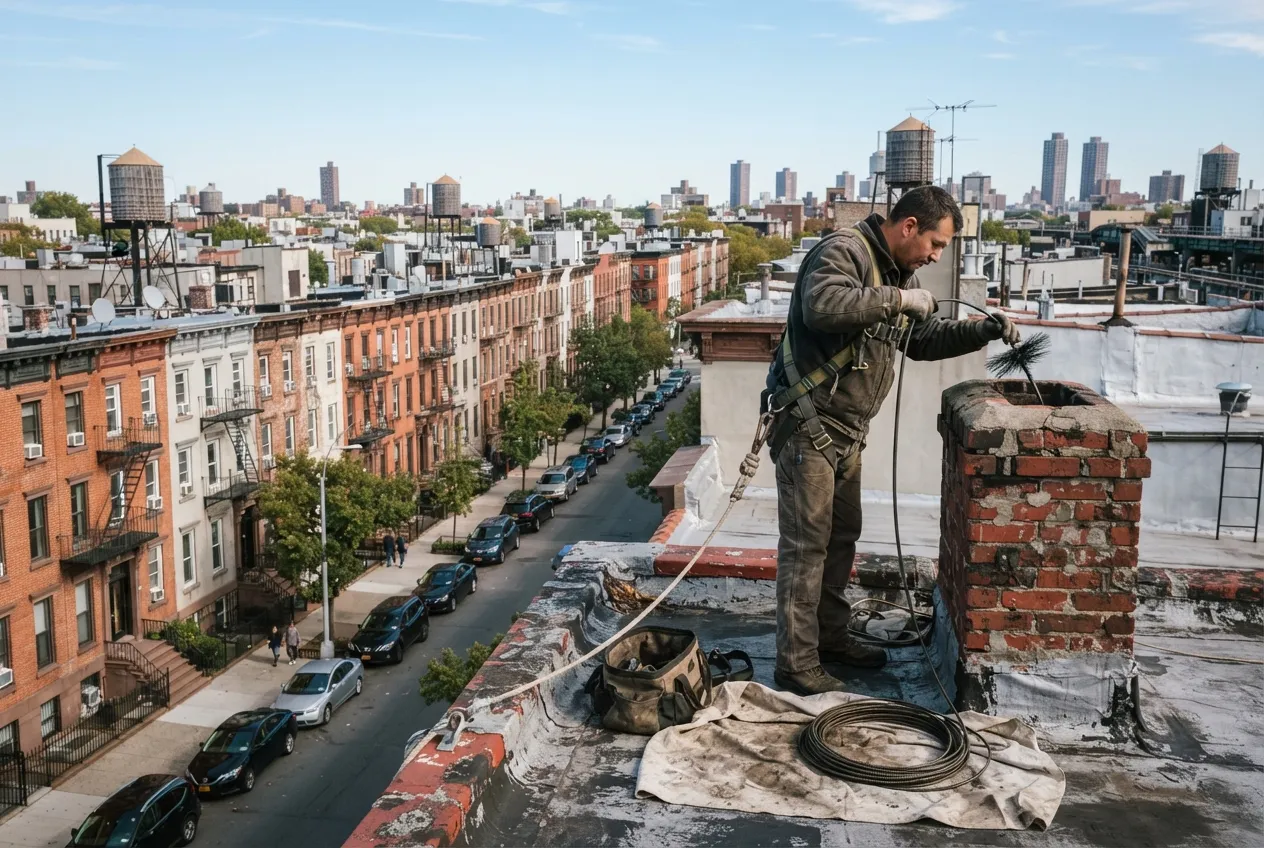
A sweep is more than running a brush up the flue. We clean the parts of the system where buildup collects, then look over what we can see so you know whether anything needs attention before the next fire or heating cycle.
For a wood-burning fireplace, the main concern is creosote, a tar-like byproduct of burning wood that sticks to flue walls. For a chimney that vents a boiler or furnace, we look for soot, scale, fallen masonry and debris that can restrict the draft.
- Brushing the flue from the firebox, the roof, or both, depending on access
- Cleaning the smoke chamber, smoke shelf and damper area
- Removing nests, leaves and fallen debris from the base of the flue
- Checking that the damper opens, closes and seals
- A visual look at the firebox, flue and visible masonry, with notes on anything we find
Chimneys in Brownstones, Rowhouses and Pre-War Buildings
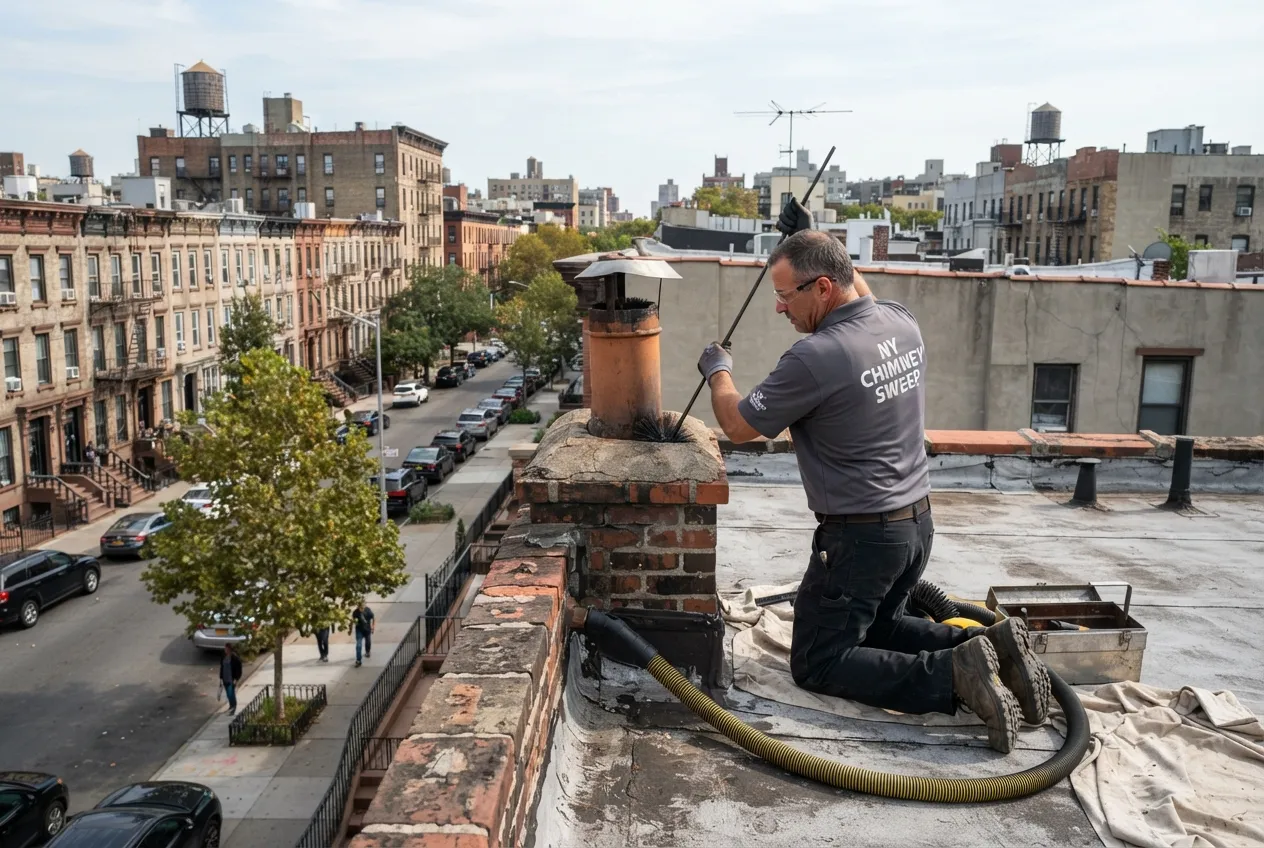
Older Manhattan housing has its own set of chimney issues. Brownstones and rowhouses often have several flues grouped in one stack, sometimes shared along a party wall, and some fireplaces were closed off or reopened over the decades. Before we sweep, we confirm which flue serves which fireplace so the right one gets cleaned.
In pre-war apartment buildings, a single masonry chimney may serve the boiler while individual units have decorative or working fireplaces on separate flues. Some older flues have clay tile liners that have cracked with age, and some have no liner at all. A sweep is a good chance to catch those conditions early, because a clean flue is much easier to see than one coated in soot.
When to Schedule Your Sweep
New York City's heat season runs from October 1 through May 31, and building owners have to keep apartments heated to the city's minimum temperatures during that stretch. For a building with a boiler, that means the chimney is working hard for eight months. Scheduling a sweep in late summer or early fall lets you deal with problems before the heat has to stay on.
For homeowners with fireplaces, the same window makes sense: clean the flue before your first fire of the season, not after a winter of buildup. The NFPA 211 standard calls for chimneys, fireplaces and vents to be inspected once a year, and pairing that inspection with a sweep keeps both on one visit.
If something has changed, such as a new appliance, a switch of fuel or a pending sale of the home, a more detailed Level 2 inspection is the usual step. A Level 3 inspection is only used when a hidden hazard has to be reached by opening part of the chimney or building.
Time for your annual chimney check?
Oil-to-Gas Conversions and Liners
Many buildings in the area have moved their boilers from oil to gas. When a New York City building converts, the chimney has to be evaluated as part of the work. A new liner is often needed, because gas exhaust produces acidic condensate that can corrode a masonry flue that was built for oil.
If your building has already converted or is planning to, tell us when you book. We will sweep the flue so its condition can be seen clearly and let you know what we observe about the liner and masonry.
What to Expect on the Day
We lay down drop cloths and use vacuums to control soot inside the home. Please let the fireplace or boiler cool fully beforehand; a fire from the night before can still leave hot embers. In multi-unit buildings, roof access usually goes through the superintendent or management, so arranging that ahead of time keeps the visit on schedule.
After the sweep, we walk you through what we cleaned and anything we noticed, in plain terms. We also serve nearby Manhattan Valley, the Upper West Side, East Harlem, Yorkville and Carnegie Hill.
More services in Morningside Heights
- Chimney Inspection in Morningside HeightsLocal service & repairs
- Chimney Repair in Morningside HeightsLocal service & repairs
- Air Duct Cleaning in Morningside HeightsLocal service & repairs
- Chimney Liner Installation in Morningside HeightsLocal service & repairs