The short answer
AshVanta's certified technicians sweep and inspect fireplace, stove and boiler chimneys in Manhattan Valley from our office about a mile away in Yorkville. The NFPA 211 standard calls for a yearly inspection, and older brownstone and pre-war flues should get a close look while they are cleaned.
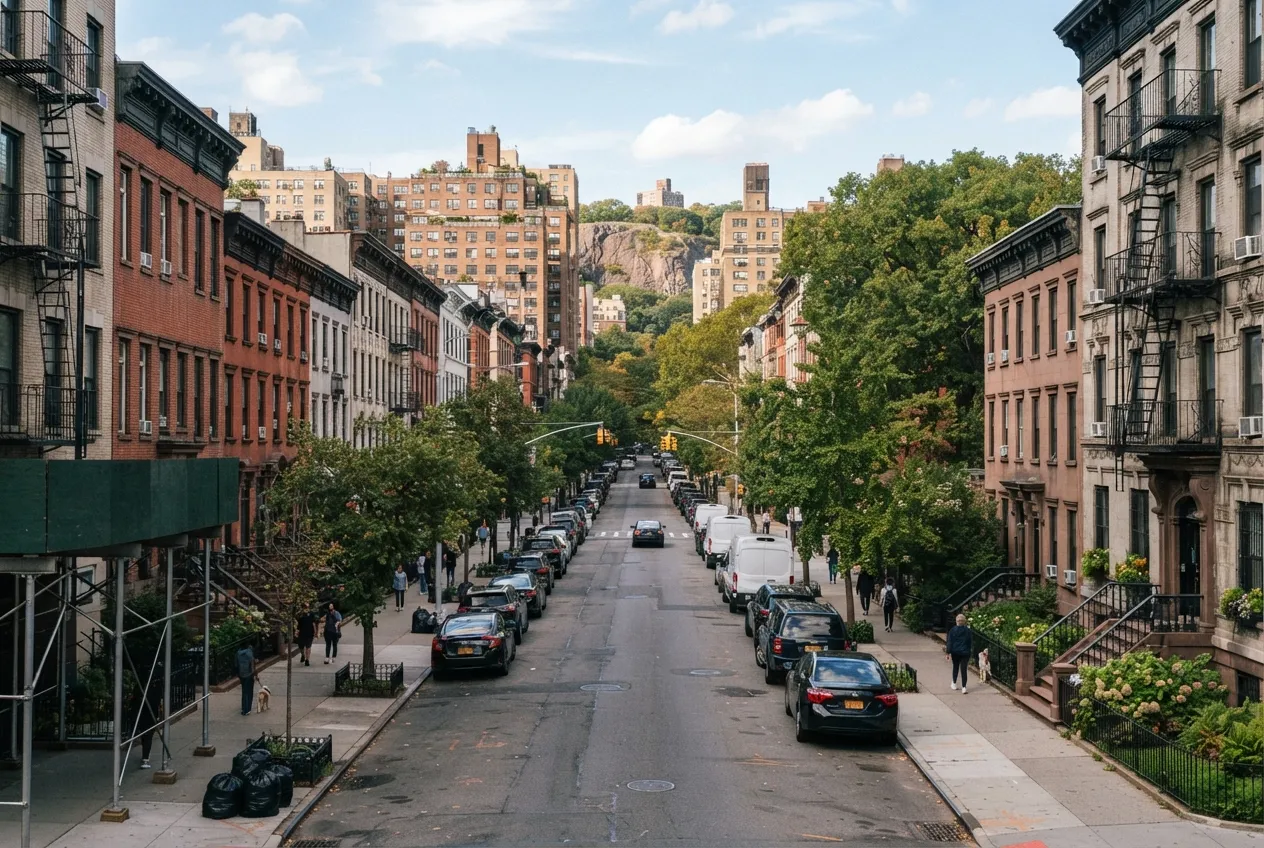
If you have a working fireplace, a wood stove or a boiler venting into a masonry chimney in Manhattan Valley, a regular sweep is the simplest way to keep that flue working properly. AshVanta Chimney Services is based in Yorkville, about a mile from Manhattan Valley, so homes in ZIP code 10025 are well within our regular service area. Our certified technicians clean and inspect chimneys in the neighborhood's brownstones, rowhouses and pre-war apartment buildings. We explain what we find in plain terms so you can decide what, if anything, needs to happen next.
What a chimney sweep includes
A sweep removes the soot, creosote and debris that build up inside a flue over time. Creosote is a byproduct of burning wood. It collects on the inner walls of the chimney as smoke cools. If it is left in place, it narrows the flue and can ignite. Debris such as fallen mortar, leaves or nesting material can also block the draft and push smoke back into the room.
During a typical visit, we take these steps:
- Protect the floor and furniture around the fireplace before any work starts
- Inspect the firebox, damper and smoke chamber for cracks, gaps and buildup
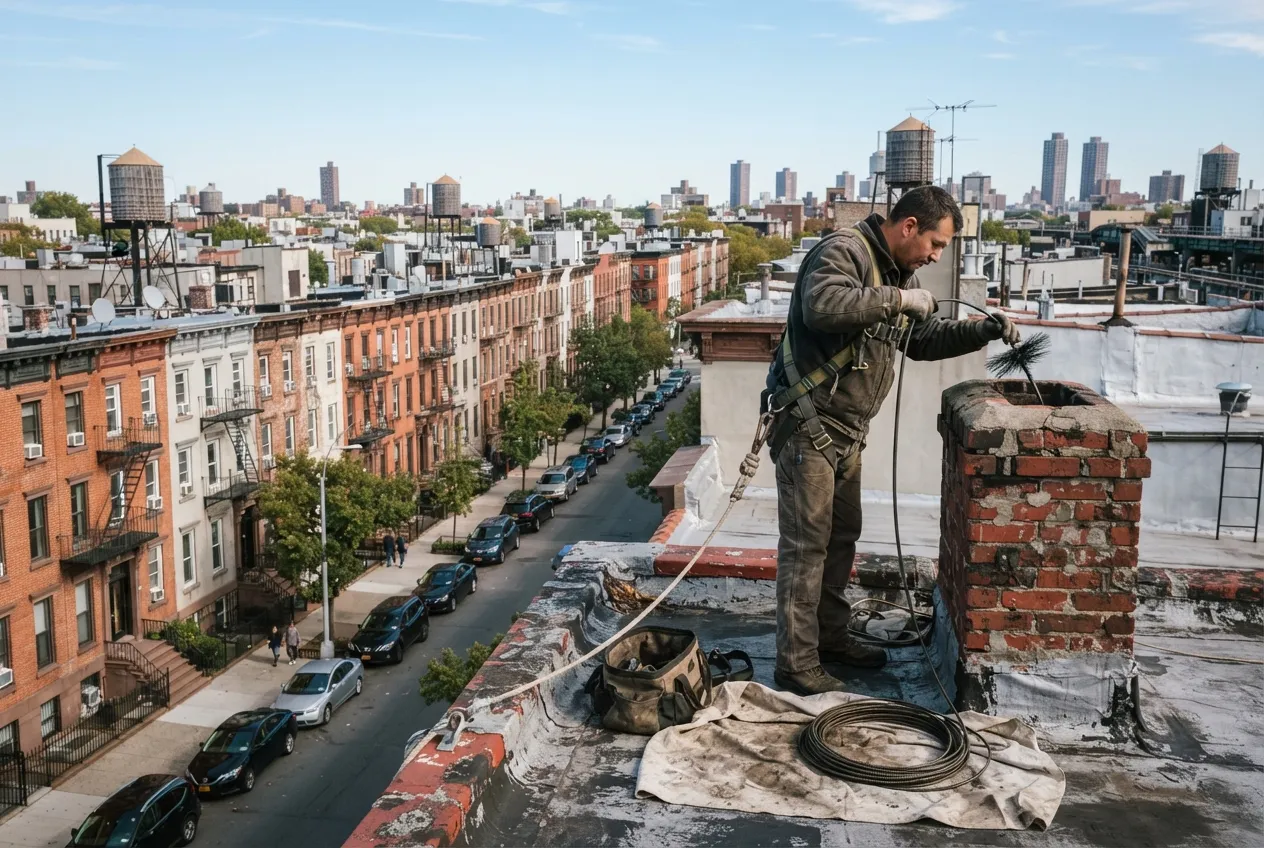
- Brush the flue from the bottom, the top or both, depending on roof access
- Vacuum loose soot and debris so it does not drift into your home
- Check the chimney cap, crown and visible masonry for damage
- Walk you through what we saw, with photos where they help
Older chimneys in brownstones and pre-war buildings
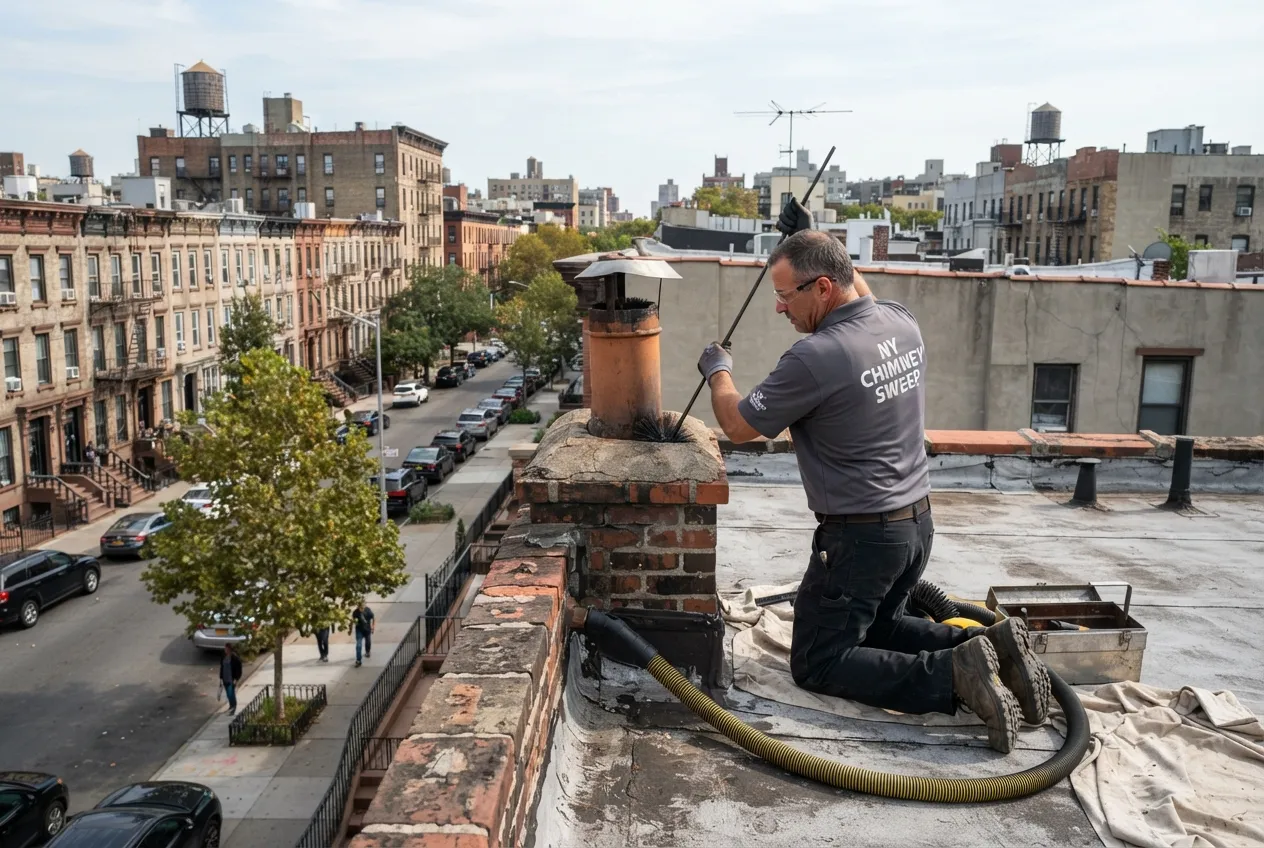
Much of Manhattan Valley's housing is older. Brownstones, rowhouses and pre-war apartment buildings often have chimneys that have been in service for a long time. Older masonry flues may have worn mortar joints, cracked clay tiles or no liner at all. Some fireplaces were closed off for years and later reopened. Others share a chimney stack with neighboring units or with the building's heating system.
These problems are not always visible from the hearth. That is why we examine the flue closely while we clean, rather than just running a brush through it. If we find something that needs more attention, we tell you what it is and why it matters before recommending any further work.
Roof access can also be a challenge in attached buildings. When we can't safely reach the top of the chimney, we clean from below. We also note any parts of the chimney we were not able to inspect.
How often to have your chimney swept and inspected
The NFPA 211 standard calls for chimneys, fireplaces and vents to be inspected once a year. Whether you need a full cleaning every year depends on how much you burn and what you burn. Either way, the inspection should happen annually.
Chimney professionals use three inspection levels:
Most Manhattan Valley homeowners who use a fireplace seasonally need a Level 1 inspection along with their sweep. If you are buying or selling a brownstone or co-op unit with a fireplace, a Level 2 inspection is the usual step.
- Level 1: for a chimney in continued use when nothing about the system has changed
- Level 2: when the system changes, such as a new appliance or a switch of fuel, or when the home is sold
- Level 3: when a suspected hidden hazard can only be reached by opening part of the chimney or the building
Time for your annual chimney check?
Oil-to-gas conversions and chimney liners
Many residential buildings in Manhattan are converting their boilers from oil to gas. When a New York City building makes that switch, the chimney has to be evaluated as part of the work. A new liner is often needed. Gas exhaust produces acidic condensate, which can corrode a masonry flue that was built for oil.
If your building is considering a conversion, a sweep and inspection of the existing chimney is a sensible early step. It shows the current condition of the flue. It also helps you and your contractor understand whether relining is likely to be part of the project.
Scheduling around the heating season
New York City's heat season runs from October 1 through May 31. During that time, building owners must keep apartments heated to the city's minimum temperatures. If your building's boiler vents through a chimney, have the flue cleaned and checked before October. That way, any problem can be fixed without interrupting heat.
For fireplace owners, late summer and early fall are also good times to book, before the first cold night. Along with Manhattan Valley, we serve nearby Morningside Heights, the Upper West Side, East Harlem, Carnegie Hill and Yorkville.
More services in Manhattan Valley
- Chimney Inspection in Manhattan ValleyLocal service & repairs
- Chimney Repair in Manhattan ValleyLocal service & repairs
- Air Duct Cleaning in Manhattan ValleyLocal service & repairs
- Chimney Liner Installation in Manhattan ValleyLocal service & repairs