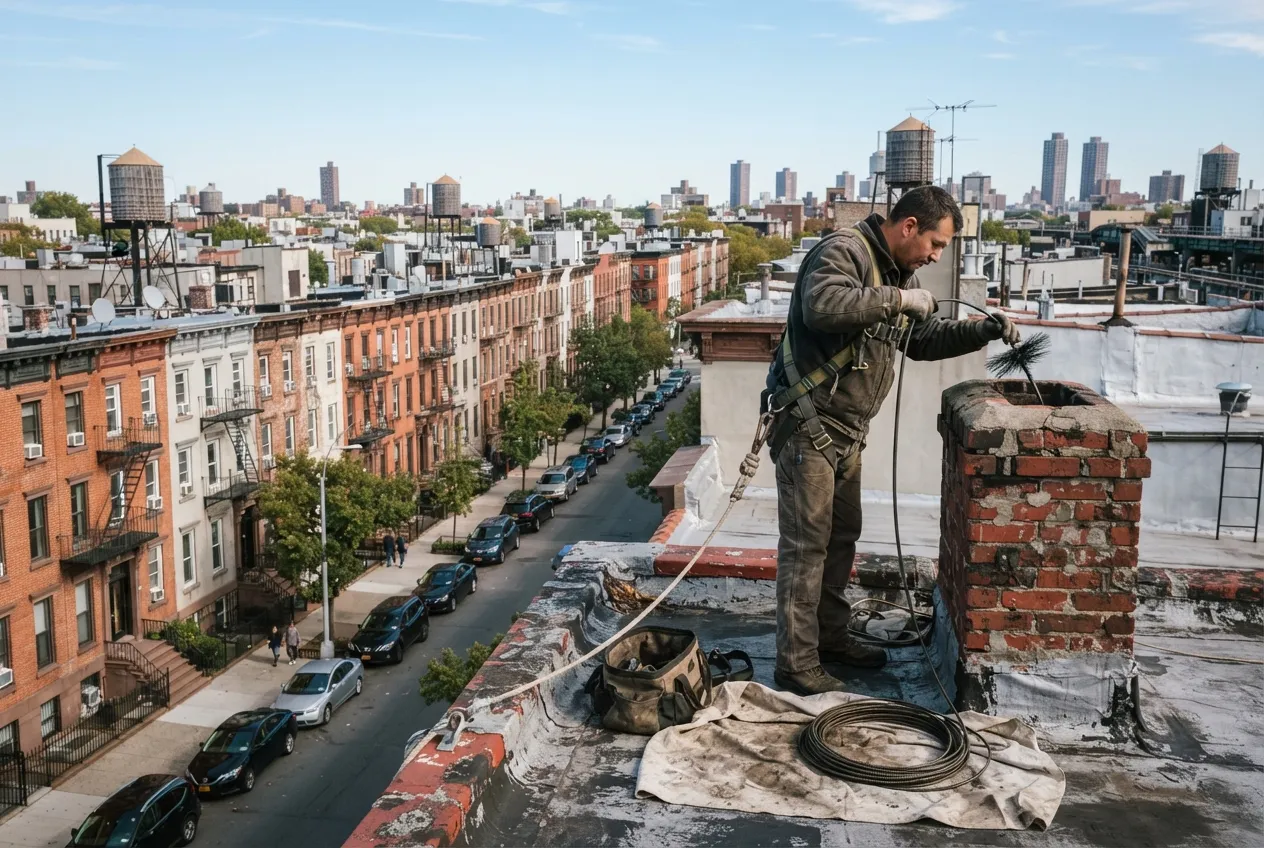

The short answer
Air duct cleaning makes sense when there is substantial visible mold, signs of rodents or insects, or enough dust and debris that it blows out of the registers. In Morningside Heights apartments and brownstones, we inspect first and clean only when the ducts show one of those problems. We don't recommend cleaning just because it has been a while.
Morningside Heights is mostly pre-war apartment buildings, with some brownstones and rowhouses. Many of these buildings were built for radiator heat, so ductwork usually came later, through central air retrofits, ducted HVAC in renovated units, or kitchen and bathroom exhaust runs. Those ducts sit in tight chases, soffits and dropped ceilings that are hard to see into. AshVanta Chimney Services sends certified technicians from our Yorkville office, about 2 miles away, to inspect and clean residential ductwork in ZIP codes 10027 and 10115. We start by checking whether cleaning is actually needed, because often it isn't.
Where ductwork shows up in Morningside Heights homes
In a pre-war apartment, the ducts you have depend on how the unit was renovated. Some owners added central air with an air handler in a closet or above a hallway ceiling, running supply ducts through soffits to each room. Others have ducted units serving a few rooms, or only bathroom and kitchen exhaust ducts that tie into a building shaft. Brownstones and rowhouses that were gut-renovated may have a full forced-air system serving several floors, with long vertical runs inside walls.
Each setup needs a different approach. A short exhaust run in a co-op bathroom is a small job. A multi-floor supply and return system in a townhouse needs more planning, more access points and more time. We look at what you have before suggesting any work.
When cleaning is worth doing
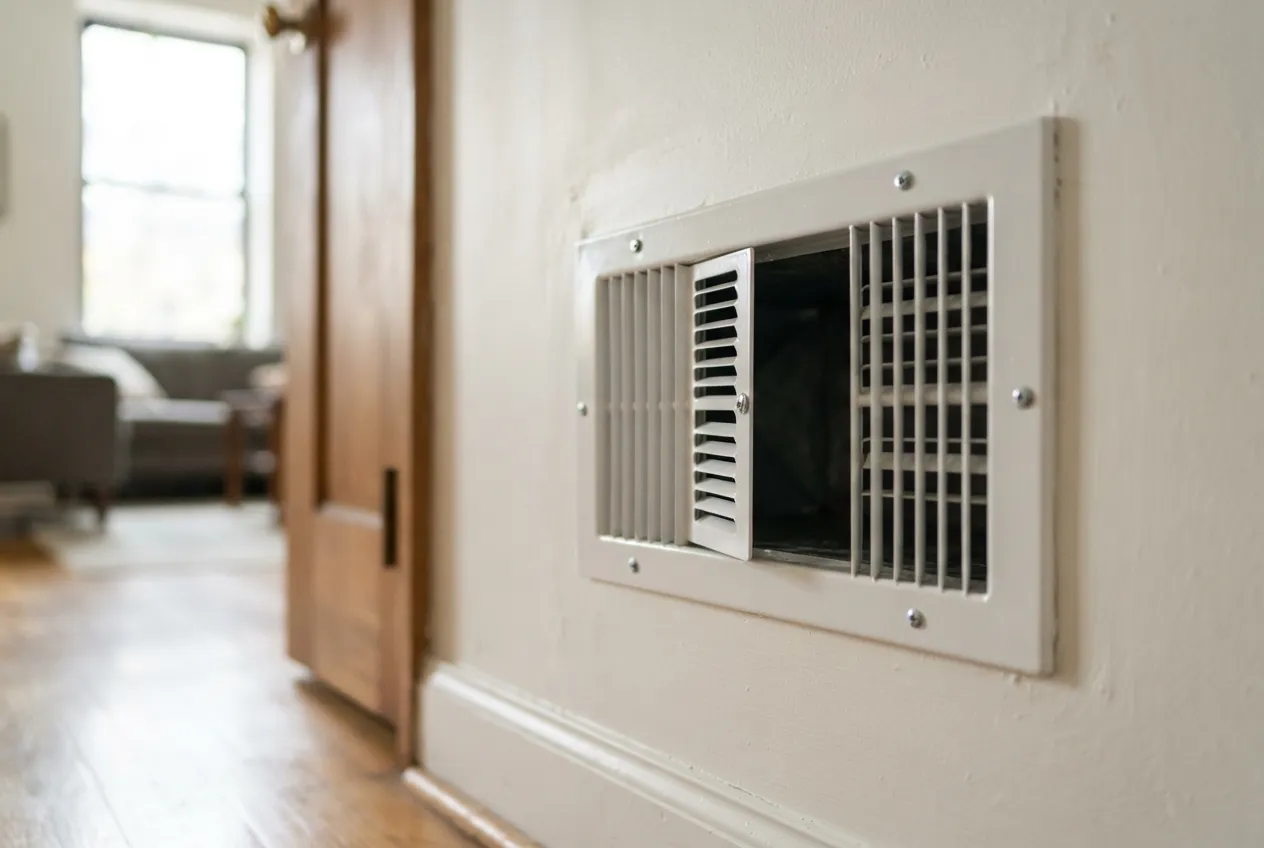
The U.S. EPA advises cleaning air ducts when there is substantial visible mold growth, vermin, or excessive dust and debris. It also says duct cleaning has not been shown to prevent health problems. We follow that guidance. If your ducts look reasonably clean, we will tell you so, and you can put the money toward filters or other maintenance instead.
Signs that call for a closer look include:
- Dust or debris puffing out of supply registers when the system starts
- Visible mold on duct surfaces, the air handler coil or the drain pan, often after a leak from an upstairs unit or a clogged condensate line
- Droppings, nesting material or odors that point to mice or insects in the ductwork
- Construction dust left behind after a renovation, in your unit or a neighbor's
- Registers or grilles that stay dirty right after you wipe them
How we work in pre-war buildings
Apartment buildings in the neighborhood often have rules about contractor hours, elevator use and protecting common areas. We plan the visit around those rules and can coordinate with your super or managing agent if the building asks for it. Inside the unit, we cover floors and furniture near the work area and keep the system under negative pressure so loosened debris goes into our collection equipment, not into the room.
A typical cleaning includes:
- Inspecting the air handler, coil, blower and accessible duct runs, with photos where we can get a camera in
- Cleaning supply and return ducts with brushes and air tools while a vacuum collector pulls debris out
- Cleaning registers, grilles and the return plenum
- Replacing or recommending the right filter for your system
- Noting problems we can't fix, such as disconnected or crushed duct sections inside walls, so you can bring in an HVAC contractor
Time for your annual chimney check?
A careful approach to chemical treatments
Some companies push sanitizers, sealants or fogging as an add-on. The EPA urges caution with chemical treatments in ductwork, and so do we. Cleaning removes the material. If there is mold, the cause, usually moisture, has to be fixed or it will come back. We will explain what we found and why before discussing any treatment. The EPA also warns consumers to research the process before responding to very cheap advertised offers. Ask any company, including us, exactly what they will clean and how.
Timing around the heating season
New York City's heat season runs from October 1 through May 31. In buildings with radiators, that schedule has little to do with your ducts. But if your unit has a ducted system used for both heating and cooling, late spring and early fall are practical times to clean, before the system runs hard for months. We also serve nearby Manhattan Valley, the Upper West Side, East Harlem, Yorkville and Carnegie Hill on the same schedule.
Don't forget the dryer vent
If you have an in-unit dryer, its vent is a duct too, and it matters more for safety than your HVAC ducts do. According to the U.S. Fire Administration, failure to clean is the leading factor contributing to clothes dryer fires in homes. Renovated apartments often have long or bent dryer runs that collect lint quickly. We can check and clean the dryer vent during the same visit.
More services in Morningside Heights
- Chimney Sweep in Morningside HeightsLocal service & repairs
- Chimney Inspection in Morningside HeightsLocal service & repairs
- Chimney Repair in Morningside HeightsLocal service & repairs
- Chimney Liner Installation in Morningside HeightsLocal service & repairs