The short answer
Yes, AshVanta Chimney Services covers all of Harlem, including ZIP codes 10026, 10030, 10037 and 10039, from our Yorkville office about 2 miles south. We handle chimney sweeping, inspection, repair, liners, rebuilding, waterproofing, caps and chase covers, plus dryer vent and air duct cleaning.
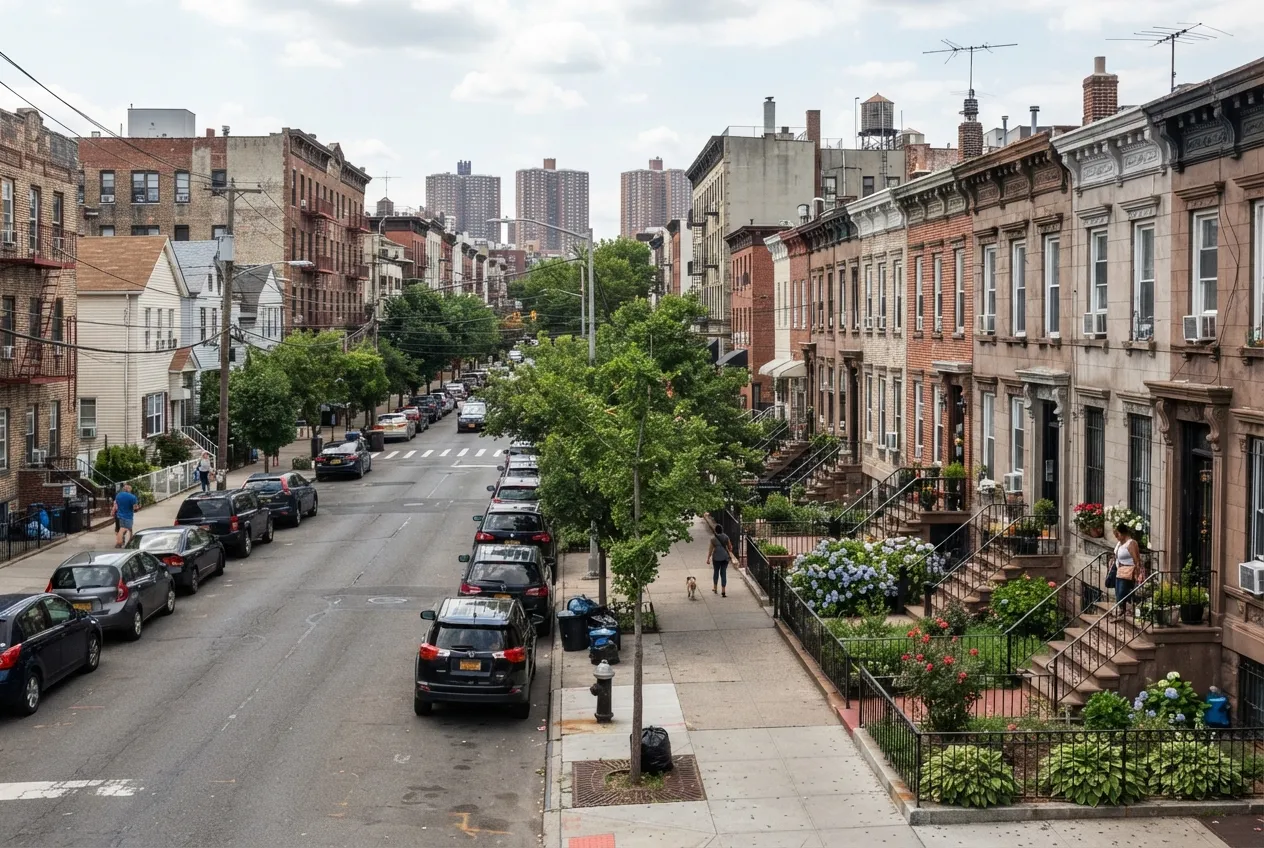
AshVanta Chimney Services works throughout Harlem, about 2 miles north of our office in Yorkville. We serve homes and buildings in ZIP codes 10026, 10030, 10037 and 10039, from single-family brownstones and rowhouses to pre-war apartment buildings with shared flues and central boilers. Our certified technicians sweep and inspect chimneys, repair and rebuild masonry, install liners, and clean dryer vents and air ducts. Below is what we see most often in Harlem's older housing and how we approach it.
Chimneys in Harlem Brownstones, Rowhouses and Pre-War Buildings
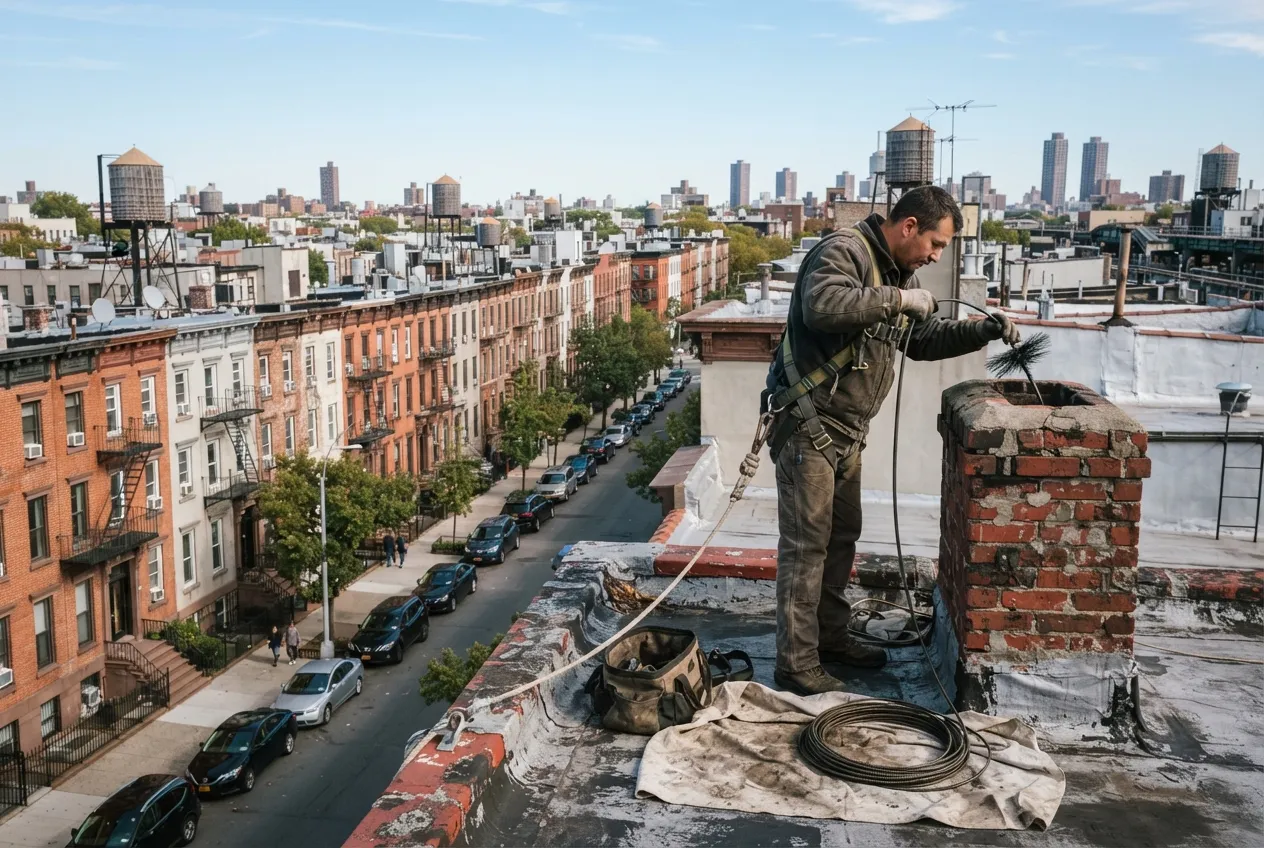
Much of Harlem's housing is older masonry construction. Many brownstones and rowhouses still have original fireplaces, sometimes several per house, and some of them have not been used in decades. Before you light a fire in a fireplace that has been closed up, it should be swept and inspected. Old flues can hold soot, debris, nesting material or cracked clay tiles that you can't see from the room.
The NFPA 211 standard calls for chimneys, fireplaces and vents to be inspected once a year. A Level 1 inspection fits when nothing has changed. A Level 2 inspection applies when you buy or sell a home, add a new appliance, or switch fuels. A Level 3 inspection is used only when a suspected hazard is hidden and part of the chimney or wall has to be opened to reach it. We'll tell you which level fits your situation and why.
Oil-to-Gas Conversions and Chimney Liners
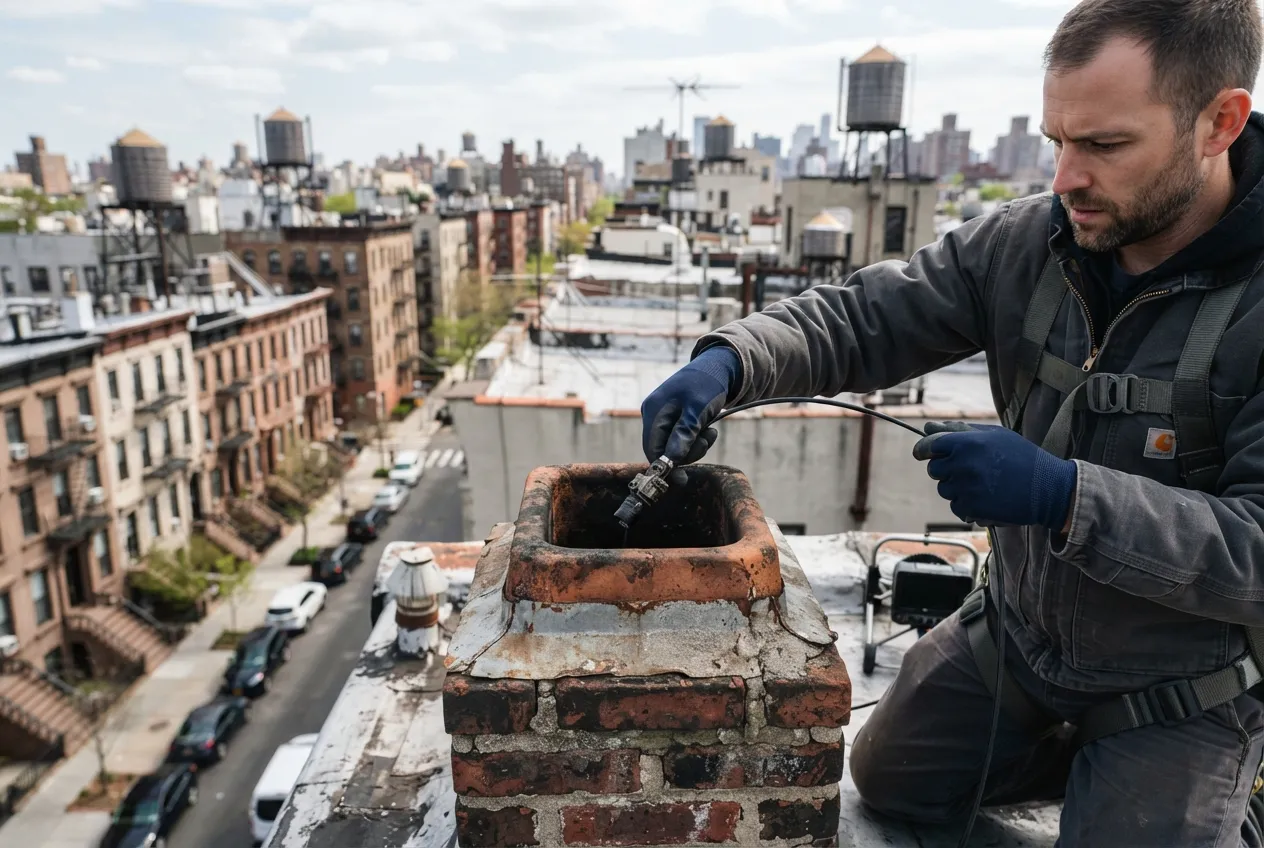
Many Harlem apartment buildings and larger rowhouses heat with a boiler that vents through a masonry chimney. When a New York City building converts its boiler from oil to gas, the chimney has to be evaluated as part of the work. A new liner is often needed. Gas exhaust produces acidic condensate, and over time that moisture can corrode an unlined or poorly lined masonry flue.
We inspect the existing flue, check that it is sized correctly for the new equipment, and install a liner when one is needed. If you're planning a conversion, bring us in early so the chimney work doesn't hold up the boiler work.
Weather, Water and Masonry Repair
Manhattan winters bring repeated freezing and thawing. Coastal storms and summer downpours drive rain sideways into brick and mortar. Water that soaks into a chimney expands when it freezes. That loosens mortar joints, cracks crowns and spalls brick, and the damage often shows up first as stains on an interior wall or ceiling. On tall, exposed rooftop chimneys, the damage can move faster than homeowners expect.
- Chimney caps and chase covers to keep out rain, snow, birds and animals
- Chimney waterproofing with a breathable masonry sealer that sheds water but lets trapped moisture escape
- Chimney repair, including repointing mortar joints, crown repair and replacing damaged brick
- Chimney rebuilding when the masonry above the roofline is too far gone to patch
- Fireplace and damper repair for stuck, rusted or missing dampers and cracked fireboxes
Time for your annual chimney check?
Dryer Vent and Air Duct Cleaning
In apartments and rowhouses, dryer vents often run long distances with several turns before they reach an outside wall or the roof. Lint builds up quickly in those runs. According to the U.S. Fire Administration, failure to clean is the leading factor contributing to clothes dryer fires in homes. If your clothes take longer to dry or the laundry area feels hot, the vent is due for cleaning.
For air ducts, we follow the U.S. EPA's guidance. Cleaning makes sense when there is substantial visible mold growth, signs of vermin, or excessive dust and debris. The EPA also notes that duct cleaning hasn't been shown to prevent health problems, so we won't promise that it will. We'll show you what we find, explain what cleaning will and won't do, and use chemical treatments only when there's a clear reason and you agree to it.
Planning Around Heat Season
New York City's heat season runs from October 1 through May 31. During that time, building owners must keep apartments heated to the city's minimum temperatures. A chimney or boiler-flue problem found in January is harder to fix without disrupting tenants. For that reason, we suggest scheduling inspections, liner work and masonry repairs in late spring or summer.
We also serve the neighborhoods around Harlem, including Morningside Heights, East Harlem, Manhattan Valley, the Upper West Side and Yorkville.
ZIP codes we serve
- 10026
- 10030
- 10037
- 10039